



Sidestream Filtration for Closed-Loop HVAC Systems
The Steps in Sidestream Filtration

Cartridge Filtration for Absolute Particle Retention
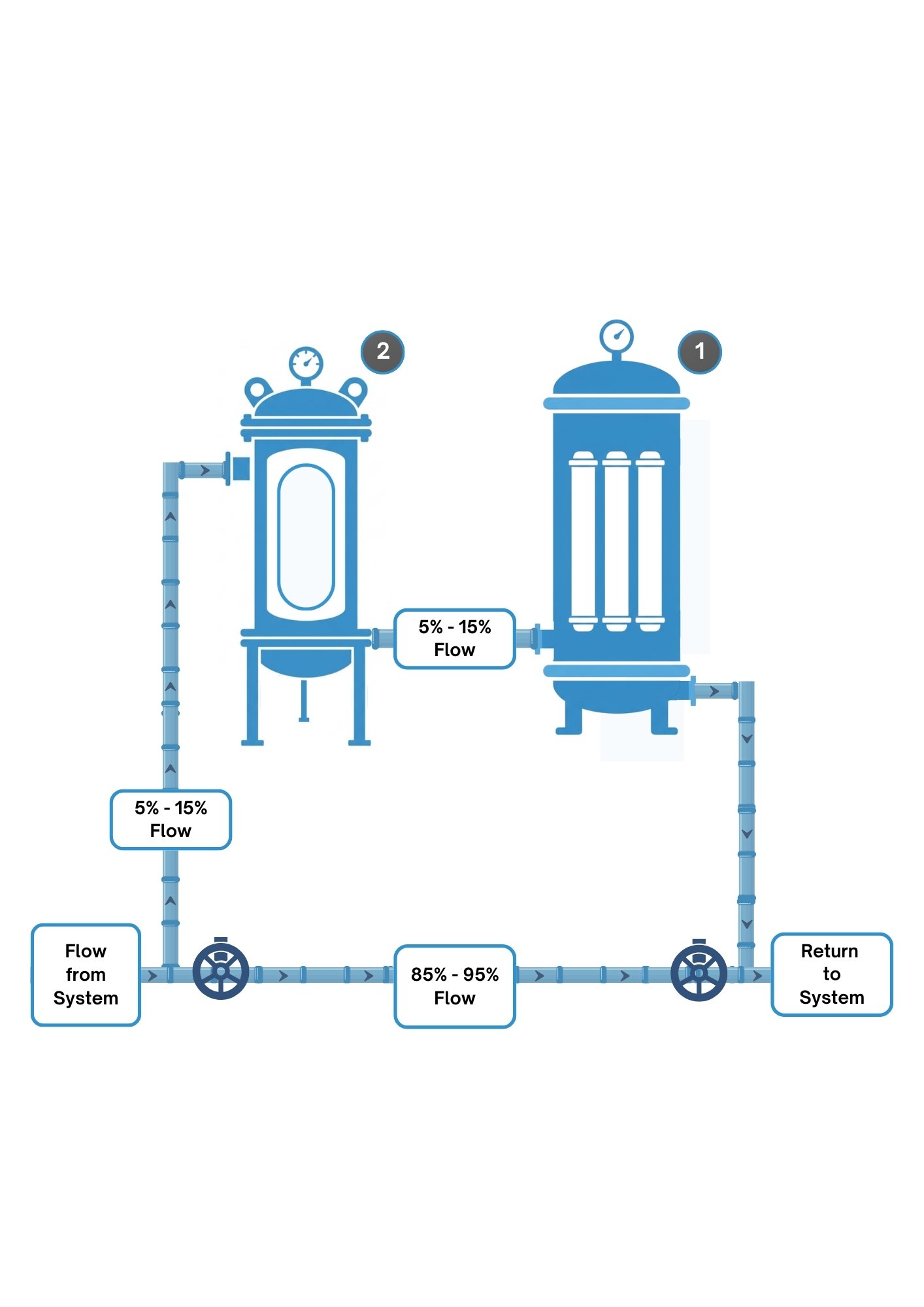
Sidestream cartridge filtration is one of the most effective methods of maintaining water quality and system cleanliness in closed-loop water systems. Using absolute-rated cartridge filters, the system continuously removes suspended solids, corrosion products, and other particulate contaminants generated during operation. This helps maintain the required cleanliness standards following system flushing and commissioning while protecting pumps, heat exchangers, valves, and other critical equipment from fouling and wear.
Recommended Products:
Prefiltration Using Bag Filters
In older closed-loop water systems being retrofitted with sidestream filtration, existing levels of suspended solids, corrosion products, and particulate contamination can be significantly higher than in newly commissioned systems. In these applications, bag filters are often used as the first stage of filtration to remove larger particles and high contaminant loads before the water reaches finer cartridge filters.
Acting as an effective prefiltration stage, bag filters capture coarse debris, rust, scale, and other contaminants that have accumulated throughout the system's operational life. This reduces the burden on downstream cartridge filters, extends filter service life, lowers maintenance costs, and improves the overall efficiency of the sidestream filtration system.
Recommended Products:
Sidestream cartridge filtration is one of the most effective methods of maintaining water quality and system cleanliness in closed-loop water systems. Using absolute-rated cartridge filters, the system continuously removes suspended solids, corrosion products, and other particulate contaminants generated during operation. This helps maintain cleanliness standards following system flushing and commissioning while protecting pumps, heat exchangers, valves, and other critical equipment from fouling and wear.
A controlled sidestream flow, typically 5–15% of the total system flow, is continuously diverted through a cartridge filter housing before being returned to the main system. Cartridge filtration provides consistent and reliable particle retention, helping to prevent the accumulation of debris throughout the system. As the process operates continuously, the entire system volume typically passes through the filtration stage multiple times, achieving complete filtration of the system volume at least once every 24 hours. This ongoing removal of particulate contamination improves system efficiency, reduces maintenance requirements, extends equipment life, and ensures consistent water quality throughout the system.
Speak to an Expert
+44(0) 203 750 8060
Drop Us an Email
enquiries@porefiltration.co.uk
Sidestream Filtration Resources and Support
Why is sidestream filtration important if I already use water treatment chemicals?
Chemical treatment controls corrosion and bacteria but doesn’t remove suspended solids. Sidestream filtration physically removes debris, improving chemical effectiveness and overall system stability.
Can sidestream filtration improve energy efficiency in HVAC systems?
Yes—removing sludge and particulates improves heat transfer efficiency. This helps HVAC systems run more effectively, reducing energy use and operating costs.
Is sidestream filtration suitable for existing or older systems?
Sidestream filtration can be easily retrofitted into existing systems. It helps remove accumulated debris, restoring performance and extending equipment lifespan.
How often should a sidestream filtration system run?
Sidestream systems typically operate continuously or on a scheduled cycle. This ensures the full system volume is regularly cleaned without disrupting operations.
What size sidestream filtration system do I need?
System size depends on flow rate, system volume, and contamination levels. Most systems filter 5–15% of total flow to maintain consistent water quality.
Sidestream Blogs:
And here’s some of our most popular blogs on Water filtration:
- Filtration Options for Brackish, High Salinity and Sea Water
- Cartridge Filtration for Process & Ultrapure Water: Challenges & Solution
- Cryptosporidium Control and Removal from Water
- Sidestream Filtration and the Benefits to Building Services.
- The Key Role of RO Membrane Protection in Industrial Water Treatment
- Cartridge Filtration: A Key Technology in Water Treatment Plants
- The Need for Data Centres to Reduce Water Consumption
- The Benefits & Options of HighFlow Cartridges
Commitment to quality is of paramount importance at PoreFiltration. We supply filtration solutions that help customers

protect their processes, meet regulatory requirements, and deliver consistent, high-quality finished products across industrial, food & beverage, chemical, and water applications. As such we have been certified to ISO9001, providing a quality management system that covers the entire organization for clarity and transparency in our processes.
Our Quality Commitment
Every PoreFiltration product is supplied with one clear objective: to perform reliably, consistently, and exactly as intended.
We are committed to:
- Meeting customer, regulatory, and application-specific requirements
- Supplying filtration products with consistent, repeatable performance
- Providing clear specifications, traceability, and technical guidance
- Continually improving our products, processes, and quality systems
If you need any more information on any aspect of quality management and assurance, then give us a call or send us an email - we’d be more than happy to help.
PoreFiltration is committed to supplying filtration products that support the highest standards of water quality, public health protection, and regulatory compliance across municipal, industrial, pharmaceutical, and process water applications. We recognise the critical role filtration plays in safeguarding water supplies, maintaining treatment performance, and supporting compliance with industry regulations and water quality standards.
Our filtration solutions are utilised throughout the water treatment cycle, from raw water intake and potable water production to process water, wastewater treatment, water reuse, and high-purity applications. By supporting the removal of suspended solids, particulate contamination, turbidity, and process-generated contaminants, our products help operators maintain reliable treatment performance while protecting critical downstream assets such as membranes, UV systems, pumps, and distribution infrastructure.
PoreFiltration supplies products suitable for a wide range of regulated water applications, including systems requiring compliance with Drinking Water Inspectorate (DWI) Regulation 31 requirements, potable water treatment processes, Cryptosporidium control strategies, pharmaceutical water systems, and industrial water treatment operations. We work closely with leading filtration manufacturers to ensure that supplied products are supported by appropriate technical documentation, material certifications, and approvals where required for their intended application.
Clean-In-Place (CIP) and Sterilise-In-Place (SIP) systems are critical to maintaining hygiene, product safety, and regulatory compliance in food, beverage, dairy, and pharmaceutical processing.
CIP enables the cleaning of pipelines, vessel
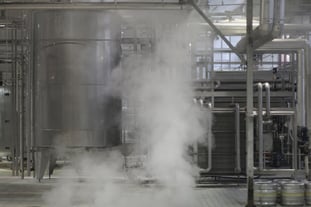
s, filters, and process equipment without dismantling, using controlled cycles of detergents, temperature, and flow to remove product residues, biofilms, and contaminants.
SIP follows with high-temperature steam sterilisation to eliminate microorganisms and ensure systems are safe for production.
Effective CIP/SIP design ensures:
- Reliable microbial control
- Reduced downtime and manual intervention
- Protection of filtration systems and membranes
- Consistent product quality and audit readiness
When properly engineered, CIP and SIP are not just cleaning steps they are integral to process performance and operational efficiency.
Read more in our blog: How CIP & SIP Can Extend Cartridge Filter Lifespan.
What Is Utility Filtration? 
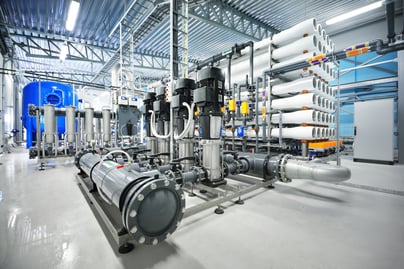
Utility filtration refers to filtration systems designed to clean and condition fluids used in support roles across manufacturing and processing environments rather than final product filtration. These include:
Utility fluids such as compressed air, steam, water and process gases are essential to industrial operations. Their quality directly affects product safety, equipment performance and regulatory compliance. Advanced utility filtration ensures contaminants are removed before they can compromise products or damage critical assets.
Effective utility filtration prevents contamination, improves product consistency, reduces maintenance costs, and supports regulatory compliance.
CLICK HERE TO READ MORE ON UTILITY FILTRATION SOLUTIONS
The Role of Cartridge Filtration in Sidestream Systems
In modern building services, maintaining clean, balanced water within closed-loop systems is essential for ensuring efficiency, reliability, and long-term asset protection. Sidestream filtration systems are designed to continuously remove contamination from circulating water without interrupting system operation. Cartridge filtration plays a critical role in this process by capturing fine suspended solids, corrosion by-products, and system debris before they can accumulate and cause performance issues.
From commercial HVAC systems to large-scale industrial plant rooms, cartridge filtration within sidestream systems supports water quality control across three key areas:
- Removal of suspended solids and corrosion debris: Captures rust, magnetite, and particulate matter that can reduce heat transfer efficiency and damage components
- Prevention of fouling within critical equipment: Protects heat exchangers, pumps, valves, and pipework from blockage, scaling, and performance loss
- Support for chemical treatment programmes: Works alongside inhibitors and biocides by removing solids that would otherwise reduce treatment effectiveness
While the core principles remain consistent, system conditions such as flow rate, contamination levels, and system age can vary significantly. New installations often focus on maintaining initial cleanliness and preventing early-stage fouling, while older systems require continuous removal of accumulated debris to restore and maintain performance. By integrating cartridge filtration into sidestream systems, operators can ensure consistent water quality, improved energy efficiency, and reduced maintenance across the lifecycle of building services infrastructure.
Correct sizing is critical to the effectiveness of a sidestream filtration system. Typically, systems are designed to filter between 5–15% of the total system flow, allowing the full system volume to be cleaned multiple times per day. The exact sizing depends on system volume, contamination levels, and application type. Undersized systems may struggle to maintain water quality, while correctly sized units ensure consistent particulate removal without impacting overall system performance.
The required filtration level depends on the type of contaminants present and the system’s sensitivity. In most building services applications, cartridge filters in the range of 1–50 microns are used to effectively remove suspended solids such as silt, rust, and magnetite. Finer filtration improves water clarity and system cleanliness, but must be balanced with flow rate and maintenance considerations to avoid excessive pressure drop.
Regular maintenance is essential to ensure optimal filtration performance. Cartridge filters are designed for easy replacement, with changeout frequency depending on system contamination levels and operating conditions. Monitoring differential pressure across the filter housing provides a clear indication of when cartridges need replacing, helping to maintain efficiency and prevent unnecessary system strain.
Sidestream filtration systems are highly adaptable and can be installed on both new and existing systems. They are typically integrated with minimal disruption by diverting a portion of flow through the filtration unit and returning it to the system. This makes them ideal for retrofit projects, where improving water quality and system performance is required without major redesign or downtime.
By removing particulate build-up, sidestream filtration helps maintain clean heat transfer surfaces, improving overall system efficiency. This can lead to measurable reductions in energy consumption and operating costs. In addition, cleaner systems experience fewer breakdowns and require less maintenance, delivering long-term cost savings and a strong return on investment.
What our customers say ...
“Very quick response from the team at PoreFiltration. Great communication throughout. Very helpful in establishing the correct product for our application, and worked closely with us to get the product to us in order that we could meet a tight deadline. Excellent service all round :)”
Steven Sweeney
“Always great products and service. The first people I call whenever I have any issues filtering my products!"
Ben Carmichael
Talk to us today about your filtration requirements
-
Extensive product range
-
Best Price GUARANTEED!
-
Specialist support team with deep knowledge of liquid & gas applications
-
Reliable quality & delivery


