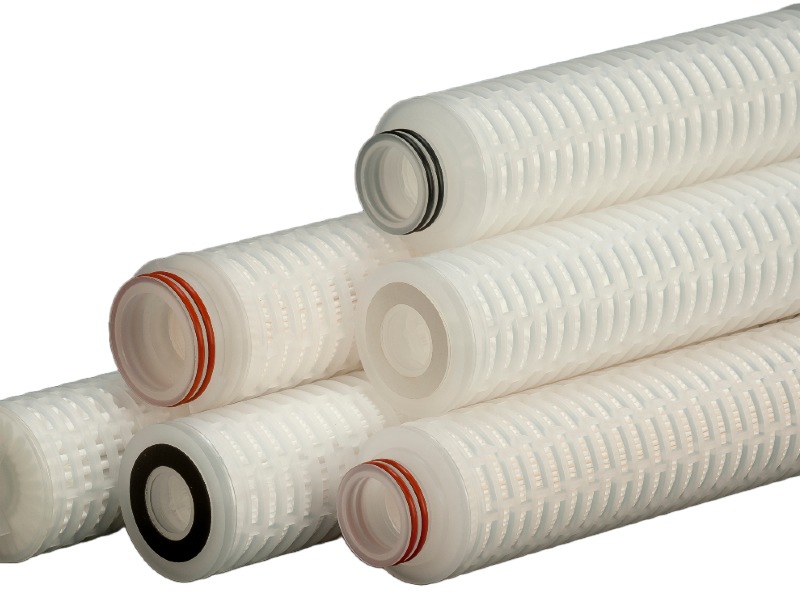



During a recent visit with a customer in the food and beverage sector, we discussed the filtration system being used on their process water supply. The site believed they had a Cryptosporidium removal filter installed, however after reviewing the specification it appeared the cartridge may have been a standard 1 micron absolute-rated filter rather than a genuinely validated crypto removal solution.
This is not an uncommon situation and highlights an important issue within water treatment: micron rating alone does not necessarily guarantee filtration performance.
What Makes a Crypto Cartridge Filter Different to a Standard 1 Micron Filter?
In critical applications such as food and beverage production, it is important that filtration systems are selected not only on particle size, but also on validation, consistency, traceability, and overall product quality. A filter that appears suitable on paper may not always provide the level of protection or assurance the end user expects.
A Crypto Filter Is More Than Just a 1 Micron Cartridge
A “crypto” cartridge filter is not simply a standard 1-micron filter with a different label. In water treatment, “crypto” typically refers to filtration validated for the removal of Cryptosporidium and often Giardia — chlorine-resistant protozoan parasites that are a concern in drinking water and certain food & beverage water systems.
The key difference is not just the stated micron rating, but the filter’s:
- Retention performance
- Construction
- Manufacturing consistency
- Validation testing
You can also read our guide to Cryptosporidium Control and Removal from Water for a broader overview of filtration approaches and water treatment strategies.
Why a Standard 1 Micron Filter Is Not Automatically a Crypto Filter
Many standard 1-micron cartridges are designed primarily for:
- Sediment reduction
- Dirt holding capacity
- Clarification
- Prefiltration duties
These filters may perform very well for general particulate removal, but that does not automatically mean they have been designed or tested for protozoan reduction.
A standard 1-micron cartridge may be:
- Nominally rated
- Inconsistent in pore structure
- Non-integrity testable
- Unsupported by independent retention validation
Under certain operating conditions such as:
- Pressure fluctuations
- High flow rates
- Channelling
- Variable particulate loading
some microorganisms or oocysts may still pass through the media.
What Makes a Crypto Cartridge Different?
A genuine crypto-rated cartridge is typically designed and validated to provide:
- Absolute retention performance
- Tightly controlled pore structure
- Reproducible filtration efficiency
- Verified particulate or microbial reduction
These filters are commonly used in applications where water quality assurance is critical, including:
- Municipal drinking water
- Bottled water production
- Private water supplies
- Food & beverage manufacturing
The cartridge media is generally supported by validation testing demonstrating reliable retention performance against particles relevant to Cryptosporidium reduction.
Why Micron Rating Alone Can Be Misleading
One of the most common misconceptions in filtration is that if a filter is “1 micron absolute,” it must automatically remove Cryptosporidium.
In reality, filtration performance depends on much more than the stated micron rating.
Factors such as:
- Media construction
- Pore consistency
- Manufacturing tolerances
- Bypass risk
- Validation methodology
all influence actual retention capability.
Two filters may both carry a “1 micron” description while performing very differently in real-world applications.
This is why quality, testing, and supporting documentation are so important.
Our Micron Rating Selection Guide also explains how particle type, filter construction, and application conditions influence filtration performance beyond simple micron rating alone.
Typical Differences Between Standard and Crypto Filters
| Feature | Standard 1 Micron Cartridge | Crypto Cartridge |
|---|---|---|
| Rating | Often nominal or general absolute | Validated absolute retention |
| Validation | Particulate reduction | Protozoan retention tested |
| Media consistency | Variable | Highly controlled |
| Integrity testing | Often unavailable | Frequently integrity testable |
| Traceability | Limited | Typically full batch traceability |
| Application focus | Sediment clarification | Water safety and quality assurance |
The Importance of Documentation and Quality Assurance
One of the clearest indicators of a genuine crypto filter is the level of supporting documentation supplied with the product.
Validated crypto filtration cartridges are often supplied with:
- Retention test data
- Validation reports
- Integrity testing procedures
- Certificates of conformity
- Traceability information
- Regulatory compliance documentation
This documentation helps ensure customers are not simply purchasing a fine particulate filter, but a filtration solution that has been properly designed, manufactured, and validated for the intended application.
For food and beverage manufacturers especially, ensuring quality is considered at every stage from specification and procurement through to installation and operation is essential for:
- Product consistency
- Operational reliability
- Compliance
- Overall process protection
A Practical Summary
A standard 1-micron filter is generally designed to reduce visible particulate and improve water clarity.
A crypto cartridge filter is designed and validated to provide a controlled and repeatable level of microbiological protection against specific protozoan risks.
The difference is therefore not simply the micron rating, but the level of validation, manufacturing quality, consistency, and confidence behind the product.
When reviewing filtration systems, the most important question is often not:
“What micron rating is this filter?”
but rather:
“What evidence exists to demonstrate and validate its performance for the application?”
Summary
Choosing a cartridge filter for Cryptosporidium reduction is about far more than selecting a nominal 1 micron rating. True crypto-rated filters are designed, manufactured, and validated to provide reliable and repeatable particle retention performance under real operating conditions. From absolute-rated media construction and integrity testing through to documented validation data and regulatory compliance, these filters play a critical role in protecting drinking water quality and process safety.
For municipal water, food & beverage, and other critical process applications, the supporting documentation is just as important as the filter itself. Validation reports, certificates of conformity, integrity test data, material compliance certificates, and traceability records all help demonstrate that the filtration system is capable of delivering the required level of protection.
At PoreFiltration, we understand that different applications require different levels of certification, validation, and technical support. Whether you need absolute-rated cartridges for drinking water protection, validated retention performance, or supporting documentation for regulatory compliance, we help ensure you receive not only the correct filtration solution, but also the product specifications and certification package needed to support your process with confidence.
Are you unsure about the filters you have purchased? Send us your process and part numbers and we’d be happy to offer guidance and ensure your system is working optimally and with quality assurance.
And if you have any other questions about Cryptosporidium Removal or Polypropylene Depth Cartridge filters, then give us a call or send us an email - we’d be more than happy to help.
And here are a few more blogs and links that you might find useful:
- Cryptosporidium Control & Removal from Water
- Understanding Absolute Vs Nominal Rating in Depth Filters
PoreFiltration – Making your filtration systems work harder