


Yet, gas filtration is often treated as an afterthought. The result? Oversized systems, inappropriate filter grades, high pressure drops, and unnecessary energy costs. Let’s break down how to choose the right gas filters that balance low capital outlay with low ongoing operating costs without compromising air quality or hygiene
-
Compressed Air Filtration – The Hidden OPEX Trap
Compressed air is the most common process gas in dairy and food plants, used for:
- Pneumatic control systems
- Air knives for drying
- Product contact air (sparging, mixing)
- Packaging lines (blow moulding, filling)
Best filter configuration for cost-effective performance:
- Bulk coalescing filter (Grade G) – 1–5 µm
Removes bulk liquid oil and water, reducing load on finer stages.
→ Low-cost aluminium housings, element replaced annually or on DP rise. - Fine coalescing filter (Grade F or S) – 0.01 µm
Removes aerosols, fine oil mist, and submicron particles.
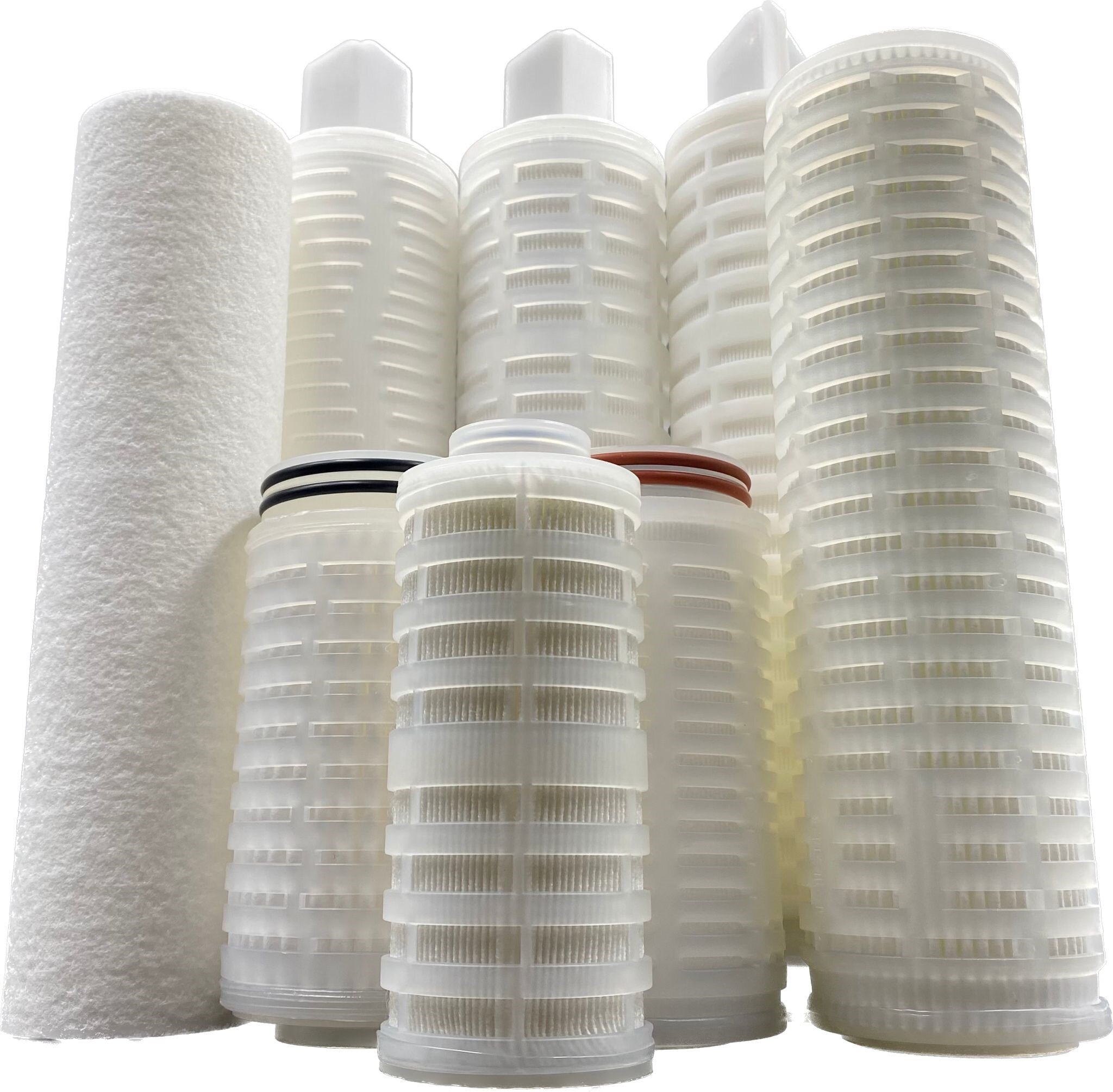
→ Typically glass microfibre media; high efficiency but still low ΔP when clean. - Sterile air filter (GF pleated depth or hydrophobic membrane) – 0.02 µm
For product contact or tank vent applications.
→ GF Pleated depth filters or PTFE membrane cartridges in 316L housings, steam-sterilisable and validated for food use.
How to minimise CAPEX
- Use modular housings (three-stage system in series) rather than multiple single filters at every point of use. Centralised filtration is cheaper to install and maintain.
- Standardise housing sizes and elements across the plant. A few standard element types mean lower inventory and faster changeouts.
- Avoid expensive “over-spec” sterile filters for non-product-contact air (use coalescers instead).
How to minimise OPEX
- Pressure drop is your enemy. Every 100 mbar of additional ΔP increases compressor energy use by roughly 1–2%. Choose filters with large surface area and low resistance media.
- Monitor differential pressure and change proactively. A clogged element doubles energy consumption before it fails.
- Drain condensate automatically — manual drains lead to flooding and carryover, fouling downstream filters.
- Steam-sterilisable PTFE filters last for hundreds of cycles when properly handled, making them cheaper per hour of operation than cheaper, disposable options.
-
Nitrogen and Carbon Dioxide Filtration – Product-Contact Purity
Nitrogen and CO₂ are used extensively for:
- Headspace blanketing in milk, cream, and yoghurt tanks
- Modified atmosphere packaging (MAP)
- Product transfer and pressurisation
Best product type:
- Sterile gas filters (0.2 µm PTFE membrane cartridges)
Installed immediately upstream of product-contact points.
Hydrophobic membranes prevent moisture intrusion, maintain sterility, and withstand steam sterilisation (CIP/SIP compatible).
How to minimise CAPEX
- Use one main sterile gas filter per distribution header rather than individual filters per point of use where practical.
- For MAP gas lines, use coalescing filters as a prefilter to extend membrane life.
How to minimise OPEX
- Validate and monitor cycle life — most high-quality PTFE elements can handle 100–200 SIP cycles. Replace on integrity test failure, not a fixed calendar interval.
- Dry gas feeds (dew point below –40 °C) reduce wetting and extend membrane life dramatically.
- Use differential pressure gauges to track filter fouling; membranes should stay below 100–200 mbar DP under normal conditions.
-
Steam Filtration – The Unsung Hero of Food Safety
Steam is used for sterilisation, cooking, and cleaning. Contaminated steam can deposit oil, rust, or particulates directly onto product-contact surfaces.
Best product types:
- Culinary steam filters: 3 µm sintered stainless steel filter cartridges.
- Final sterile steam filters: 1 µm sintered stainless steel or pleated PTFE elements in 316L housings.
Sintered stainless steel are fully re-usable — clean using ultrasonics or chemical soak — giving exceptionally low lifetime cost.
CAPEX minimisation
- Choose stainless housings designed for gas use and they can handle both culinary and sterile steam filters while ensuring a low combined differential pressure guaranteeing low OPEX costs.
- One central sterile steam filter per distribution line is more cost-effective than several smaller filters at each outlet.
OPEX minimisation
- Liquid industrial or sanitary housings appear to offer a low capex solution to steam filter housings. However they create excessive differential pressure causing excessive OPEX costs.
- Clean sintered elements regularly rather than replacing them. Stainless elements can last 10+ years with proper care.
- Keep steam dry — use separators upstream to prevent wet steam fouling filters.
- Monitor DP and re-clean when it rises by 300–400 mbar.
-
Tank Vent Filtration – Protecting Product Integrity
Tank vents equalise pressure during filling and emptying. Without filtration, airborne dust or microorganisms can enter tanks.
Best sterile filter products:
- Hydrophobic sterile air filters (0.2 µm PTFE membrane) or Pleated GF depth filters (0.01 µm)
Installed on top of tanks, SIP-compatible, validated for bacteria and spore retention.
CAPEX strategies
- Modular vent housings (½”–1½” connections) are inexpensive and can be standardised across all storage vessels.
- Use replaceable cartridges rather than complete disposable assemblies. Stainless housings last decades.
- To reduce cost of initial housings use Pleated GF depth cartridges as these will reduce costs by 30 to 50% at the same initial clean differential pressure.
OPEX strategies
- Use superior performance of Pleated GF depth filters to reduce differential minimising the possibility of tank collapse and extend sterile vent filter life.
- Avoid water logging — ensure condensate drains freely, always place vent filters at the highest point so gravity aids condensate drainage, and use heated housings to reduce gas relative humidity and prevent condensate formation.
- Condensate in any compressed gas system leads to significantly increased OPEX.
- Clean in place or SIP to reuse filters over many cycles rather than replacing routinely.
-
Packaging Gas and Air Knives – Dry and Clean, Not Sterile
Many packaging lines use compressed air or nitrogen for blowing off moisture or debris. These do not require sterile filtration but still demand clean, oil-free gas to avoid contamination of packaging surfaces.
Best product:
- Two-stage coalescing system (5 µm + 0.01 µm) with optional activated carbon stage for odour removal.
CAPEX/OPEX balance
- Aluminium housings with push-fit elements are cheap and easy to maintain.
- Elements last 6–12 months; automated DP monitoring prevents early or late changeouts.
- Activated carbon filters should be installed only where odour control is critical — they add ΔP and need regular replacement.
Reducing Overall Gas Filtration Cost of Ownership
|
Cost driver |
How to reduce it |
Typical saving |
|
Energy (ΔP) |
Select large-area, low-ΔP elements; change on condition, not schedule |
10–20% compressor energy |
|
Consumables |
Use prefiltration and standardise element types |
20–40% fewer replacements |
|
Labour/time |
Modular housings, quick-release clamps |
15–25% reduction |
|
Downtime |
Parallel housings for critical lines |
Zero process interruptions |
|
Product losses |
Proper sterile gas filtration, integrity testing |
Avoids recalls & waste |
Choosing the Right Filter Media and Housing
|
Duty |
Media Type |
Housing Material |
Typical ΔP (clean) |
Lifespan |
|
Coalescing (bulk) |
Borosilicate glass fibre |
Aluminium |
<25 mbar |
6–12 months |
|
Fine coalescing |
Borosilicate glass fibre |
Aluminium |
<25 mbar |
6–12 months |
|
Sterile air/gas Sterile air / gas |
Pleated GF Depth filter PTFE membrane |
316 SS Gas Housing 316 SS Gas Housing |
<10 – 30mbar <50 mbar |
100 SIP cycles 100 SIP cycles |
|
Culinary steam |
Sintered stainless steel |
316L SS |
<100 mbar |
5–10 years |
|
Tank vent |
PTFE membrane |
316L SS |
<10 -50 mbar |
50–100 SIP cycles |
Key Takeaways
- Design filtration in stages – each stage protects the next and lowers lifecycle cost.
- Differential pressure (ΔP) drop = money. Optimise for low ΔP, high media vois volume.
- Steam and gas filters are reusable assets – CIP/SIP them, don’t discard prematurely.
- Standardise across the site – one housing type, few element part numbers.
- Monitor and maintain – simple pressure gauges or ΔP pressure gauges and integrity tests prevent overuse and ensure safety.
For dairies and food plants, the best gas filtration strategy is not the most expensive or the most sophisticated — it’s the one that delivers certified gas purity with the lowest total cost of ownership.
That usually means:
- Reusable sintered, GF pleated filters or membrane elements in standard stainless housings designed for gas use,
- Coalescing prefilters to protect expensive sterile stages, and
- Attention to ΔP, CIP, and steam sterilisation procedures.
Done right, your gas filtration system will run quietly in the background for years — protecting your process, your energy budget, and your brand reputation.
If you have any questions on process gas filtration solutions for dairy and food applications, then you can give us a call or send us an email - we’d be more than happy to help.
You can also read more:
- Coalescing Filters: The Right Choice For Compressed Gas Prefiltration
- Sterile Gas Applications
- Demystifying Culinary Steam Filtration
- Membrane Cartridge Filters & Serile or Final Filtration
PoreFiltration – Making your filtration systems work harder