


When we think about filtration in process industries, the focus is often on the product itself – beer, chemicals, pharmaceuticals, coatings, or food ingredients. However, the utilities that support these processes are just as critical. Poorly filtered utilities can reduce product quality, damage equipment, cause unplanned downtime, and increase operating costs.
The Critical Role of Cartridge Filters in Utility Systems
Utilities such as water, compressed air, steam, gases, and process chemicals are used across almost every industry. Cartridge filters play a central role in ensuring these utilities are clean, consistent, and fit for purpose.
This blog explores how different types of cartridge filters are used to protect and condition utilities in process industries.
What Are “Utilities” in Process Industries?
Utilities are the supporting services required to run a process.
Common Types of Utilities:
- Process water (make-up water, rinse water, cooling water)
- Compressed air and gases
- Steam
- Cleaning-in-place (CIP) fluids
- Heat transfer fluids
- Chemical dosing solutions
Although utilities may not become part of the final product, any contamination they carry can still end up there indirectly – or cause operational problems upstream.
Why Utility Filtration Matters
Risks of Poorly Filtered Utilities:
- Blocked spray nozzles and heat exchangers
- Erosion or fouling of valves and instrumentation
- Microbiological contamination
- Inconsistent process performance
- Premature membrane or equipment failure
Cartridge filters provide predictable, controllable, and scalable filtration, making them ideal for utility applications.
Cartridge Filter Types Used in Utility Filtration
Different utilities require different filtration mechanisms. The most common cartridge filter types include:
- Depth filter cartridges
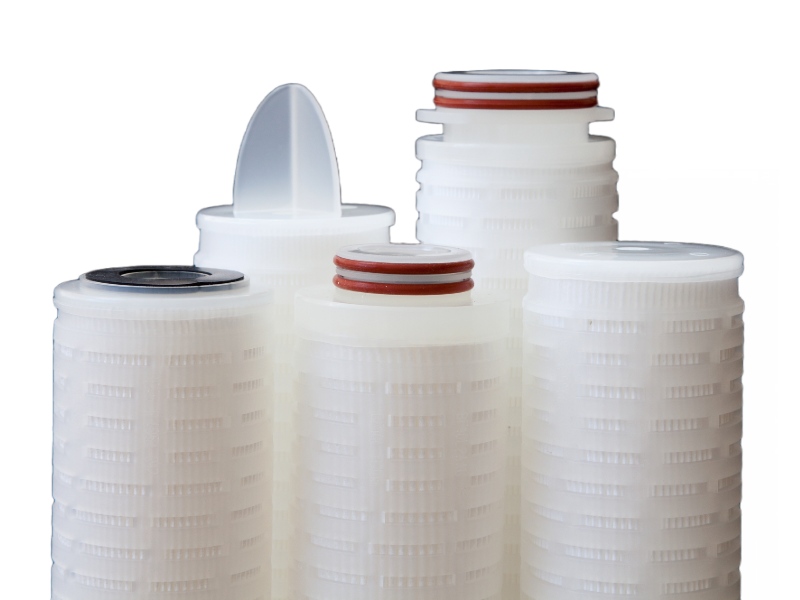
- Pleated filter cartridges
- Membrane filter cartridges
- Carbon cartridges
- Specialist cartridges (oil removal, sterile gas, high-temperature)
Each has a distinct role.
-
Depth Filter Cartridges for Utility Filtration
Robust Protection for General Utility Filtration
How Depth Cartridge Filters work:
Depth cartridges capture contaminants throughout the thickness of the media rather than just on the surface.
Common Depth Cartridge constructions:
- Melt blown polypropylene
- Wound polypropylene or cotton
- Resin-bonded fibres
Typical Utility Applications:
- Pre-filtration of process water
- Cooling water protection
- Chemical transfer and storage
- Pre-filtration upstream of membranes
Key Benefits:
- High dirt-holding capacity
- Good tolerance to variable water quality
- Cost-effective for bulk particulate removal
Typical Micron Ratings:
1 µm to 100 µm (nominal or absolute)
Depth cartridges are often the workhorse of utility filtration, providing reliable protection where fine precision is not critical.
-
Pleated Filter Cartridges for Utility Filtration
High Flow, Low Pressure Drop Utility Filtration
How Pleated Cartridge Filters Work:
Pleated cartridges use surface filtration with a large effective surface area, resulting in lower pressure drop and higher flow rates.
Common Pleated Cartridge Media:
- Polypropylene
- Polyester
- Glass fibre
Typical Utility Applications:
- Final filtration of process water
- Rinse water for food and beverage
- Boiler feed water pre-filtration
- Compressed air condensate filtration
Key Benefits:
- Higher flow rates per cartridge
- Lower energy consumption
- Longer service life compared to depth filters in clean systems
Typical micron ratings:
0.2 µm to 50 µm (often absolute)
Pleated cartridges are ideal where consistency, flow stability, and reduced operating costs are important.
-
Membrane Filter Cartridges for Utility Filtration
Critical Utility Filtration for Microbial Control
How Membrane Cartridge Filters Work:
Membrane cartridges provide absolute-rated filtration using a defined pore structure.
Common Membrane Materials:
- PES (polyethersulfone)
- PVDF
- PTFE
- Nylon
Typical Utility Applications:
- Sterile process water
- Water for injection (pharma)
- Compressed air and gas sterilisation
- Tank vent filtration
- Final rinse water in hygienic processes
Key Benefits:
- Reliable microbial removal
- Validatable and testable
- Consistent performance batch to batch
Typical Micron Ratings:
0.1 µm, 0.2 µm, 0.45 µm
Membrane cartridges are essential where utilities directly impact hygiene, sterility, or regulatory compliance.
-
Carbon Cartridge Filters
Removing Taste, Odour, and Chemical Contaminants
How Carbon Cartridge Filters Work:
Activated carbon adsorbs chlorine, chloramines, organic compounds, and odours.
Common Carbon Filter Formats:
- Carbon block cartridges
- Granular activated carbon (GAC) cartridges
Typical Utility Applications:
- Dechlorination of process water
- Protecting RO and membrane systems
- Improving taste and odour in food and beverage water
- Removing ozone or residual disinfectants
Key Benefits:
- Chemical removal rather than particle filtration
- Protects downstream membranes and resins
Carbon cartridges are often combined with particulate cartridges for complete utility water conditioning.
-
Specialist Cartridge Filters for Utilities
Some utility applications require more specialised solutions:
Oil Removal Cartridges
- Used in compressed air systems
- Coalescing media removes oil aerosols and fine droplets
Sterile Gas Filters
- PTFE membrane cartridges
- Used for nitrogen, CO₂, air, and tank blanketing
High-Temperature Cartridges
- Sintered metal cartridges for steam filtration
- Cartridge filters using st.st hardware for elevated operating temperatures and pressures
These cartridges ensure utilities meet both process performance and safety requirements.
Summarising Cartridge Filter Selection by Utility Type
|
Utility |
Primary Contaminants |
Recommended Cartridge Type(s) |
Purpose |
|
Process water (general) |
Sand, rust, scale, silt |
Depth → Pleated |
Equipment protection |
|
Rinse water (F&B) |
Fine particulates, microbes |
Pleated → Membrane |
Hygiene and quality |
|
Boiler feed water |
Sediment, corrosion products |
Depth → Pleated |
Protect boilers & valves |
|
Cooling water |
Solids, debris |
Depth cartridges |
Prevent fouling |
|
CIP solutions |
Undissolved solids |
Pleated cartridges |
Nozzle protection |
|
Compressed air |
Particles, oil aerosols, moisture |
Pleated → Coalescing |
Instrument protection |
|
Process gases |
Particles, microbes |
PTFE membrane |
Sterility |
|
Steam |
Rust, scale |
Sintered metal or PTFE |
Valve & process protection |
|
Chemical utilities |
Particulates, gels |
Depth or pleated (chemical compatible) |
Product integrity |
Typical Micron Rating Recommendations by Utility
|
Utility Application |
Typical Micron Rating |
Rating Type |
|
Raw process water |
10–50 µm |
Nominal |
|
Pre-filtration for membranes |
1–5 µm |
Absolute |
|
Final process water |
0.2–1 µm |
Absolute |
|
Boiler feed water |
5–10 µm |
Absolute |
|
Cooling water |
25–100 µm |
Nominal |
|
CIP return lines |
5–25 µm |
Nominal |
|
Compressed air (particle) |
1–5 µm |
Absolute |
|
Sterile air/gas |
0.2 µm |
Absolute |
|
Steam filtration |
1–5 µm |
Absolute |
Key point:
As utilities become more critical to product quality, filtration shifts from nominal depth filtration to absolute-rated pleated or membrane cartridges.
Practical Micron Selection Rules of Thumb
- Protect equipment: 5–25 µm
- Protect membranes: ≤5 µm absolute
- Protect hygiene: 0.2 µm membrane
- High dirt load: Use depth first
- High flow & clean fluids: Use pleated
Micron rating alone is not enough – rating type (nominal vs absolute) and media construction are equally important.
Key Takeaways
- Utilities are critical to product quality and process reliability
- Cartridge filters provide flexible, scalable solutions for utility filtration
- Different cartridge types serve distinct roles, from bulk protection to sterile control
- Correct selection improves uptime, efficiency, and compliance
Investing in the right cartridge filtration strategy for utilities is not just good practice – it is essential for stable and efficient process operations.
If you have any questions on filtration solutions for utilities in your industrial processes then you can give us a call or send us an email - we’d be more than happy to help.
You can also read more:
- Membrane Vs Depth Filtration in MicroFiltration: A Technical Comparison
- Ensuring You Use The Optimum Sterile Gas Filter
- Understanding Absolute vs Nominal Ratings in Filters
- And you can also read more about some of the utility applications: Steam, Sterile Gas, Sterile Venting & one of the most common utilities, Industrial Water.
PoreFiltration – Making your filtration systems work harder