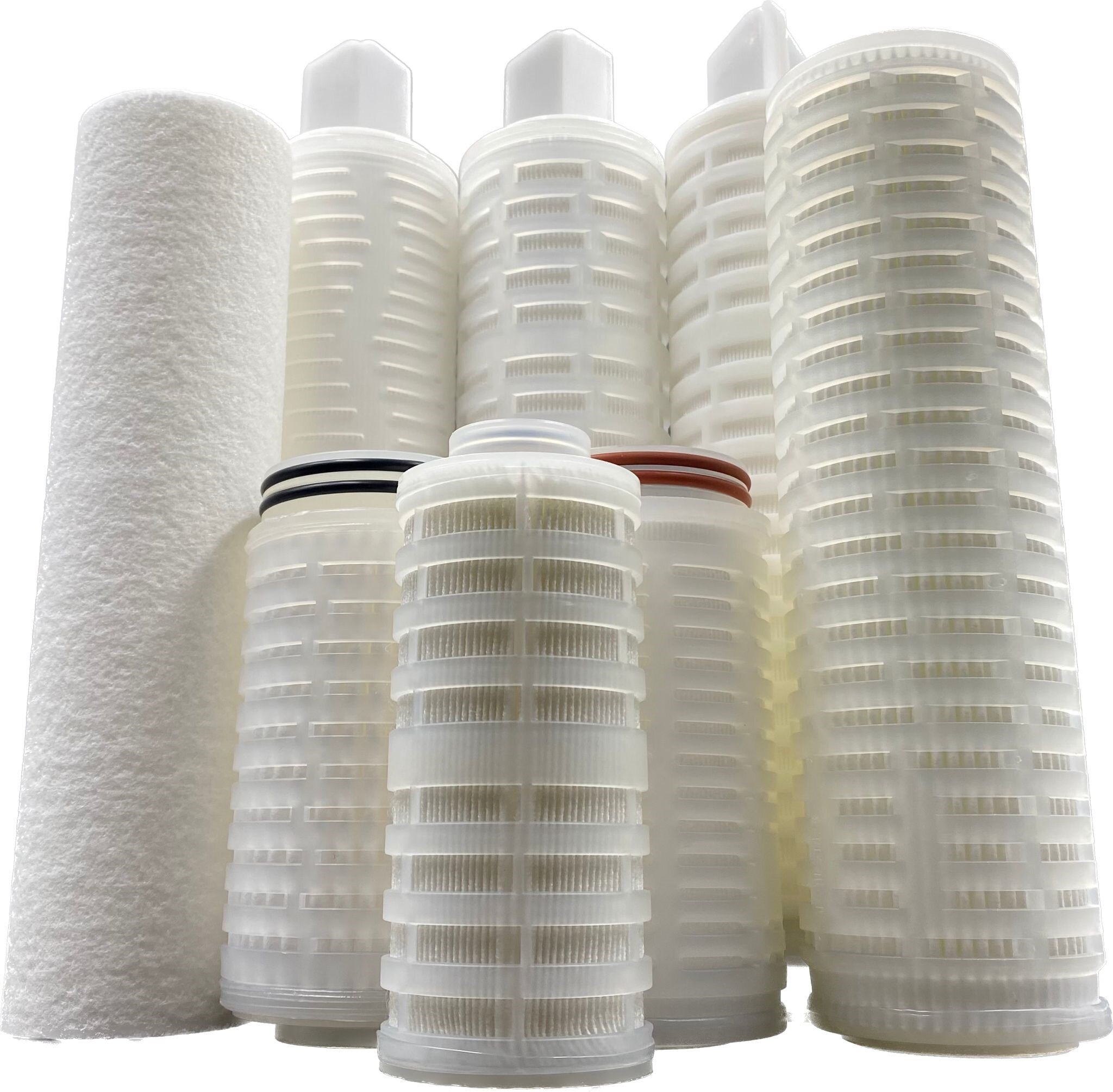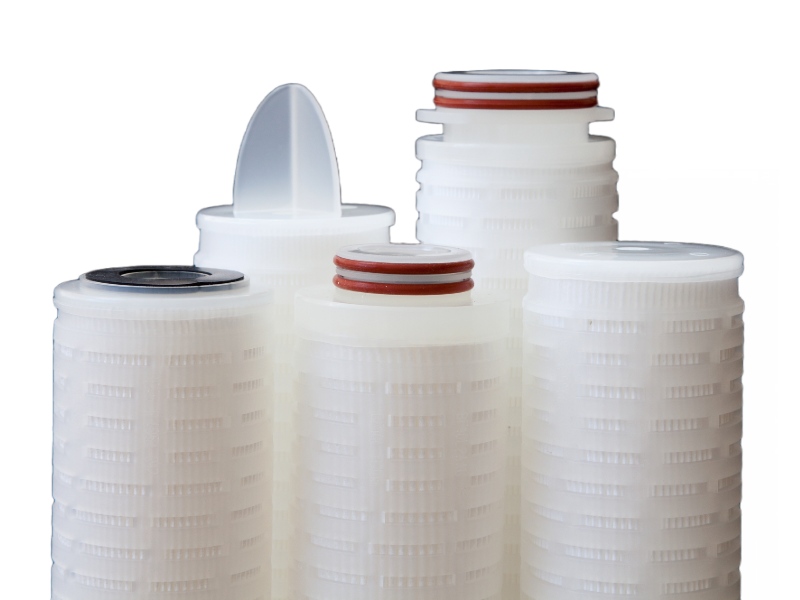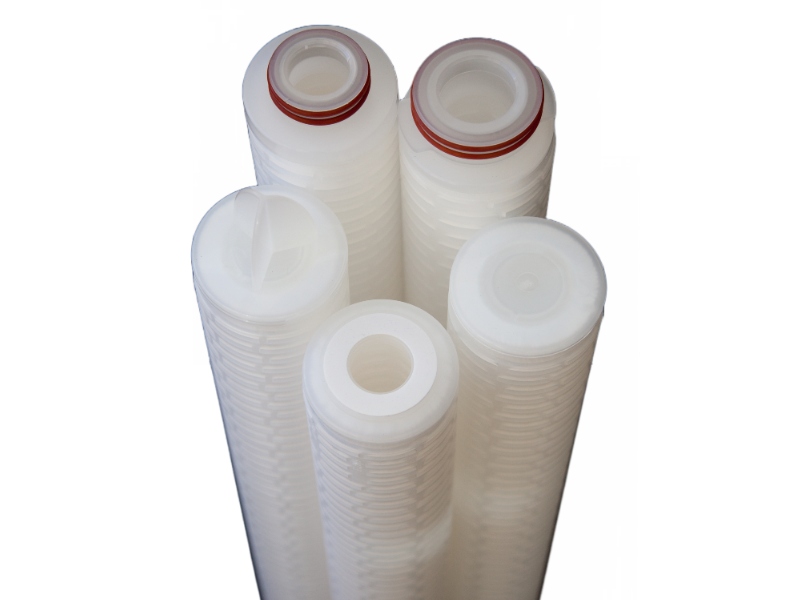



Utility filtration works best when it is engineered as a system, not chosen in isolation. Correct cartridge type and micron rating are essential to balance protection, performance, and operating cost.
The tables below provide typical guidance, not absolute rules. Final selection should always consider fluid quality, contamination load, flow rate, temperature, and downstream sensitivity, but these are an excellent starting point.
Utility Type vs Cartridge Filter Selection
|
Utility |
Primary Contaminants |
Recommended Cartridge Type(s) |
Purpose |
|
Process water (general) |
Sand, rust, scale, silt |
Depth → Pleated |
Equipment protection |
|
Rinse water (F&B) |
Fine particulates, microbes |
Pleated → Membrane |
Hygiene and quality |
|
Boiler feed water |
Sediment, corrosion products |
Depth → Pleated |
Protect boilers & valves |
|
Cooling water |
Solids, debris |
Depth cartridges |
Prevent fouling |
|
CIP solutions |
Undissolved solids |
Pleated cartridges |
Nozzle protection |
|
Compressed air |
Particles, oil aerosols, moisture |
Pleated → Coalescing |
Instrument protection |
|
Process gases |
Particles, microbes |
PTFE membrane |
Sterility |
|
Steam |
Rust, scale |
Sintered metal or PTFE |
Valve & process protection |
|
Chemical utilities |
Particulates, gels |
Depth or pleated (chemical compatible) |
Product integrity |
Typical Micron Rating Recommendations by Utility
|
Utility Application |
Typical Micron Rating |
Rating Type |
|
Raw process water |
10–50 µm |
Nominal |
|
Pre-filtration for membranes |
1–5 µm |
Absolute |
|
Final process water |
0.2–1 µm |
Absolute |
|
Boiler feed water |
5–10 µm |
Absolute |
|
Cooling water |
25–100 µm |
Nominal |
|
CIP return lines |
5–25 µm |
Nominal |
|
Compressed air (particle) |
1–5 µm |
Absolute |
|
Sterile air/gas |
0.2 µm |
Absolute |
|
Steam filtration |
1–5 µm |
Absolute |
As utilities become more critical to product quality, filtration shifts from nominal depth filtration to absolute-rated pleated or membrane cartridges.
Depth vs Pleated vs Membrane – When to Use Each
|
Cartridge Type |
Best Used When |
Typical Micron Range |
Notes |
|
High dirt load, variable quality |
1–100 µm |
High capacity, cost-effective |
|
|
Stable systems, high flow |
0.2–50 µm |
Low pressure drop |
|
|
Hygiene or sterility required |
0.1–0.45 µm |
Testable & validatable |
Water Utility Filtration – Example Staged Design
|
Stage |
Cartridge Type |
Micron Rating |
Function |
|
Stage 1 |
Depth (melt blown) |
20 µm nominal |
Bulk solids removal |
|
Stage 2 |
5 µm absolute |
Fine particulate control |
|
|
Stage 3 |
0.2 µm absolute |
Microbial control |
This approach:
- Extends service life of fine cartridges
- Reduces pressure drop spikes
- Improves consistency of downstream processes
Compressed Air & Gas Utility Filtration
|
Application |
Cartridge Type |
Micron Rating |
Function |
|
Plant air (general) |
5 µm |
Particle removal |
|
|
Instrument air |
1 µm |
Protect valves & actuators |
|
|
Oil-sensitive systems |
0.01–0.3 µm |
Oil aerosol removal |
|
|
0.2 µm |
Bacteria retention |
||
|
Hydrophobic PTFE |
0.2 µm |
Sterile pressure equalisation |
Carbon Cartridge Selection for Utility Water
|
Application |
Carbon Type |
Typical Pre-Filtration |
Notes |
|
Dechlorination |
5 µm pleated |
Best chlorine removal |
|
|
Taste & odour |
GAC |
10 µm depth |
Lower pressure drop |
|
RO membrane protection |
1–5 µm absolute |
Protects membranes |
|
|
Ozone removal |
1–5 µm |
Rapid adsorption |
Important:
Carbon cartridges must always be protected with upstream particulate filtration to prevent premature fouling.
Practical Micron Selection Rules of Thumb
- Protect equipment: 5–25 µm
- Protect membranes: ≤5 µm absolute
- Protect hygiene:2 µm membrane
- High dirt load: Use depth first
- High flow & clean fluids: Use pleated
Micron rating alone is not enough – rating type (nominal vs absolute) and media construction are equally important.
Final Thoughts
Utility filtration is often under-specified because it is “not the product.” In reality, utilities define:
- Process stability
- Equipment life
- Hygiene and compliance
- Overall operating cost
Cartridge filters provide a modular, scalable way to control utility quality – if selected correctly. If you have any questions on filtration solutions for utilities in your industrial processes then you can give us a call or send us an email - we’d be more than happy to help.
You can also read more:
- Membrane Vs Depth Filtration in MicroFiltration: A Technical Comparison
- A Guide to Selecting the Right Micron Rating
- Ensuring You Use The Optimum Sterile Gas Filter
- Understanding Absolute vs Nominal Ratings in Depth Cartridge Filters
- And you can also read more about some of the utility applications: Steam, Sterile Gas, Sterile Venting & one of the most common utilities, Industrial Water.
PoreFiltration – Making your filtration systems work harder