



<img alt="" src="https://secure.smart-company-vision.com/267217.png" style="display:none;">

Water Filtration Solutions for Closed-Loop System

Filtration Steps in Pre-Commissioning & Flushing

Sidestream FINAL

Primary Filtration (Bag Filter)

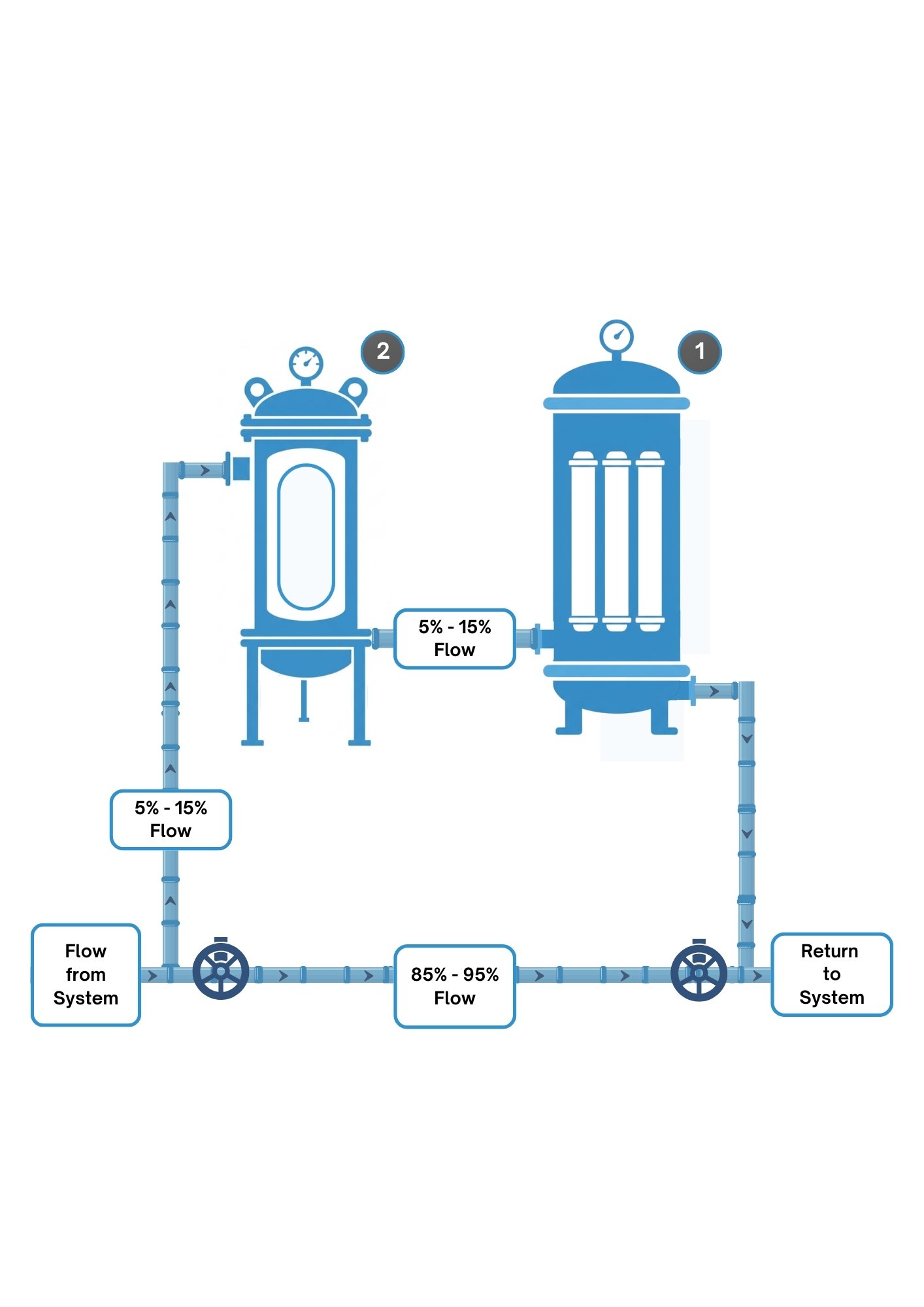
A controlled sidestream flow of approximately 5–15% of the total system flow is diverted from the main system and routed through the bag filter housing.

During commissioning and flushing, the bag filter serves as the first stage of filtration, capturing larger debris such as construction residue, pipe scale, welding slag, dirt, and other coarse contaminants generated during installation and startup. The remaining 85–95% of system flow continues through the main bypass line.

Recommended Product:

  • Bag Filter

  • Industrial Bag Housing 

Secondary Filtration (Cartridge Filter)

The sidestream exiting the bag filter is directed to the cartridge filter housing for fine filtration. The cartridge filter removes smaller suspended particles that pass through the bag filter, helping achieve the required system cleanliness level during flushing and commissioning.

After passing through the cartridge filter, the filtered sidestream is recombined with the main flow and returned to the system. Continuous circulation through both filtration stages progressively reduces particulate contamination throughout the system.


Recommended Product:

During commissioning and system flushing, maintaining clean water conditions is critical to ensuring long-term performance and reliability in building services systems. Newly installed pipework and equipment often introduce contaminants such as installation debris, metal swarf, jointing compounds, and dirt, all of which must be effectively removed before the system becomes operational. Filtration plays a vital role during this stage by capturing suspended solids and preventing them from circulating through sensitive components. As commissioning standards become more stringent, effective filtration during flushing has become essential for achieving required water quality levels, protecting equipment, and ensuring systems are clean, compliant, and ready for operation from day one. 

Speak to an Expert

+44(0) 203 750 8060

Drop Us an Email

enquiries@porefiltration.co.uk


Commissioning & Flushing Filtration Resources and Support

Why is filtration important during system commissioning and flushing?

Commissioning introduces debris such as swarf, dirt, and installation residues into the system. Filtration removes these contaminants, preventing damage and ensuring the system starts clean.

What types of contaminants are removed during flushing?

Typical contaminants include metal particles, rust, jointing compounds, and construction debris. These can block components and reduce system efficiency if not removed.

How long should filtration be used during commissioning?

Filtration is typically used throughout the flushing process until water quality meets required standards. Duration depends on system size and contamination levels.

Can filtration speed up the commissioning process?

Yes—effective filtration accelerates the removal of debris, helping systems reach cleanliness targets faster and reducing the need for repeated flushing.

Is temporary or permanent filtration better for commissioning?

Both can be used depending on the system. Temporary units are common for initial cleaning, while permanent systems provide ongoing protection after commissioning.

Commitment to quality is of paramount importance at PoreFiltration.  We supply filtration solutions that help customersPore_Filter_9001_Logo protect their processes, meet regulatory requirements, and deliver consistent, high-quality finished products across industrial, food & beverage, chemical, and water applications. As such we have been certified to ISO9001, providing a quality management system that covers the entire organization for clarity and transparency in our processes.

Our Quality Commitment

Every PoreFiltration product is supplied with one clear objective: to perform reliably, consistently, and exactly as intended.

We are committed to:

  • Meeting customer, regulatory, and application-specific requirements
  • Supplying filtration products with consistent, repeatable performance
  • Providing clear specifications, traceability, and technical guidance
  • Continually improving our products, processes, and quality systems

If you need any more information on any aspect of quality management and assurance, then give us a call or send us an email - we’d be more than happy to help.

PoreFiltration is committed to supplying filtration products that support the highest standards of water quality, public health protection, and regulatory compliance across municipal, industrial, pharmaceutical, and process water applications. We recognise the critical role filtration plays in safeguarding water supplies, maintaining treatment performance, and supporting compliance with industry regulations and water quality standards.

Our filtration solutions are utilised throughout the water treatment cycle, from raw water intake and potable water production to process water, wastewater treatment, water reuse, and high-purity applications. By supporting the removal of suspended solids, particulate contamination, turbidity, and process-generated contaminants, our products help operators maintain reliable treatment performance while protecting critical downstream assets such as membranes, UV systems, pumps, and distribution infrastructure.

PoreFiltration supplies products suitable for a wide range of regulated water applications, including systems requiring compliance with Drinking Water Inspectorate (DWI) Regulation 31 requirements, potable water treatment processes, Cryptosporidium control strategies, pharmaceutical water systems, and industrial water treatment operations. We work closely with leading filtration manufacturers to ensure that supplied products are supported by appropriate technical documentation, material certifications, and approvals where required for their intended application.


Clean-In-Place (CIP) and Sterilise-In-Place (SIP) systems are critical to maintaining hygiene, product safety, and regulatory compliance in food, beverage, dairy, and pharmaceutical processing.

CIP enables the cleaning of pipelines, vesselSteams, filters, and process equipment without dismantling, using controlled cycles of detergents, temperature, and flow to remove product residues, biofilms, and contaminants.
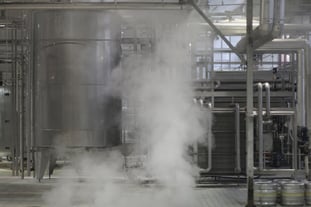
SIP follows with high-temperature steam sterilisation to eliminate microorganisms and ensure systems are safe for production.

Effective CIP/SIP design ensures:

  • Reliable microbial control
  • Reduced downtime and manual intervention
  • Protection of filtration systems and membranes
  • Consistent product quality and audit readiness

When properly engineered, CIP and SIP are not just cleaning steps they are integral to process performance and operational efficiency.

Read more in our blog: How CIP & SIP Can Extend Cartridge Filter Lifespan.
The Role of Cartridge Filtration in Commissioning & Flushing

During commissioning and flushing operations, the primary objective is to remove installation-related contamination and achieve required system cleanliness standards as efficiently as possible. Cartridge filtration plays a key role in this process by providing high-capacity removal of suspended solids across a wide range of particle sizes. As water is circulated at high velocity during flushing, cartridge filters capture debris before it can settle or recirculate, helping to rapidly improve water clarity and cleanliness.

Across commissioning and flushing applications, cartridge filtration supports three key objectives:

    • Rapid removal of installation debris: Captures swarf, dirt, and construction residues introduced during system installation
    • Protection of system components: Prevents contaminants from reaching pumps, valves, and heat exchangers during initial operation
    • Achieving required cleanliness standards: Supports compliance with commissioning guidelines and water quality specifications

While the goal is consistent achieving clean system water the level of contamination can vary significantly depending on installation quality and system complexity. High-capacity, staged filtration is often required to handle heavy initial loading, with finer filtration introduced as water quality improves. By utilising cartridge filtration during commissioning, operators can reduce flushing time, improve system readiness, and ensure long-term performance from the outset.

Flushing Strategy: How is Filtration Applied During Commissioning?

Filtration is typically applied alongside high-velocity flushing to maximise debris removal. Water is circulated through the system while filtration units continuously capture suspended solids, preventing recontamination. Staged approaches are often used, starting with coarse filtration and progressing to finer levels as cleanliness improves.

Filtration Ratings: What Micron Level is Needed for Flushing?

During early-stage flushing, coarse filtration (e.g. 25–100 microns) is used to capture large debris. As the system cleans, finer filtration (down to 1–10 microns) is introduced to remove smaller particles and achieve final water quality targets.

System Sizing: What Capacity is Required for Effective Flushing?

Filtration systems for commissioning are typically sized to handle higher contamination loads than standard operation. Flow rates and housing capacity must support continuous filtration during high-velocity flushing, ensuring efficient debris removal without restricting system performance.

Maintenance & Cartridge Changeout During Flushing

Due to high levels of contamination, cartridges may require frequent replacement during commissioning. Monitoring pressure drop across the filter helps determine when changeout is needed, ensuring consistent performance and avoiding flow restriction.

Post-Commissioning: What Happens After Flushing is Complete?

Once flushing is complete and water quality targets are achieved, filtration can be removed or transitioned to a permanent solution such as sidestream filtration. This ensures ongoing system protection and prevents future contamination build-up.

Microbiological Contamination and Sediment Build-Up

Sediment and suspended solids can create favourable conditions for microbiological activity within closed-loop water systems. Deposits may provide surfaces where bacteria can attach, grow and form biofilms, reducing the effectiveness of water treatment programmes and increasing the risk of system contamination.

Removing particulate matter through effective filtration helps support cleaner water conditions and improves the performance of chemical treatment and biocide programmes.

Corrosion-Related Leaks and Abrasive Wear

Corrosion products such as iron oxides and magnetite can circulate through closed-loop systems and act as an abrasive contaminant. Over time, these particles can contribute to wear in pumps, valves, seals and control equipment. In severe cases, corrosion and erosion can increase the risk of leaks, unplanned maintenance and premature equipment failure.

By removing particulate contamination from the circulating water, filtration helps reduce the abrasive load within the system and supports the long-term protection of system components.

Increased Energy Use from Fouling and Scale

Even small amounts of scale, corrosion debris or surface fouling can reduce heat transfer efficiency across heat exchangers, cooling circuits and pipework. As fouling builds up, pumps and heat transfer equipment must work harder to maintain system performance, increasing energy consumption and operating costs.

Effective water filtration helps remove suspended solids and circulating debris before they can settle on critical surfaces, supporting cleaner systems and more efficient operation.

What our customers say ...   


Very quick response from the team at PoreFiltration. Great communication throughout. Very helpful in establishing the correct product for our application, and worked closely with us to get the product to us in order that we could meet a tight deadline. Excellent service all round :) 

Steven Sweeney


Always great products and service. The first people I call whenever I have any issues filtering my products!"  

Ben Carmichael

Talk to us today about your filtration requirements


  • Extensive product range
  • Best Price GUARANTEED!
  • Specialist support team with deep knowledge of liquid & gas applications
  • Reliable quality & delivery