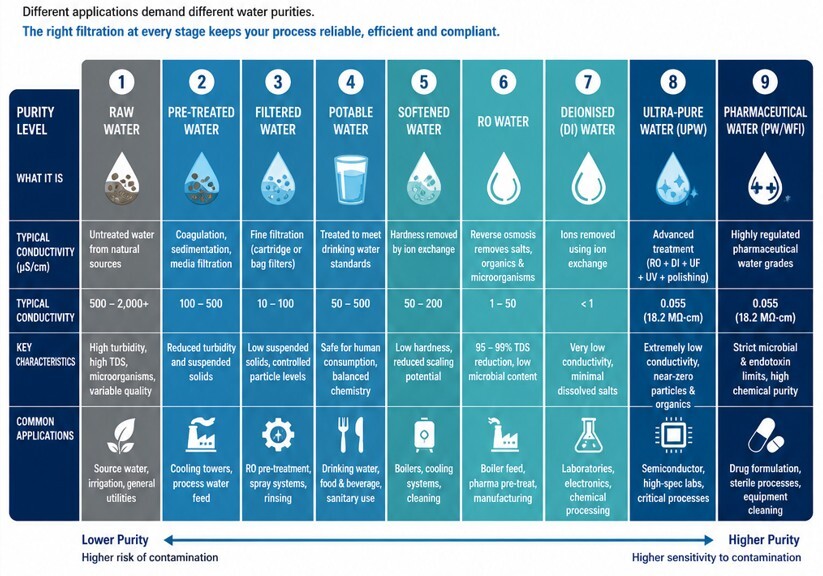



What is WFI and where is Water for Injection used?
Water for Injection (WFI) is a highly purified pharmaceutical water used in injectable drug production, sterile processing, and equipment cleaning. It must meet strict microbiological, endotoxin, and regulatory requirements.
Why is filtration important in Water for Injection systems?
WFI filtration removes particulates and microbial contaminants to maintain water purity throughout generation, storage, and distribution. It plays a critical role in protecting product quality and regulatory compliance.
What filtration level is required for WFI systems?
Sterilising-grade filtration, typically 0.2 micron absolute, is commonly used to achieve effective microbial control. This helps maintain compliance with pharmaceutical water quality standards.
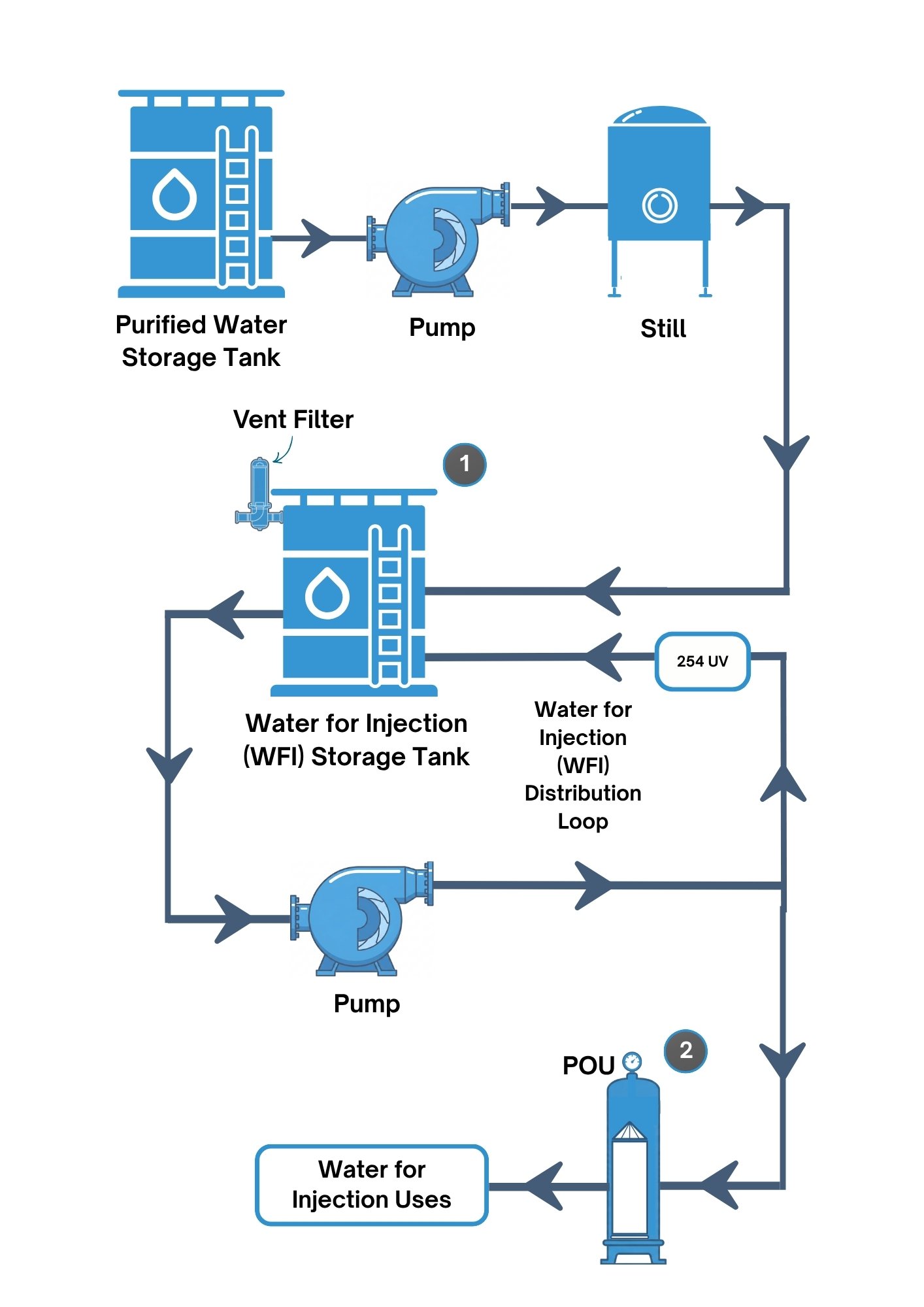
Where is filtration used within a WFI system?
Filtration is applied throughout WFI generation, storage, venting, distribution loops, and point-of-use locations. These filtration stages help maintain system integrity and water quality.
How is WFI filtration validated in pharmaceutical applications?
WFI filters are validated through bacterial retention studies, integrity testing, and documented performance verification. This ensures consistent filtration performance and regulatory compliance.
WFI Blogs:
And here’s some of our most popular blogs on water filtration:
- The Key Role of RO Membrane Protection in Industrial Water Treatment
- Cartridge Filtration: A Key Technology in Water Treatment Plants
- The Need for Data Centres to Reduce Water Consumption
- The Benefits & Options of HighFlow Cartridges
- Green Hydrogen: The Key Role of Water in Sustainable Production
- When it Comes to Water Quality, Think Cartridge Filtration.
Commitment to quality is of paramount importance at PoreFiltration. We supply filtration solutions that help customers protect their processes, meet regulatory requirements, and deliver consistent, high-quality finished products across industrial, food & beverage, chemical, and water applications. As such we have been certified to ISO9001, providing a quality management system that covers the entire organization for clarity and transparency in our processes.
Our Quality Commitment
Every PoreFiltration product is supplied with one clear objective: to perform reliably, consistently, and exactly as intended.
We are committed to:
- Meeting customer, regulatory, and application-specific requirements
- Supplying filtration products with consistent, repeatable performance
- Providing clear specifications, traceability, and technical guidance
- Continually improving our products, processes, and quality systems
If you need any more information on any aspect of quality management and assurance, then give us a call or send us an email - we’d be more than happy to help.
PoreFiltration is committed to supplying filtration products that support the highest standards of water quality, public health protection, and regulatory compliance across municipal, industrial, pharmaceutical, and process water applications. We recognise the critical role filtration plays in safeguarding water supplies, maintaining treatment performance, and supporting compliance with industry regulations and water quality standards.
Our filtration solutions are utilised throughout the water treatment cycle, from raw water intake and potable water production to process water, wastewater treatment, water reuse, and high-purity applications. By supporting the removal of suspended solids, particulate contamination, turbidity, and process-generated contaminants, our products help operators maintain reliable treatment performance while protecting critical downstream assets such as membranes, UV systems, pumps, and distribution infrastructure.
PoreFiltration supplies products suitable for a wide range of regulated water applications, including systems requiring compliance with Drinking Water Inspectorate (DWI) Regulation 31 requirements, potable water treatment processes, Cryptosporidium control strategies, pharmaceutical water systems, and industrial water treatment operations. We work closely with leading filtration manufacturers to ensure that supplied products are supported by appropriate technical documentation, material certifications, and approvals where required for their intended application.
Clean-In-Place (CIP) and Sterilise-In-Place (SIP) systems are critical to maintaining hygiene, product safety, and regulatory compliance in food, beverage, dairy, and pharmaceutical processing.
CIP enables the cleaning of pipelines, vessel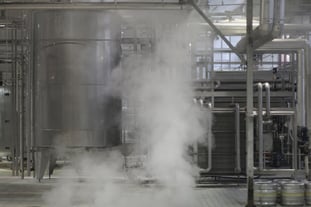 s, filters, and process equipment without dismantling, using controlled cycles of detergents, temperature, and flow to remove product residues, biofilms, and contaminants.
SIP follows with high-temperature steam sterilisation to eliminate microorganisms and ensure systems are safe for production.
Effective CIP/SIP design ensures:
- Reliable microbial control
- Reduced downtime and manual intervention
- Protection of filtration systems and membranes
- Consistent product quality and audit readiness
When properly engineered, CIP and SIP are not just cleaning steps they are integral to process performance and operational efficiency.
Read more in our blog: How CIP & SIP Can Extend Cartridge Filter Lifespan.
What Is Utility Filtration? 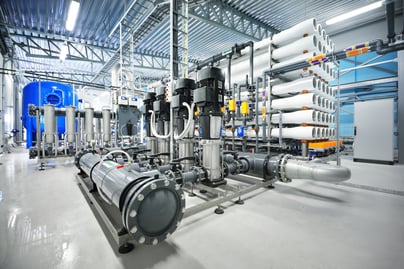
Utility filtration refers to filtration systems designed to clean and condition fluids used in support roles across manufacturing and processing environments rather than final product filtration. These include:
Utility fluids such as compressed air, steam, water and process gases are essential to industrial operations. Their quality directly affects product safety, equipment performance and regulatory compliance. Advanced utility filtration ensures contaminants are removed before they can compromise products or damage critical assets.
Effective utility filtration prevents contamination, improves product consistency, reduces maintenance costs, and supports regulatory compliance.
CLICK HERE TO READ MORE ON UTILITY FILTRATION SOLUTIONS