



<img alt="" src="https://secure.smart-company-vision.com/267217.png" style="display:none;">

Fermentation Filtration

Precision microbial protein production

Filtration Steps in Fermentation Applications

Fermentation UPDATE

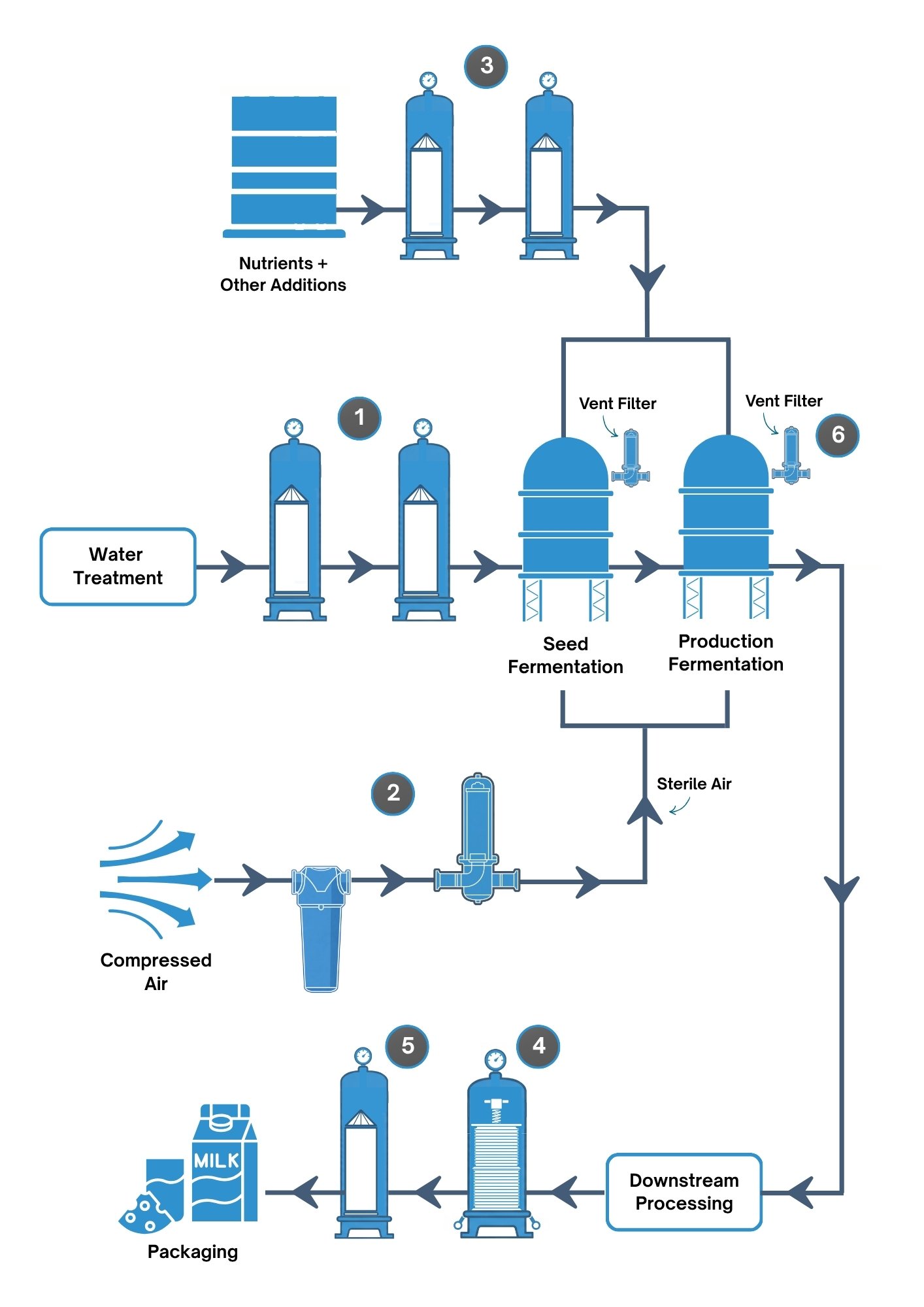
Sterile filtration of product water

Sterile water filtration plays a critical role in fermentation and bioprocessing by ensuring that process water used for equipment preparation, dilution, cleaning, and make-up operations does not introduce contamination or variability into the system. Even low levels of suspended solids or microorganisms can negatively affect culture growth, extend fermentation cycle times, or lead to inconsistent and unstable yields.

Appropriate pre-filtration helps remove particulates and reduce bioburden, improving batch-to-batch consistency while also lowering the burden on downstream clarification and sterilisation steps.

Final sterile liquid filtration provides a robust microbial barrier, protecting fermentation integrity and ensuring tight control over the biological environment throughout the process, which is essential for reliable and repeatable production outcomes 

 Recommended Products: 

Sterile air filtration

Sterile air filtration is essential in fermentation and bioprocessing to ensure that the air used to supply oxygen for microbial growth does not introduce particulates, microorganisms, or contaminants into the system.

In aerobic fermentations, air is a critical process input, providing the dissolved oxygen required to sustain cell metabolism, growth, and product formation. However, without effective filtration, airborne microbes or particulates can compromise culture purity, reduce yields, or lead to batch failure.

Pre-filtration of intake air is therefore required to remove particulates as well as entrained oils, aerosols, and condensate that may originate from compressors and upstream air handling systems, helping to reduce the bioburden load and protect downstream sterile gas filters.

Final sterile air filtration provides a critical microbial barrier, ensuring that only clean, sterile air is delivered to the bioreactor, thereby maintaining aseptic conditions, supporting optimal oxygen transfer, and enabling consistent and reliable fermentation performance.

Recommended Products:

Sterile filtration of nutrient feeds & additions

Sterile filtration of nutrient solutions and process additions such as acids and bases plays a critical role in fermentation and bioprocessing by ensuring that these inputs do not introduce contamination or variability into the system.

These streams are commonly used for pH control, process adjustment, and maintaining optimal conditions for culture growth, but even low levels of suspended solids or microorganisms can negatively affect fermentation performance, extend cycle times, or lead to inconsistent and unstable yields.

Appropriate pre-filtration helps remove particulates and reduce bioburden, improving batch-to-batch consistency while also lowering the burden on downstream clarification and sterilisation steps.

Final sterile liquid filtration provides a robust microbial barrier, protecting fermentation integrity and ensuring tight control over the biological environment throughout the process, which is essential for reliable and repeatable production outcomes. 

Recommended Products:

Clarification post centrifugation

Following fermentation, clarification of the broth is a critical downstream step to separate biomass, cell debris, and colloidal solids from the target product stream.

Sheet or lenticular depth filters are commonly used at this stage due to their high solids-holding capacity and ability to handle highly variable and fouling-prone feeds. These systems provide an effective means of reducing turbidity and removing residual particulates that remain after primary separation steps such as centrifugation.

By stabilising the feed entering subsequent purification stages—such as membrane filtration, chromatography, or concentration—clarification helps protect sensitive equipment, improve process efficiency, and ensure consistent product quality.

In addition, well-controlled clarification reduces bioburden and simplifies downstream processing, contributing to higher yields and more robust, repeatable fermentation production cycles 

Recommended Products:

Final Product Sterilisation

Final sterile filtration of the fermentation product is a critical safeguard step designed to ensure microbial control immediately prior to downstream processing, storage, or filling. Even after clarification and primary separation, trace levels of microorganisms may still be present in the product stream, posing a risk to product stability, safety, and regulatory compliance.

Sterile-grade membrane cartridge filters, typically rated at 0.2 µm absolute, provide a validated microbial barrier that removes any remaining viable organisms without impacting key product attributes such as activity, concentration, or composition.

Positioned as the last unit operation before final containment, this filtration step is essential for maintaining product sterility assurance, protecting against post-process contamination, and ensuring consistent, high-quality output in regulated fermentation-based manufacturing processes. 

Recommended Products:

Vent/Off-gas sterile filtration

Off-gas and vent systems play a critical role in maintaining sterile and stable bioreactor conditions during microbial growth. As microorganisms such as yeast, bacteria, or fungi metabolise feedstocks, they generate off-gases that must be safely released while preventing the ingress of airborne contaminants.

Vent filtration ensures that exhaust gases are treated to remove microorganisms, aerosols, and particulates, protecting both the process and the surrounding environment. Effective off-gas and vent filtration is essential to maintain sterility, safeguard product quality, and ensure reliable, contamination-free fermentation performance from inoculation through to harvest.

Recommended Products:

In the precision fermentation industry, proteins and functional ingredients are produced through tightly controlled microbial fermentation rather than extraction from agricultural sources. Similar principles apply in pharmaceutical and biopharmaceutical manufacturing, where maintaining sterile conditions is critical. Microorganisms such as yeast, bacteria, or fungi are cultivated in bioreactors, where they convert feedstocks into target proteins and bioactive compounds. Because these processes are highly sensitive to contamination, strict sterile handling, filtration, and gas management are required throughout.

From fermentation and cell growth through to downstream separation and purification, robust filtration is essential to ensure product purity, process stability, and consistent high-quality output. 

Speak to an Expert

+44(0) 203 750 8060

Drop Us an Email

enquiries@porefiltration.co.uk


Fermentation Filtration Resources and Support

What is the purpose of cartridge filtration in fermentation processes?

Cartridge filtration helps maintain aseptic conditions by removing contaminants from air, gases, liquids, and process streams. It also protects downstream equipment and supports consistent product quality throughout fermentation.

What filter ratings are typically used in fermentation applications?

Fermentation processes commonly use 0.2 micron filters for sterile filtration and microbial control, with larger micron ratings used for clarification and prefiltration. Filter selection depends on the process stage and contamination risk.

Where are cartridge filters typically installed in a fermentation process?

Filters are commonly installed on fermenter air inlets, media preparation systems, harvest lines, and downstream purification processes. Each location requires filtration tailored to specific sterility and process requirements.

What type of cartridge filter media is best for fermentation?

PES, PTFE, PVDF, and polypropylene filter media are widely used depending on whether the application involves liquids, gases, or high solids loading. Material selection is based on compatibility, sterility requirements, and process conditions.

How do you prevent filter fouling in fermentation processes?

Filter fouling is reduced through staged prefiltration, controlled flow rates, and correct filter sizing. These measures help maintain filtration performance, extend filter life, and minimise process downtime.

Commitment to quality is of paramount importance at PoreFiltration.  We supply filtration solutions that help customersPore_Filter_9001_Logo protect their processes, meet regulatory requirements, and deliver consistent, high-quality finished products across industrial, food & beverage, chemical, and water applications. As such we have been certified to ISO9001, providing a quality management system that covers the entire organization for clarity and transparency in our processes.

Our Quality Commitment

Every PoreFiltration product is supplied with one clear objective: to perform reliably, consistently, and exactly as intended.

We are committed to:

  • Meeting customer, regulatory, and application-specific requirements
  • Supplying filtration products with consistent, repeatable performance
  • Providing clear specifications, traceability, and technical guidance
  • Continually improving our products, processes, and quality systems

If you need any more information on any aspect of quality management and assurance, then give us a call or send us an email - we’d be more than happy to help.

PoreFiltration is committed to supplying filtration products that support the highest standards of food safety and product integrity across the food and beverage industry. Our solutions are selected to meet the stringent requirements of manufacturers operating under globally recognised standards such as BRCGS Global Standard for Food Safety, as well as wider frameworks including HACCP, FDA compliance, and EU food contact regulations.

Our range of cartridge filters, bag filters, and associated housings are designed for use in food and beverage applications where hygiene, material traceability, and process reliability are critical. We work closely with leading manufacturers to ensure that all supplied filtration products are suitable for food contact applications and supported by appropriate documentation, including material certifications and conformity declarations where required.

PoreFiltration operates as a specialist distributor of industrial filtration products and components used within a wide range of processing environments. While we do not manufacture, process, store, or handle food products directly, we play a key role in supporting compliant and hygienic processing through the supply of high-quality filtration solutions.

FOOD SAFETY LOGO


Clean-In-Place (CIP) and Sterilise-In-Place (SIP) systems are critical to maintaining hygiene, product safety, and regulatory compliance in food, beverage, dairy, and pharmaceutical processing.

CIP enables the cleaning of pipelines, vesselSteams, filters, and process equipment without dismantling, using controlled cycles of detergents, temperature, and flow to remove product residues, biofilms, and contaminants.
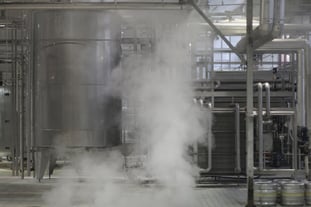
SIP follows with high-temperature steam sterilisation to eliminate microorganisms and ensure systems are safe for production.

Effective CIP/SIP design ensures:

  • Reliable microbial control
  • Reduced downtime and manual intervention
  • Protection of filtration systems and membranes
  • Consistent product quality and audit readiness

When properly engineered, CIP and SIP are not just cleaning steps they are integral to process performance and operational efficiency.

Read more in our blog: How CIP & SIP Can Extend Cartridge Filter Lifespan.

What Is Utility Filtration?                    Municipal RO system
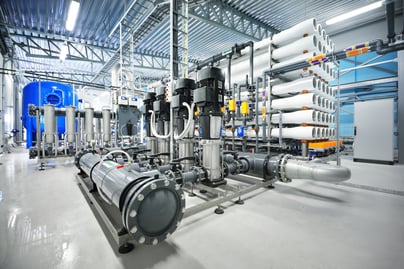
Utility filtration refers to filtration systems designed to clean and condition fluids used in support roles across manufacturing and processing environments rather than final product filtration. These include:


Utility fluids such as compressed air, steam, water and process gases are essential to industrial operations. Their quality directly affects product safety, equipment performance and regulatory compliance. Advanced utility filtration ensures contaminants are removed before they can compromise products or damage critical assets.

Effective utility filtration prevents contamination, improves product consistency, reduces maintenance costs, and supports regulatory compliance.


CLICK HERE TO READ MORE ON UTILITY FILTRATION SOLUTIONS 


Key Challenges in Fermentation Filtration producing microbial proteins

 Fermentation processes are among the most sensitive manufacturing operations in the food, biotechnology, pharmaceutical, and alternative protein industries. Whether producing enzymes, cultured ingredients, precision fermentation proteins, or bio-based chemicals, maintaining a clean and controlled process environment is essential. Cartridge filtration plays a vital role throughout the production cycle, protecting valuable batches from contamination, safeguarding critical equipment, and helping manufacturers achieve consistent product quality. 

Maintaining Sterility Throughout the Process

The primary challenge in any fermentation application is preventing contamination. The microorganisms intentionally cultivated within a bioreactor are highly susceptible to invasion by wild yeast, bacteria, mould spores, and airborne particulates. Even a small contamination event can spoil an entire production batch, resulting in lost product, production delays, and expensive cleaning operations.

Filtration provides multiple sterile barriers throughout the process. Sterile air filters protect incoming process gases, tank vent filters prevent airborne contamination during vessel breathing, while sterile liquid filters ensure that water, acids, bases, and other process additions do not introduce unwanted microorganisms. Together, these filtration stages help maintain the aseptic conditions essential for successful fermentation.

Why It’s Essential

  • Improves product consistency from the start
  • Protects downstream filtration systems
  • Reduces contamination risks
  • Supports high-quality end products
Protecting Valuable Production Cultures

Fermentation organisms perform best within tightly controlled environments. Water quality, chemical additions, and process utilities all have the potential to introduce particles or microorganisms that interfere with cell growth and productivity.

Contaminants such as rust particles, pipe scale, microbial carryover, or poorly filtered process water can reduce yields, alter metabolic activity, and create inconsistencies between production batches. By incorporating appropriate prefiltration and final membrane filtration, manufacturers can minimise these risks and provide their production cultures with the cleanest possible environment.

This level of process protection is particularly important in precision fermentation and biotechnology applications, where product values can be extremely high and batch failures carry significant financial consequences.

Delivering Sterile Air for Efficient Fermentation

For many aerobic fermentation processes, air is more than just a utility—it is a critical raw material. Oxygen is required to sustain microbial growth and maximise product formation, making the quality of incoming compressed air fundamental to process success.

However, compressed air systems can contain particulates, oil aerosols, water condensate, and microorganisms, all of which must be removed before the air enters the fermenter. Multi-stage filtration systems typically combine water separators, coalescing filters, particulate filters, and final sterile membrane cartridges to deliver clean, sterile air with minimal pressure drop.

Maintaining low differential pressure across these filters is equally important, as excessive restriction can reduce oxygen transfer efficiency and negatively impact fermentation performance.

Managing High Solids Loading During Downstream Clarification

Once fermentation is complete, the resulting broth often contains a complex mixture of cells, cell debris, proteins, and insoluble media components. These suspended solids can rapidly foul expensive downstream membrane systems, reducing throughput and increasing operating costs.

Cartridge filtration provides an effective polishing stage following centrifugation or decantation, removing fine particulates before they reach sensitive purification equipment. Pleated depth cartridges, bag filters, and lenticular modules are commonly used to reduce solids loading, improve process consistency, and significantly extend the service life of downstream membrane filters.

By incorporating staged filtration into the clarification process, manufacturers can improve overall process economics while maximising product recovery and maintaining reliable production performance.

Protecting Fermenters with Sterile Tank Vent Filtration

F

Fermentation vessels continuously expand and contract as they fill, empty, heat, and cool. This breathing action requires air to enter and leave the vessel, creating a potential route for contamination if left unprotected.

Sterile tank vent filters act as the final barrier between the external environment and the process, preventing airborne microorganisms and particulates from entering the fermenter. At the same time, they must withstand repeated steam sterilisation cycles while maintaining high airflow and low resistance.

Effective vent filtration not only protects product quality but also helps prevent operational issues such as excessive vacuum or overpressure conditions that can occur if vent filters become blocked.

What our customers say ...   


Very quick response from the team at PoreFiltration. Great communication throughout. Very helpful in establishing the correct product for our application, and worked closely with us to get the product to us in order that we could meet a tight deadline. Excellent service all round :) 

Steven Sweeney


Always great products and service. The first people I call whenever I have any issues filtering my products!"  

Ben Carmichael

Talk to us today about your filtration requirements


  • Extensive product range
  • Best Price GUARANTEED!
  • Specialist support team with deep knowledge of liquid & gas applications
  • Reliable quality & delivery