



<img alt="" src="https://secure.smart-company-vision.com/267217.png" style="display:none;">

Coatings and Paints Filtration

Delivering High-Quality Surface Finishes

The Steps in Coatings and Paint Filtration

Coatings and Paints FINAL

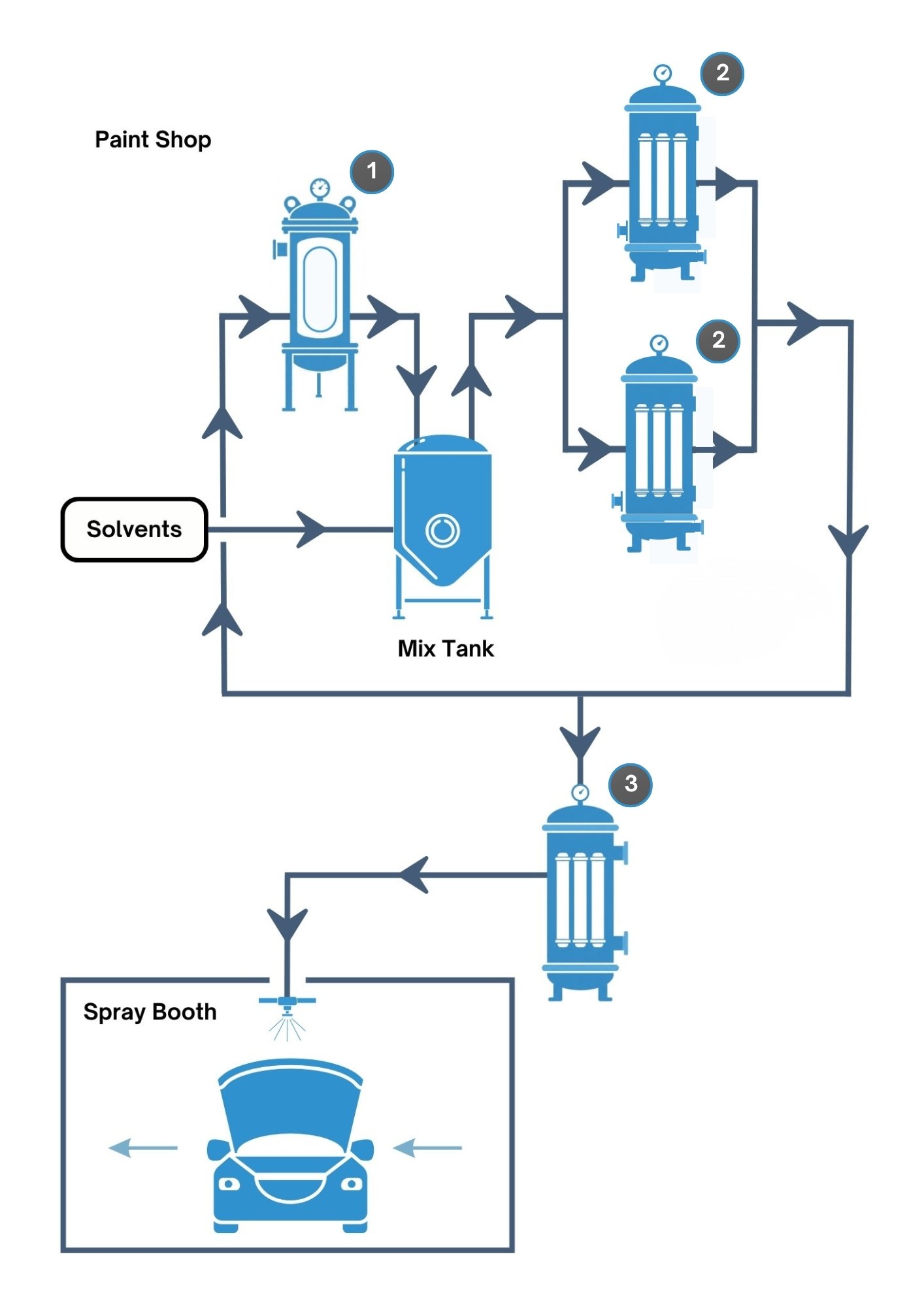
Raw Material & Paint Mixing Filtration

Solvents, resins, pigments and additives are filtered before entering the mix tank to remove contamination that could affect coating quality and finish.

This initial filtration stage helps protect mixing equipment, improve batch consistency and prevent defects in the final paint or coating product.

Recommended Products:

Bag Filters

Basket Strainers

Industrial Bag Housing


Compressed Air & Process Filtration

Compressed air used during paint manufacturing and application is filtered to remove oil aerosols, water, particulates and contaminants that can cause surface imperfections.

Process filtration is also used to remove pigment agglomerates and fine particles before the coating is transferred for application.

Recommended Products:

Depth Filters

Pleated Cartridge Filters

Industrial Housing

Final Paint & Coating Filtration Before Application

Prior to entering the spray booth, the paint or coating undergoes final filtration to remove fine particulate, gels and unmixed material that could block spray nozzles or create defects in the finished surface.

Final filtration ensures a smooth, consistent finish while improving coating quality and reducing rework.

Recommended Products:

  • Pleated depth filter
  • Industrial Housing

In coatings and paint manufacturing, product quality is defined by consistency, surface finish, and the absence of contamination throughout the production process. Even small levels of particulate contamination can result in visible surface defects such as cratering, fisheyes, streaking, and uneven coating performance, leading to rejected products, rework, and increased production costs. Filtration plays a critical role across the entire coatings process, from incoming raw materials and mixing operations through to final application and recirculation systems. As coating technologies continue to evolve across automotive, industrial, decorative, and specialist applications, high-performance filtration systems are essential for maintaining product integrity, protecting application equipment, and ensuring consistent final finishes across every batch. 

Speak to an Expert

+44(0) 203 750 8060

Drop Us an Email

enquiries@porefiltration.co.uk


Coatings & Paints Resources and Support

Why is filtration important in paint and coatings manufacture?

Filtration removes particulate contamination that can cause surface defects, nozzle blockages, and inconsistent coating performance. It helps maintain finish quality and production reliability.

What contaminants are commonly removed from paints and coatings?

Typical contaminants include coagulated pigments, gels, dirt, rust particles, fibres, and contamination introduced during mixing, storage, or transfer.

Can filtration prevent paint spray nozzle blockage?

Yes—effective filtration removes oversized particles and agglomerates before application, helping prevent nozzle fouling and reducing spray system downtime.

Do water-based and solvent-based paints require different filters?

Yes—water-based coatings commonly use polypropylene media, while solvent-based systems often require nylon or chemically resistant filtration materials.

Where is filtration typically used within a paint process?

Filtration is commonly applied to incoming raw materials, after mixing, before spraying, and on paint return loops to maintain cleanliness throughout production.

Commitment to quality is of paramount importance at PoreFiltration.  We supply filtration solutions that help customersPore_Filter_9001_Logo protect their processes, meet regulatory requirements, and deliver consistent, high-quality finished products across industrial, food & beverage, chemical, and water applications. As such we have been certified to ISO9001, providing a quality management system that covers the entire organization for clarity and transparency in our processes.

Our Quality Commitment

Every PoreFiltration product is supplied with one clear objective: to perform reliably, consistently, and exactly as intended.

We are committed to:

  • Meeting customer, regulatory, and application-specific requirements
  • Supplying filtration products with consistent, repeatable performance
  • Providing clear specifications, traceability, and technical guidance
  • Continually improving our products, processes, and quality systems

If you need any more information on any aspect of quality management and assurance, then give us a call or send us an email - we’d be more than happy to help.

Clean-In-Place (CIP) and Sterilise-In-Place (SIP) systems are critical to maintaining hygiene, product safety, and regulatory compliance in food, beverage, dairy, and pharmaceutical processing.

CIP enables the cleaning of pipelines, vesselSteams, filters, and process equipment without dismantling, using controlled cycles of detergents, temperature, and flow to remove product residues, biofilms, and contaminants.
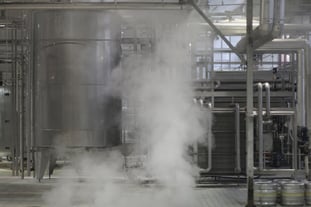
SIP follows with high-temperature steam sterilisation to eliminate microorganisms and ensure systems are safe for production.

Effective CIP/SIP design ensures:

  • Reliable microbial control
  • Reduced downtime and manual intervention
  • Protection of filtration systems and membranes
  • Consistent product quality and audit readiness

When properly engineered, CIP and SIP are not just cleaning steps they are integral to process performance and operational efficiency.

Read more in our blog: How CIP & SIP Can Extend Cartridge Filter Lifespan.

What Is Utility Filtration?                    Municipal RO system
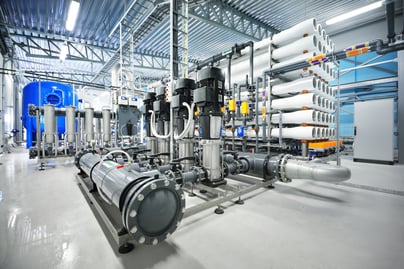
Utility filtration refers to filtration systems designed to clean and condition fluids used in support roles across manufacturing and processing environments rather than final product filtration. These include:


Utility fluids such as compressed air, steam, water and process gases are essential to industrial operations. Their quality directly affects product safety, equipment performance and regulatory compliance. Advanced utility filtration ensures contaminants are removed before they can compromise products or damage critical assets.

Effective utility filtration prevents contamination, improves product consistency, reduces maintenance costs, and supports regulatory compliance.


CLICK HERE TO READ MORE ON UTILITY FILTRATION SOLUTIONS 
 

Key Challenges in Coatings & Paint Filtration

In coatings and paint production, cartridge filtration provides essential particulate control to maintain product consistency, protect application equipment, and achieve high-quality final finishes. Throughout manufacturing and application processes, filters remove contaminants such as coagulated pigments, gels, fibres, and process debris that could otherwise compromise coating performance or visual appearance.

Across coatings and paint applications, cartridge filtration supports three key objectives:

    • Maintaining final finish quality: Removes contaminants that can cause surface blemishes, fisheyes, cratering, and inconsistent coating appearance
    • Protecting spray systems and application equipment: Prevents nozzle blockage and fouling within pumps, spray guns, and circulation systems
    • Ensuring process consistency across production batches: Controls particulate levels during mixing, transfer, and recirculation to improve repeatability and reduce waste

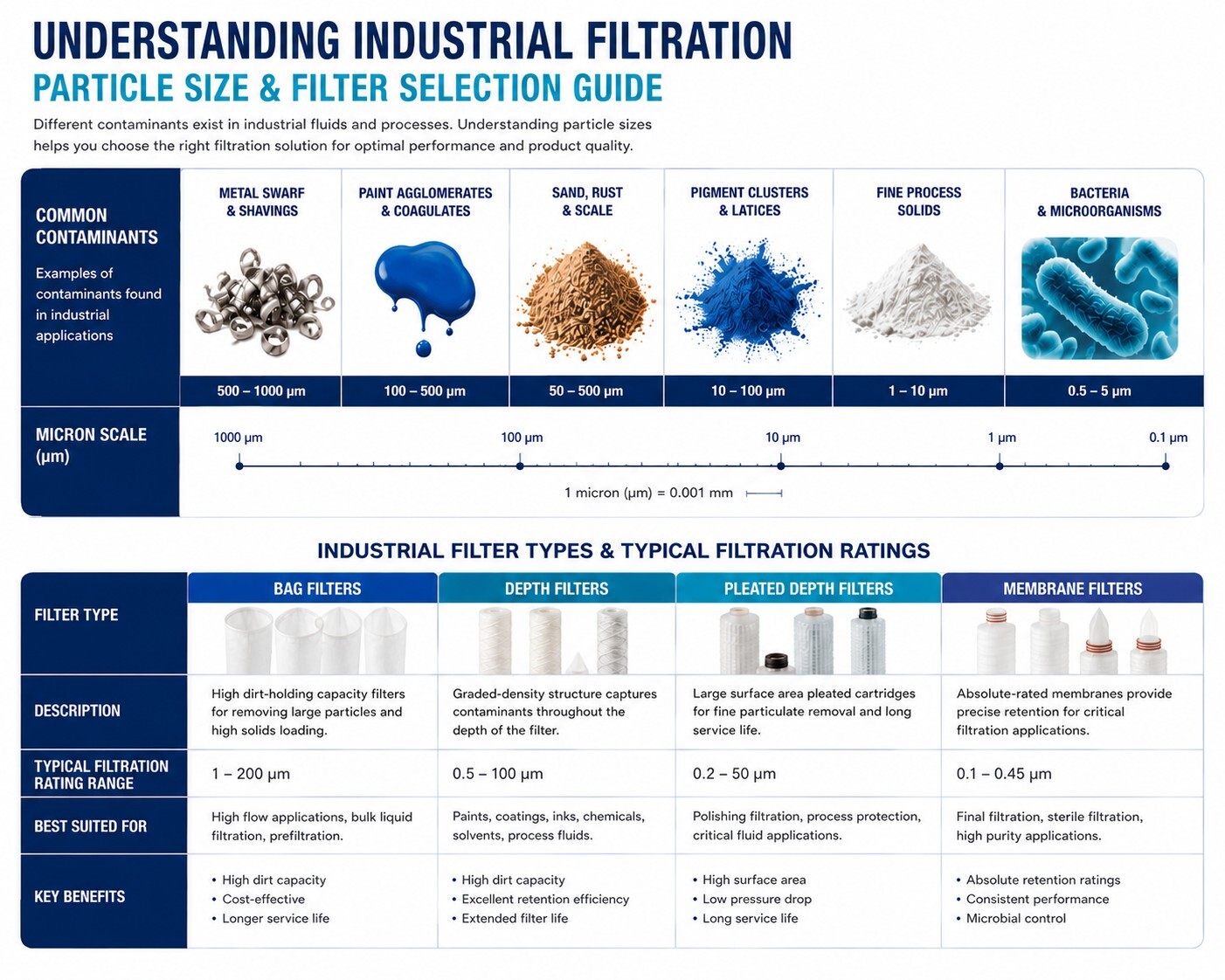
Different filtration technologies are used depending on coating chemistry, solids loading, and process stage. Depth and bag filters are commonly selected for removing gels and agglomerates due to their high dirt-holding capacity and tortuous flow paths, while finer pleated filters are often used for polishing stages and sensitive application systems. By integrating correctly specified filtration systems, coatings manufacturers can reduce defects, minimise downtime, and improve production efficiency across demanding industrial applications.

Surface Finish Defects: How Contamination Impacts Coating Quality

In coatings applications, even microscopic contamination can become highly visible once applied to a finished surface. Particles trapped within paint films can cause defects such as cratering, fisheyes, pinholes, streaking, and uneven texture, particularly in high-specification sectors such as automotive and industrial finishing. Coagulated pigments and gel particles are especially problematic because their deformable structure allows them to bypass poorly specified filtration systems. Effective filtration therefore focuses not only on nominal particle size but also on capturing soft contaminants before application.

Pigment Agglomerates & Gel Removal

Paints and coatings contain dispersed pigments and additives that can agglomerate during manufacture, storage, or thermal cycling. These agglomerates can vary significantly in size and shape, making them difficult to remove using simple surface filtration alone. Depth and bag filtration systems are commonly used because their layered media structures create tortuous flow paths capable of trapping irregular and deformable particles throughout the filter depth. This improves contaminant retention while maintaining practical flow rates for high-volume coating processes.

Spray System Protection & Nozzle Reliability

Modern coating systems rely on precision spray equipment operating with increasingly fine nozzle geometries to achieve controlled atomisation and uniform film build. Contamination within paint streams can obstruct nozzles, disrupt spray patterns, and lead to uneven coating thickness or overspray issues. Filtration positioned immediately before spray systems acts as a final polishing stage, ensuring contaminants generated during storage or circulation do not reach critical application equipment. In automated coating lines, this protection is essential for maintaining uptime and reducing servicing frequency.

Water-Based vs Solvent-Based Coatings: Material Compatibility Challenges

The chemistry of the coating has a major influence on filtration system design. Water-based paints are commonly filtered using polypropylene media due to its broad compatibility and cost-effectiveness, while solvent-based systems often require nylon or PTFE-based materials capable of withstanding aggressive solvent carriers. Incorrect material selection can lead to swelling, extractables, media degradation, or reduced filter life. Compatibility must therefore be evaluated alongside operating temperature, viscosity, and solvent concentration to ensure reliable long-term filtration performance.

Recirculation & Return Loop Filtration

Many coating systems continuously recirculate paint to maintain consistency and reduce waste during production. However, recirculation loops can also accumulate contaminants generated from tank walls, pumps, and process exposure. Installing filtration within return loops helps maintain stable particulate levels within mixing systems and prevents contamination build-up over time. This is particularly important in high-value coatings where batch consistency and colour stability are critical quality parameters.

Optimising Filter Life & Production Efficiency

Paint and coatings applications often involve high viscosities and variable particulate loading, making filter optimisation essential for controlling operational costs. Staged filtration systems are commonly used to improve efficiency, with coarse filters removing larger debris before finer polishing stages. Monitoring differential pressure across filters allows operators to identify optimal changeout points, balancing contaminant retention with flow stability and minimising unnecessary downtime or consumable usage.

Industrial Graphic

Talk to us today about your filtration requirements


  • Extensive product range
  • Best Price GUARANTEED!
  • Specialist support team with deep knowledge of liquid & gas applications
  • Reliable quality & delivery