



<img alt="" src="https://secure.smart-company-vision.com/267217.png" style="display:none;">

Dark Spirits Filtration

Protecting Flavour and Colour

The Steps in Dark Spirit Filtration

Dark Spirits

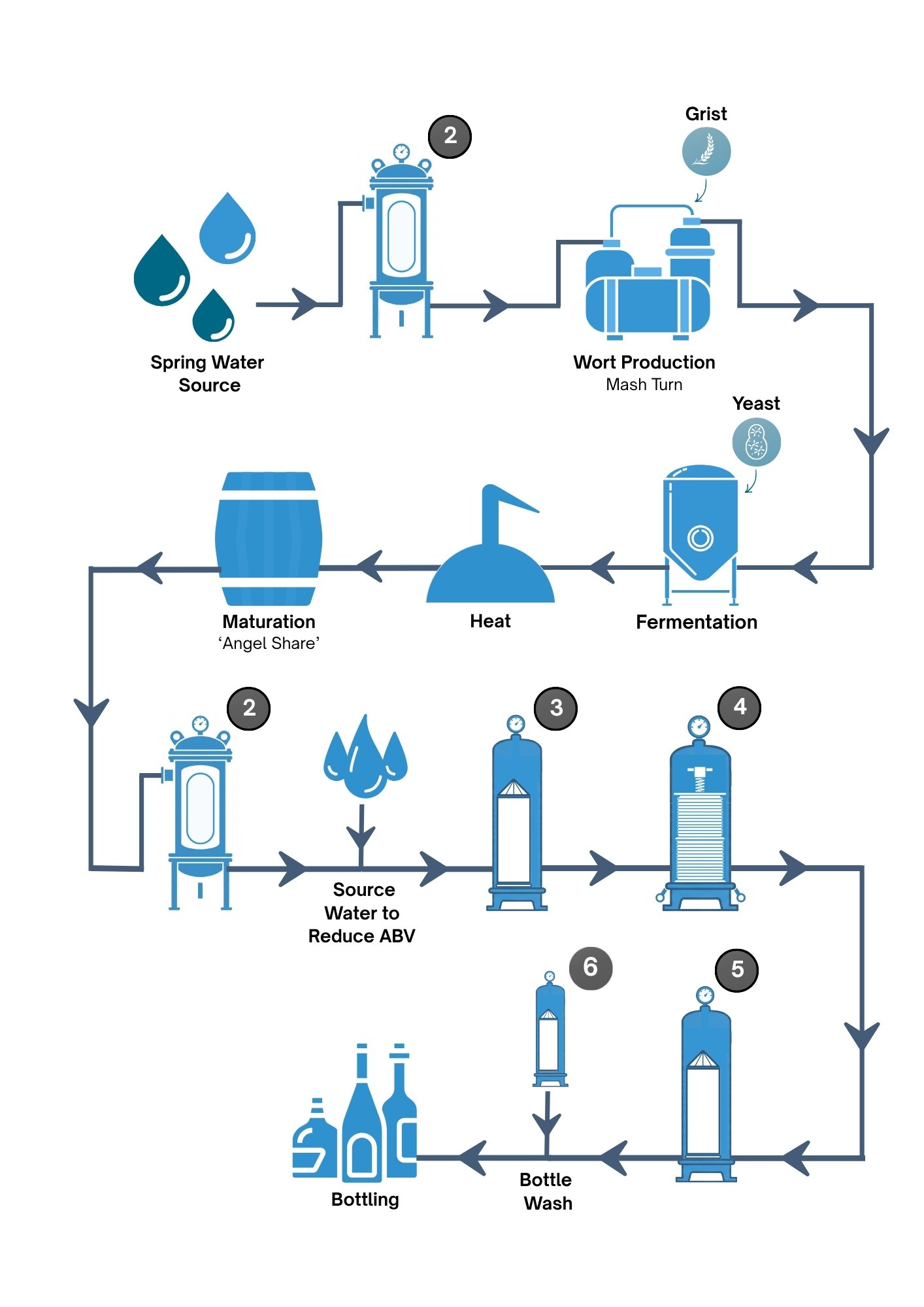
Incoming Water Supply

Water used within dark spirits production particularly for dilution, blending, and cask strength adjustment must meet high quality and consistency standards. Incoming potable water is therefore subjected to pre-treatment filtration to remove suspended solids, particulates, and distribution-related contaminants such as rust, scale, or organic matter.

This initial filtration step is critical in protecting downstream processes, maintaining flavour integrity, and ensuring consistent ABV adjustment without introducing unwanted impurities. Depth filtration is typically used at this stage to provide reliable particulate removal and safeguard both product quality and processing equipment.

Recommended Products:

Char Removal – Disgorging

Following maturation in oak casks, dark spirits such as whisky, rum, and brandy often contain residual barrel char, wood particles, and sediment introduced during ageing. During disgorging, these solids must be effectively removed to protect downstream processes and maintain product clarity.

Depth filtration is typically applied at this stage to capture larger particulates while preserving the colour, flavour, and mouthfeel developed during maturation. This step is essential in preventing fouling of finer downstream filters and ensuring consistent processing performance.

Recommended Products:

Post Blending & ABV Reduction

After maturation, dark spirits are often blended and reduced to bottling strength using filtered water. This stage can introduce variability, including haze-forming compounds or particulate matter from different batches or cask sources.

Filtration at this point ensures a uniform and stable product by removing fine particulates and protecting the integrity of the final blend. It also helps maintain consistency in appearance and flavour across batches, particularly important for large-scale production.

Recommended Products:

Chill Haze Removal

Dark spirits can develop haze when exposed to lower temperatures due to the presence of fatty acids, esters, and other compounds extracted during maturation. Chill haze removal is a critical step to ensure clarity and visual stability, particularly for products intended for global distribution.

Fine filtration is used to remove these haze-forming components without stripping desirable flavour or colour. This process helps maintain product appearance while preserving the character developed during ageing.

Recommended Products:


Trap/Guard Filtration Prior to Bottling

Before final filtration, a guard or trap filtration stage is implemented to remove any remaining particulates and protect the final membrane filters from premature fouling. This is particularly important in dark spirits where residual fines or colour bodies may still be present.

This stage ensures consistent flow rates, extends the life of final filters, and improves overall process efficiency, reducing downtime and operational costs.

Recommended Products:


Bottle Washing Prior to Filling

Prior to filling, bottles are rinsed to remove particulates such as dust, glass fragments, or contaminants introduced during storage and handling. The water or air used in this process must be filtered to prevent recontamination of the final product.

Filtration at this stage ensures that packaging materials meet hygiene standards and do not compromise the clarity or quality of the spirit during filling.

Recommended Products:

The dark spirits category, including whisky, rum, and brandy, is experiencing a wave of innovation, from new cask finishes and flavour profiles to evolving maturation techniques. While ageing remains central to character development, filtration and stabilisation processes are increasingly important in preparing these spirits for market. These steps help manage haze, maintain clarity, and ensure consistency without compromising the depth and complexity developed during maturation. For producers, the challenge lies in balancing tradition with modern processing to deliver a uniform and high-quality product, whether for small-batch releases or large-scale production, ensuring each bottle meets the expected standard of flavour, appearance, and stability. 

Speak to an Expert

+44(0) 203 750 8060

Drop Us an Email

enquiries@porefiltration.co.uk


Dark Spirit Filtration Resources and Support

Why does chill haze form in whisky during filtration and dilution?

Chill haze in dark spirits occurs when fatty acids, esters, and wood-derived compounds precipitate at lower temperatures or when water is added. This can lead to cloudy spirits in the bottle, which impacts visual quality. Using chill-stable filtration techniques with depth cartridge filters helps remove haze-forming compounds without stripping desirable flavour or aroma.

How can I remove haze without damaging flavour or mouthfeel?

Dark spirits are sensitive to aggressive filtration, which can remove flavour-active compounds. Effective clarification requires staged filtration: coarse removal of solids with depth cartridges followed by polishing filters for colloids. This preserves aroma, body, and mouthfeel while ensuring clarity.

Why am I seeing particles or sediment after maturation?

Aged spirits often contain precipitated tannins, lignin’s, and barrel char particles. These need to be removed to prevent haze or sediment in the final bottled product. Using coarse depth filtration or lenticular cartridges before polishing ensures stability and clarity.

Is chill filtration always necessary?

Chill filtration is not always required, but it is highly recommended to prevent visible haze or sediment in bottled whisky, rum, or brandy, particularly for cold storage or export. The right chill filtration system balances clarity, mouthfeel, and consumer expectations.

How can chill filtration improve clarity in aged spirits?

Chill filtration removes colloidal haze-forming compounds such as long-chain fatty acids, esters, and proteins that precipitate at low temperatures. By combining depth cartridge pre-filtration with membrane polishing filters, producers achieve bright, visually appealing spirits without compromising aroma or mouthfeel. This is particularly useful for premium aged spirits where clarity affects market perception.

Commitment to quality is of paramount importance at PoreFiltration.  We supply filtration solutions that help customersPore_Filter_9001_Logo protect their processes, meet regulatory requirements, and deliver consistent, high-quality finished products across industrial, food & beverage, chemical, and water applications. As such we have been certified to ISO9001, providing a quality management system that covers the entire organization for clarity and transparency in our processes.

Our Quality Commitment

Every PoreFiltration product is supplied with one clear objective: to perform reliably, consistently, and exactly as intended.

We are committed to:

  • Meeting customer, regulatory, and application-specific requirements
  • Supplying filtration products with consistent, repeatable performance
  • Providing clear specifications, traceability, and technical guidance
  • Continually improving our products, processes, and quality systems

If you need any more information on any aspect of quality management and assurance, then give us a call or send us an email - we’d be more than happy to help.

PoreFiltration is committed to supplying filtration products that support the highest standards of food safety and product integrity across the food and beverage industry. Our solutions are selected to meet the stringent requirements of manufacturers operating under globally recognised standards such as BRCGS Global Standard for Food Safety, as well as wider frameworks including HACCP, FDA compliance, and EU food contact regulations.

Our range of cartridge filters, bag filters, and associated housings are designed for use in food and beverage applications where hygiene, material traceability, and process reliability are critical. We work closely with leading manufacturers to ensure that all supplied filtration products are suitable for food contact applications and supported by appropriate documentation, including material certifications and conformity declarations where required.

PoreFiltration operates as a specialist distributor of industrial filtration products and components used within a wide range of processing environments. While we do not manufacture, process, store, or handle food products directly, we play a key role in supporting compliant and hygienic processing through the supply of high-quality filtration solutions.

FOOD SAFETY LOGO


Clean-In-Place (CIP) and Sterilise-In-Place (SIP) systems are critical to maintaining hygiene, product safety, and regulatory compliance in food, beverage, dairy, and pharmaceutical processing.

CIP enables the cleaning of pipelines, vesselSteams, filters, and process equipment without dismantling, using controlled cycles of detergents, temperature, and flow to remove product residues, biofilms, and contaminants.
SIP follows with high-temperature steam sterilisation to eliminate microorganisms and ensure systems are safe for production.

Effective CIP/SIP design ensures:

  • Reliable microbial control
  • Reduced downtime and manual intervention
  • Protection of filtration systems and membranes
  • Consistent product quality and audit readiness

When properly engineered, CIP and SIP are not just cleaning steps they are integral to process performance and operational efficiency.

Read more in our blog: How CIP & SIP Can Extend Cartridge Filter Lifespan.

What Is Utility Filtration?                    Municipal RO system

Utility filtration refers to filtration systems designed to clean and condition fluids used in support roles across manufacturing and processing environments rather than final product filtration. These include:


Utility fluids such as compressed air, steam, water and process gases are essential to industrial operations. Their quality directly affects product safety, equipment performance and regulatory compliance. Advanced utility filtration ensures contaminants are removed before they can compromise products or damage critical assets.

Effective utility filtration prevents contamination, improves product consistency, reduces maintenance costs, and supports regulatory compliance.


CLICK HERE TO READ MORE ON UTILITY FILTRATION SOLUTIONS 


The Role of Cartridge Filtration in Dark Spirits Production

For distillers, the primary objective is consistent product quality — clarity, stability, and flavour integrity — regardless of batch variation, maturation conditions, or production scale. Cartridge filtration plays a critical role in achieving this by removing contaminants and preventing their ingress throughout the spirits production process.

From craft distilleries to large-scale operations, filtration is applied across three key areas:

  • Preventing contamination entering via utilities and ingredients (water for dilution, gases, and processing aids)
  • Controlling contamination generated during processing (e.g. barrel char, wood particles, precipitated compounds, and maturation residues)
  • Removing haze-forming compounds and particulates prior to bottling
(chill filtration and final polishing for product clarity and stability)

While the principles remain consistent, the complexity of aged spirits introduces additional challenges. Variability in raw materials, barrel ageing, and environmental conditions means filtration systems must be both robust and carefully controlled. Larger distilleries typically prioritise high throughput and process efficiency, using multi-stage cartridge filtration systems, while smaller producers often focus on gentle, selective filtration to preserve the spirit’s character, mouthfeel, and aroma.

Managing Variability: Batch-to-Batch Filterability

Dark spirits present unique challenges due to variations in maturation, cask type, char level, and ageing time. Differences in base spirits, molasses, botanical extracts, or barrel influences can all affect filterability.

For distillers, this can lead to:

  • Fluctuating differential pressures
  • Reduced filter life
  • Increased operational costs

Cartridge filtration systems must be able to handle a wide range of feed conditions efficiently. This is particularly important for:

  • Craft distilleries experimenting with limited-edition cask finishes, spiced rums, or fruit-infused brandies
  • Large-scale producers aiming for consistency in whisky, dark rum, or aged brandy across multiple batches
Utility Filtration: Water, Air, CO₂ & Steam

Water, compressed air, CO₂, and steam are essential in dark spirits production, affecting dilution, infusion, and bottling processes.

Key applications include:

  • Water filtration for blending, proofing, and cask dilution
  • Sterile air for tank blanketing, distillation heads, and bottling environments
  • CO₂ filtration for bottling or infused spirit carbonation
  • Steam filtration for extraction of botanicals, heating mash, or infusion processes

Depth and membrane filtration remove particulates, oils, moisture, and microbial contamination, protecting both product and equipment.

Impact by distillery scale:

  • Craft producers: Compact, flexible systems suited for small-batch experimentation with cask finishes or botanicals
  • Regional producers: Ensure consistent quality across multiple small- to mid-size batches
  • Large producers: High-throughput, validated systems to meet strict regulatory and quality requirements 
Guard Filtration: Protecting the Core Process

After distillation, blending, or maturation, dark spirits can contain residual solids, barrel char, or haze-forming compounds. Trap filtration acts as a protective step, typically using:

These filters are chosen for:

  • High dirt-holding capacity
  • Resistance to CIP/SIP procedures
  • Reliable, repeatable performance

Why it matters:

  • Protects final membrane filters from premature fouling
  • Maintains consistent flow rates
  • Improves overall filtration efficiency

For large-scale producers, this stage is vital for uninterrupted production, while craft distilleries rely on it to maintain clarity, colour, and flavour integrity without unnecessary product loss.

Final Filtration: Stabilisation Without Compromise

Before bottling, dark spirits must be stabilised to remove particulates, haze, or microorganisms that could affect appearance, taste, or shelf life.

Membrane filtration is commonly used, often with:

These provide:

  • Reliable particle and microbial retention
  • High flow rates
  • Compatibility with CIP/SIP regimes

Prefiltration using polypropylene or glass fibre combined with asymmetric PES membranes extends filter life and enhances efficiency.

Scale considerations:

  • Craft distilleries: Preserve complex flavours from oak casks, spices, botanicals, or fruit infusions
  • Large distilleries: Ensure consistent control over sediment, char particles, and colour for high-volume whisky, rum, or brandy

Membrane filtration allows distillers to maintain the full character of the spirit while achieving clarity and stability, widely accepted as a complement or alternative to heat or cold stabilization.

Filtration as a Strategic Tool in Dark Spirits Production

Across all distillery sizes, filtration is more than a processing step — it is a critical control point that impacts:

  • Product consistency, colour, and clarity
  • Retention of aroma, flavour, and mouthfeel
  • Shelf life and stability
  • Equipment protection
  • Operational efficiency

Whether producing small-batch aged whisky, spiced rum, or large-scale brandy, the right cartridge filtration strategy enables distillers to manage variability, protect quality, and confidently scale production without compromising the rich character of their spirits.

What our customers say ...   


Very quick response from the team at PoreFiltration. Great communication throughout. Very helpful in establishing the correct product for our application, and worked closely with us to get the product to us in order that we could meet a tight deadline. Excellent service all round :) 

Steven Sweeney


Always great products and service. The first people I call whenever I have any issues filtering my products!"  

Ben Carmichael

Talk to us today about your filtration requirements


  • Extensive product range
  • Best Price GUARANTEED!
  • Specialist support team with deep knowledge of liquid & gas applications
  • Reliable quality & delivery