



<img alt="" src="https://secure.smart-company-vision.com/267217.png" style="display:none;">

Chemicals and Solvents

Filtration Solutions for Chemicals and Solvent Processing Applications

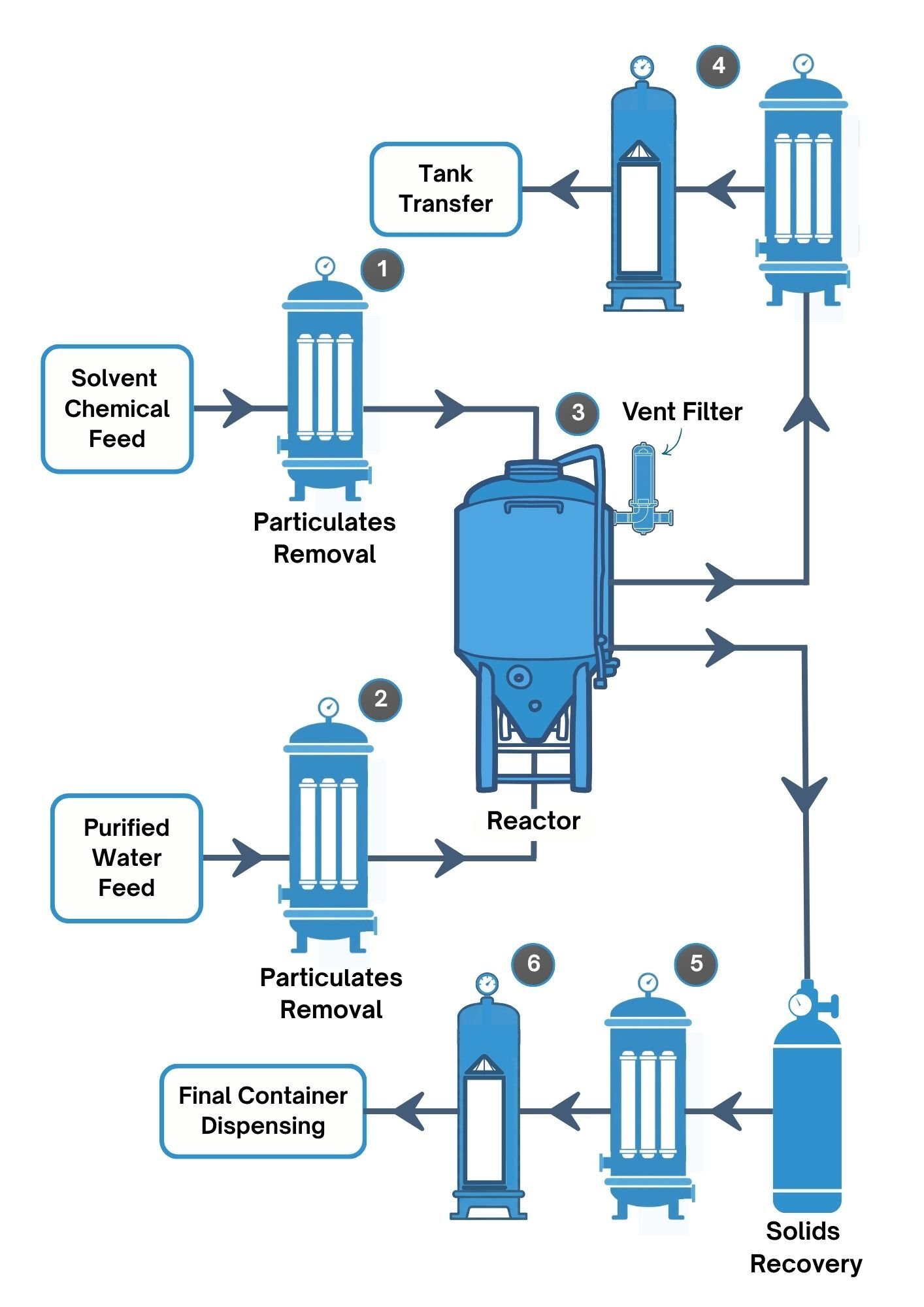
Filtration Steps in Chemical & Solvent Manufacture

Chemical Production Final

Solvent & Chemical Feed Filtration

Incoming solvents and chemicals are filtered to remove particulate contamination introduced during manufacture, storage or transportation.

This initial solvent filtration stage typically uses bag filters or cartridge filters to protect downstream equipment, improve batch consistency and prevent costly product quality issues.

Recommended Products:


Purified Water Feed Filtration

Purified water used within chemical manufacturing processes is filtered to remove suspended particles, carbon fines and distribution system contamination before entering the reactor.

Effective water filtration helps maintain product quality, process efficiency and consistent batch performance.


Recommended Products:

Reactor Vent Filtration

The reactor vent filter allows air displacement during filling, emptying and temperature changes while preventing dust, moisture and airborne contamination from entering the vessel.

PTFE membrane vent filters are commonly used in solvent applications due to their excellent chemical resistance and compatibility with aggressive vapours.


Recommended Products:

  •  

Solids Recovery & Product Clarification

Following the reaction process, filtration is used for solids recovery, catalyst removal, activated carbon removal and clarification of chemical solutions.

This stage is critical for separating unwanted particulate while maximising product yield and preparing the liquid stream for final polishing filtration.

Tank Transfer & Product Polishing Filtration

During tank transfer, the product undergoes a polishing filtration stage to remove fine particulate contamination before storage, blending or filling. Effective tank transfer filtration improves product quality, protects downstream equipment and helps manufacturers achieve the cleanliness standards required for chemicals, solvents, coatings, inks and speciality process fluids.

Recommended Products:

  •  

Solvent Polishing Filtration

A polishing filtration stage removes fine particulate and process contaminants that remain after bulk solids removal.

This intermediate filtration step reduces loading on the final filter cartridges and helps achieve the cleanliness levels required for coatings, inks, pharmaceuticals and speciality chemicals.

Recommended Products:

  •  

Final Chemical & Solvent Filtration

The final filtration stage provides precise particulate removal before product storage, transfer or filling.

Depending on the solvent and chemical compatibility requirements, PTFE, Nylon, PVDF or Polypropylene filter cartridges may be selected to ensure product purity, remove fine contamination and meet final quality specifications.

Recommended Products:

Filtration plays a critical role across chemical and solvent processing industries, where product purity, process consistency, and equipment protection are essential to operational performance. From pharmaceutical intermediates and coatings to inks, resins, and bulk chemicals, contaminants can be introduced during manufacture, storage, transport, or processing stages. Even small levels of particulate contamination can lead to product rejection, batch inconsistency, or downstream equipment fouling. Chemical and solvent filtration systems are designed to remove suspended solids, carbon fines, gels, and other process contaminants while maintaining compatibility with aggressive fluids and challenging operating conditions. As production standards become more demanding, effective filtration has become essential for protecting product quality, improving process reliability, and supporting safe chemical handling across industrial applications. 

Speak to an Expert

+44(0) 203 750 8060

Drop Us an Email

enquiries@porefiltration.co.uk


Chemical & Solvent Filtration Resources and Support

Why is filtration important in chemical and solvent processing?

Filtration removes particulate contamination that can affect product quality, process consistency, and downstream equipment performance. It also helps reduce waste and batch rejection.

What types of contaminants are commonly removed from solvents?

Typical contaminants include carbon fines, rust, gels, catalyst residues, and particulate introduced during manufacturing, storage, or transfer processes.

Which filter materials are suitable for aggressive solvents and chemicals?

PTFE, PVDF, Nylon, and polypropylene are commonly used depending on the chemical compatibility, temperature, and process conditions involved.

Can filtration improve solvent recovery and reuse?

Yes—filtration removes contaminants that would otherwise reduce solvent quality, helping extend solvent life and support recovery or regeneration processes.

What micron rating is typically used in solvent filtration?

Micron ratings vary depending on the application, ranging from coarse prefiltration to fine membrane filtration for polishing or sterile processing applications.

Commitment to quality is of paramount importance at PoreFiltration.  We supply filtration solutions that help customersPore_Filter_9001_Logo protect their processes, meet regulatory requirements, and deliver consistent, high-quality finished products across industrial, food & beverage, chemical, and water applications. As such we have been certified to ISO9001, providing a quality management system that covers the entire organization for clarity and transparency in our processes.

Our Quality Commitment

Every PoreFiltration product is supplied with one clear objective: to perform reliably, consistently, and exactly as intended.

We are committed to:

  • Meeting customer, regulatory, and application-specific requirements
  • Supplying filtration products with consistent, repeatable performance
  • Providing clear specifications, traceability, and technical guidance
  • Continually improving our products, processes, and quality systems

If you need any more information on any aspect of quality management and assurance, then give us a call or send us an email - we’d be more than happy to help.

Clean-In-Place (CIP) and Sterilise-In-Place (SIP) systems are critical to maintaining hygiene, product safety, and regulatory compliance in food, beverage, dairy, and pharmaceutical processing.

CIP enables the cleaning of pipelines, vesselSteams, filters, and process equipment without dismantling, using controlled cycles of detergents, temperature, and flow to remove product residues, biofilms, and contaminants.
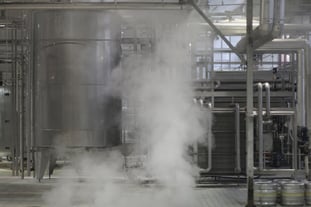
SIP follows with high-temperature steam sterilisation to eliminate microorganisms and ensure systems are safe for production.

Effective CIP/SIP design ensures:

  • Reliable microbial control
  • Reduced downtime and manual intervention
  • Protection of filtration systems and membranes
  • Consistent product quality and audit readiness

When properly engineered, CIP and SIP are not just cleaning steps they are integral to process performance and operational efficiency.

Read more in our blog: How CIP & SIP Can Extend Cartridge Filter Lifespan.

What Is Utility Filtration?                    Municipal RO system
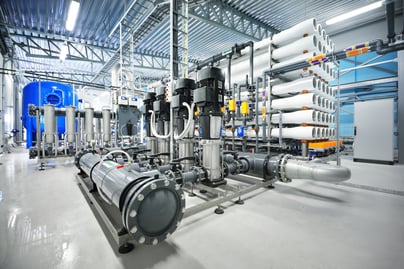
Utility filtration refers to filtration systems designed to clean and condition fluids used in support roles across manufacturing and processing environments rather than final product filtration. These include:


Utility fluids such as compressed air, steam, water and process gases are essential to industrial operations. Their quality directly affects product safety, equipment performance and regulatory compliance. Advanced utility filtration ensures contaminants are removed before they can compromise products or damage critical assets.

Effective utility filtration prevents contamination, improves product consistency, reduces maintenance costs, and supports regulatory compliance.


CLICK HERE TO READ MORE ON UTILITY FILTRATION SOLUTIONS 
 

The Role of Cartridge Filtration in Chemicals & Solvent Processing

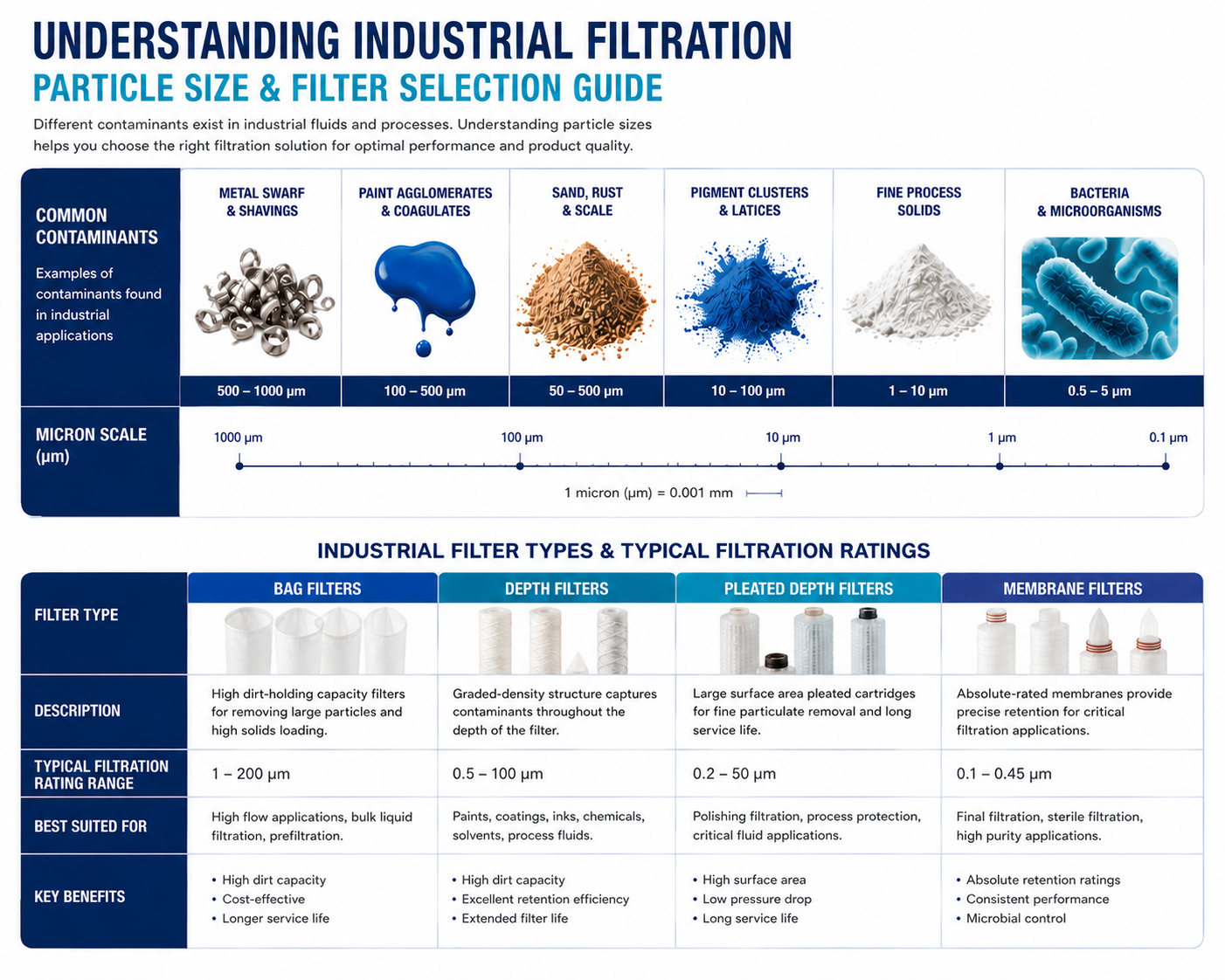
In chemical and solvent applications, cartridge filtration provides a controlled and efficient method of removing particulate contamination while maintaining compatibility with aggressive process fluids. Whether used in bulk chemical manufacture, API processing, coatings production, or solvent recovery systems, cartridge filters help maintain product purity and protect critical process equipment from fouling or damage.

Across chemicals and solvents applications, cartridge filtration supports three key objectives:

    • Removal of particulate and process contamination: Captures carbon fines, catalyst residues, gels, and suspended solids that can affect final product quality
    • Protection of downstream equipment and processes: Prevents contamination reaching pumps, spray nozzles, reactors, and sensitive process stages
    • Maintaining chemical compatibility and process safety: Utilises chemically resistant materials suitable for aggressive solvents, acids, and alkalis

Because chemical compatibility is critical in these environments, filter material selection plays a major role in system performance and reliability. PTFE membranes are widely used for aggressive solvents and caustics, while Nylon and polypropylene filters are commonly selected for broader industrial applications. By integrating correctly specified filtration systems, manufacturers can improve product consistency, reduce downtime, and support safer, more efficient processing operations.

Chemical Compatibility: Why Filter Material Selection Matters

In solvent and chemical processing, the compatibility of filtration materials is often more critical than the filtration rating itself. Aggressive solvents can cause swelling, embrittlement, or degradation of unsuitable polymers, leading to premature failure and contamination risks. PTFE membranes are commonly selected for highly aggressive solvents and extreme pH conditions due to their exceptional chemical resistance, while Nylon, PVDF, and polypropylene offer broader compatibility for less aggressive applications. Material selection must also consider temperature, solvent concentration, and cleaning regimes to ensure long-term operational stability.

Particulate Removal: Managing Carbon Fines, Gels & Catalyst Residues

Many chemical processes intentionally introduce solids during production, including activated carbon for colour removal or catalysts used in synthesis stages. Once these stages are complete, the solids must be fully removed to prevent downstream contamination and product instability. Filtration systems are designed to capture a wide range of particle sizes, from large agglomerates to sub-micron fines, ensuring product clarity and protecting subsequent processing steps. In pharmaceutical and fine chemical manufacture, even trace contamination can result in failed quality checks or costly batch reprocessing.

Process Safety & Hazardous Solvent Handling

Many solvents used in industrial processing are flammable, volatile, or hazardous to operators, making filtration system design a critical safety consideration. Factors such as flash point, vapour pressure, operating temperature, and pressure containment must all be considered when specifying housings and filter materials. Stainless steel housings are commonly used due to their broad chemical resistance and structural integrity, while fluoropolymer-lined systems may be required for highly aggressive media. Compliance with pressure equipment and hazardous area requirements is often essential in solvent filtration installations.

Filtration Staging: From Coarse Prefiltration to Final Polishing

Chemical and solvent processes often require multiple stages of filtration to optimise efficiency and filter life. Coarse filtration removes larger particles and protects downstream filters, while depth and membrane filters provide finer polishing stages for final product quality. In high-purity applications such as pharmaceutical solvents or electronics chemicals, sterilising-grade membrane filtration may also be used to control microbial or ultra-fine particulate contamination. Correct staging helps reduce operational costs while maintaining stable process performance.

Solvent Recovery & Sustainability Benefits

Filtration is increasingly used to support solvent recovery and reuse strategies, particularly as manufacturers focus on sustainability and cost reduction. By removing particulate contamination and degradation products, filtration extends solvent life and improves the efficiency of regeneration systems. Advanced membrane technologies such as organic solvent nanofiltration (OSN) are also being adopted in some sectors to enable selective separation and solvent recovery with significantly lower energy consumption than traditional distillation processes.

Operational Reliability & Filter Changeout Strategies

Contaminant loading in chemical processing can vary significantly depending on batch conditions, raw material quality, and production stages. Monitoring differential pressure across filters helps operators determine when cartridges require replacement, reducing the risk of restricted flow or contamination breakthrough. Selecting the correct filter geometry, media structure, and dirt-holding capacity is essential for maintaining stable operation and minimising downtime in continuous manufacturing environments.


ChatGPT Image Jun 4, 2026, 09_55_58 AM

Talk to us today about your filtration requirements


  • Extensive product range
  • Best Price GUARANTEED!
  • Specialist support team with deep knowledge of liquid & gas applications
  • Reliable quality & delivery