



Pure & Purified Water Filtration
Filtration Steps in Pure Water Manufacture

Raw Water Filtration
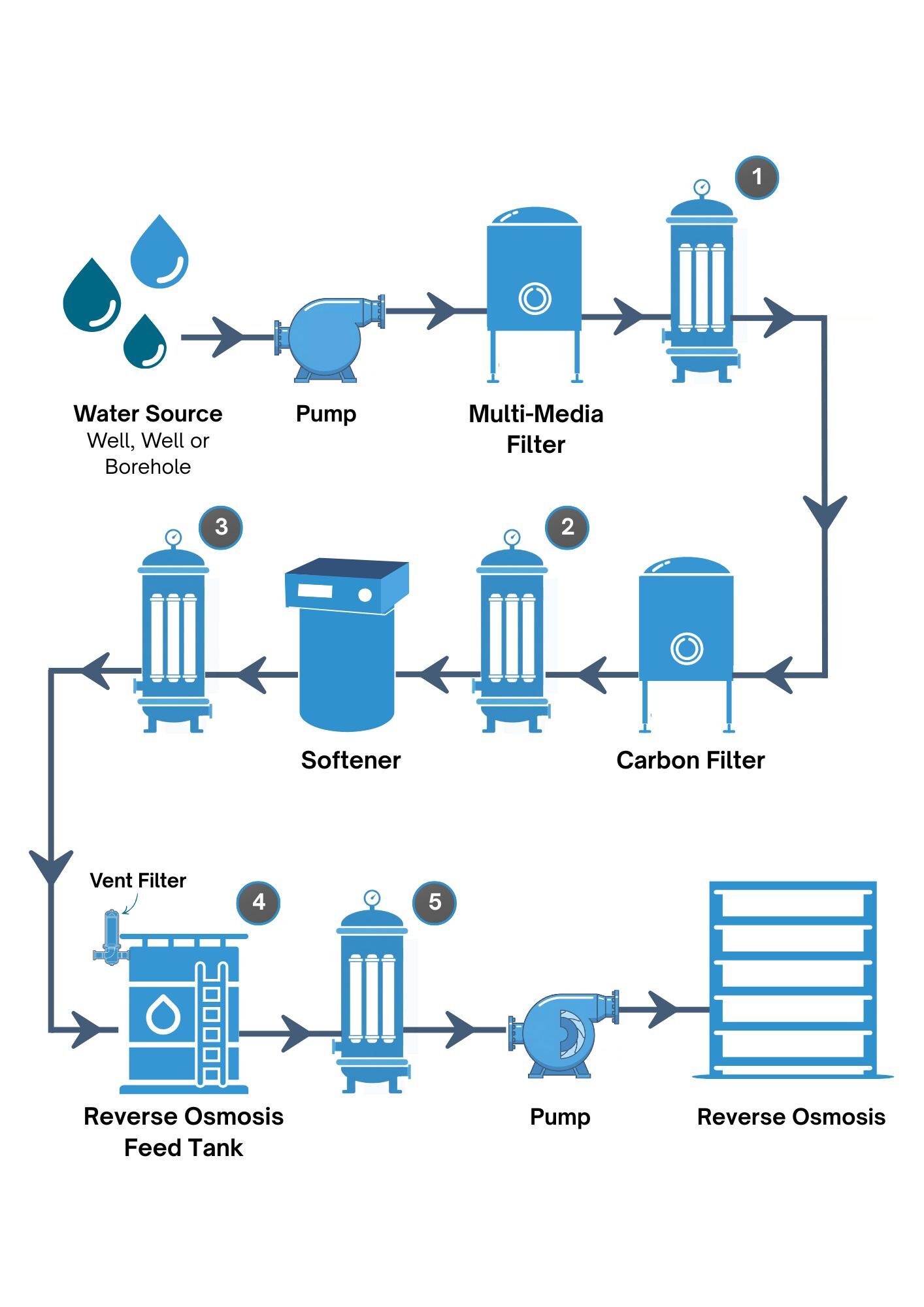
Raw water from a well, borehole, or other source is pumped through a multi-media filtration system, where suspended solids such as sand, silt, rust, and other particulates are removed. This initial treatment stage improves water clarity and reduces the solids load on downstream purification equipment.
Cartridge filters are used remove any residual particulate or fines originating from multimedia filter preventing downstream contamination.
Recomended Products
PurePore PP pleated depth filters
Water Conditioning & Organic Removal
The water then flows through an activated carbon filter, which reduces chlorine, organic compounds, tastes, odours, and other contaminants that could affect water quality or damage membrane systems.
Cartridge filters are used remove any residual particulate or fines originating from carbon filter preventing downstream contamination.
Recomended Products
PurePore PP pleated depth filters
Post water softening filter
The water next passes through a water softener, where hardness minerals such as calcium and magnesium are removed. Softening helps prevent scale formation in downstream reverse osmosis equipment.
Similar to the previous 2 steps cartridge filters act in a guard/trap duty removing any residual particulate or fines originating from water softener preventing downstream contamination.
Recomended Products
PurePore PP pleated depth filters
Vent filter RO Feed Water Tank
The RO feed/storage tank is fitted with a vent filter that allows the tank to breathe as water levels change. As water enters or leaves the vessel, air passes through the vent filter, preventing airborne particles and microorganisms from entering the tank while maintaining atmospheric pressure inside the vessel.
This helps preserve water quality during storage and supports hygienic operation of the overall system.
Recommended products:
SurePore PTFE Membrane Sterile Gas Filters
RO Prefiltration
Water is pumped from the RO feed tank to the reverse osmosis (RO) system, where high pressure (40 bar plus) forces water through semi-permeable membranes. The membranes reject dissolved salts, minerals, bacteria, organic contaminants, and other impurities, allowing purified water to pass through while concentrating contaminants into a reject stream.
RO is typically the primary purification stage and is responsible for the significant reduction of dissolved solids and conductivityallowing us to consider the water pure and this is fed into a pure water storage tamk for use or further treatment.
A final 5 micron trap filter is placed before the RO pump to provide a final gaurantee ensuring SDI levels are below manufacturers recommendations.
Recomended products:
PurePore PP pleated depth filters
PurePore GF pleated depth filters
Filtration Steps in Purified Water Manufacture

Post Deioniser Filter
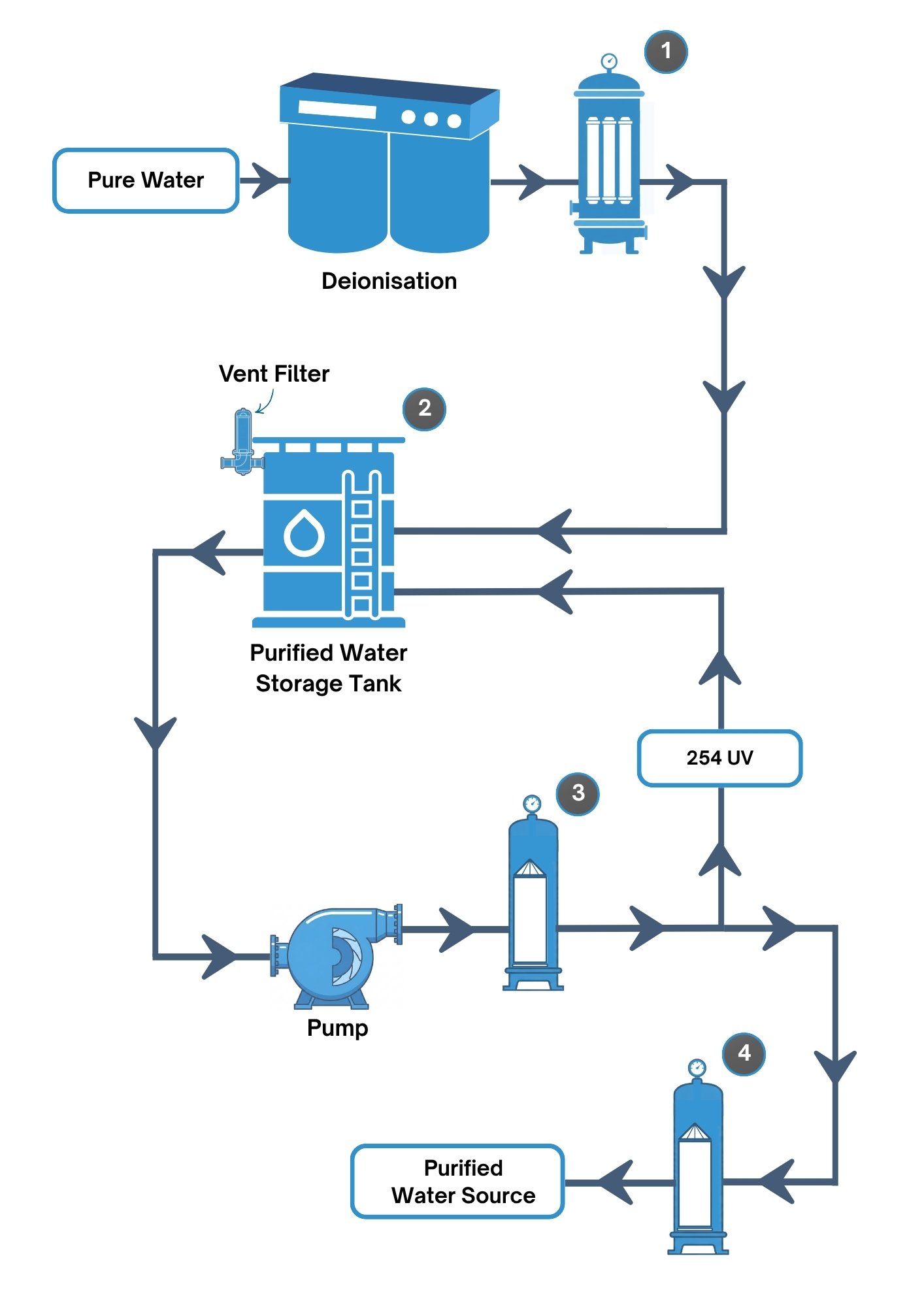
After reverse osmosis the water next passes through a dioniser, Post-deioniser cartridge filtration provides a critical polishing/trap step in purified water treatment systems, ensuring that water leaving the deionisation (DI) unit meets the cleanliness requirements of downstream processes.
While deionisers effectively remove dissolved ions and minerals, they do not prevent the release of resin fines, particulate contamination, or microorganisms that may originate within the treatment system. Installing cartridge filters downstream of the deioniser captures these contaminants before they enter storage tanks, distribution loops, or points of use.
Due to water quality only polypropylene filters can be used in these applications.
Recomended Products
PurePore PP pleated depth filters
Vent filter Purified Water Tank
The RO feed/storage tank is fitted with a vent filter that allows the tank to breathe as water levels change. As water enters or leaves the vessel, air passes through the vent filter, preventing airborne particles and microorganisms from entering the tank while maintaining atmospheric pressure inside the vessel.
This helps preserve water quality during storage and supports hygienic operation of the overall system.
Recommended products:
SurePore PTFE Membrane Sterile Gas Filters
UV Prefiltration with Cartridge Filters
Cartridge filters are commonly installed upstream of UV disinfection systems to provide effective UV prefiltration and ensure reliable microbial control. By removing suspended solids, turbidity, and particulate contamination from the water stream, cartridge filtration helps prevent light scattering and shadowing effects that can reduce UV effectiveness. Without adequate prefiltration, microorganisms may be shielded from UV exposure, compromising the disinfection process.
In municipal water treatment, process water applications, and industrial water systems, cartridge filters improve UV transmittance by reducing the particulate load entering the UV reactor. This allows the UV system to deliver the required dose for effective microbial inactivation while maintaining consistent performance.
Cartridge filtration also helps protect UV equipment by reducing fouling of quartz sleeves, lowering maintenance requirements, and extending system operating efficiency. The result is a more reliable UV disinfection process, improved water quality, and enhanced protection against microbiological contamination.
Recommended Products:
Point-of-Use (POU) Sterile Filtration for Purified Water Systems
Point-of-use (POU) cartridge filters provide the final level of protection within purified water treatment systems, ensuring microbiologically safe water is delivered exactly where it is required. Typically incorporating a sterilizing-grade membrane filter, these cartridge filters are installed at critical points of use to remove bacteria and other microorganisms that may be present in the distribution system, helping to maintain water quality up to the point of consumption or process use.
In pharmaceutical, healthcare, food and beverage, laboratory, and high-purity industrial applications, POU sterile filtration acts as a critical control point by preventing downstream contamination and safeguarding product quality. Sterilizing-grade membrane cartridge filters provide a validated barrier to microbial contamination while maintaining the flow rates required by the application.
By ensuring the consistent delivery of microbiologically controlled water, POU cartridge filtration helps support regulatory compliance, protect sensitive processes, and maintain the integrity of purified water systems.
Recommended Products:
Pure and ultrapure water systems are essential across industries where contamination control, consistency, and precision are critical from pharmaceuticals and laboratories to electronics manufacturing and healthcare. These systems are designed to remove dissolved salts, organics, particulates, microorganisms, and even gases, producing water that is as close as possible to pure H₂O.
As purity requirements increase, so does the importance of filtration. Multi-stage treatment processes — including reverse osmosis, deionisation, and UV rely heavily on effective pre-treatment and polishing filtration to maintain system performance and prevent contamination.
For operators, the challenge lies in maintaining ultra-low contaminant levels while preventing recontamination, ensuring consistent water quality whether for critical laboratory analysis or high-specification manufacturing processes.
Speak to an Expert
+44(0) 203 750 8060
Drop Us an Email
enquiries@porefiltration.co.uk
Pure & Ultrapure Water Filtration Resources and Support
Why is filtration important in ultrapure water systems?
Even trace levels of particles, bacteria, or organics can compromise sensitive applications such as pharmaceuticals or microelectronics. Cartridge filtration is critical at multiple stages to remove particulates, protect downstream technologies, and prevent contamination from entering or re-entering the system.
What causes contamination in pure water systems?
Contamination can originate from feed water, system components, storage tanks, or distribution loops. Common issues include particulate ingress, bacterial growth, and dissolved organics, all of which can impact water quality and system performance if not effectively controlled.
How is ultrapure water produced?
Ultrapure water is typically produced through a multi-stage process including pre-treatment, reverse osmosis, deionisation or electrodeionisation, UV treatment, and final polishing. Each stage progressively removes different types of contaminants to achieve extremely high purity levels.
What industries require ultrapure water?
Ultrapure water is used in industries where even minimal contamination can affect results or product quality, including semiconductor manufacturing, pharmaceuticals, healthcare, and laboratory research.
How can I maintain consistent pure water quality?
Maintaining consistent quality requires a combination of effective pre-filtration, final polishing filtration, and system design to prevent contamination throughout the process, including storage and distribution. Regular monitoring and correct filter selection are key to ensuring stable performance.
Pure & Ultrapure Water Blogs:
- Why Your RO System is Fouling Faster than Expected: How Better Filtration Protects Membrane Performance
- When it Comes to Water Quality, Think Cartridge Filtration.
- Why Your RO System is Fouling Faster than Expected: How Better Filtration Protects Membrane Performance
And here’s some of our most popular blogs on Water filtration:
- Cartridge Filtration for Process & Ultrapure Water: Challenges & Solution
- Cryptosporidium Control and Removal from Water
- Sidestream Filtration and the Benefits to Building Services.
- The Key Role of RO Membrane Protection in Industrial Water Treatment
- Cartridge Filtration: A Key Technology in Water Treatment Plants
- The Need for Data Centres to Reduce Water Consumption
- The Benefits & Options of HighFlow Cartridges
Commitment to quality is of paramount importance at PoreFiltration. We supply filtration solutions that help customers

protect their processes, meet regulatory requirements, and deliver consistent, high-quality finished products across industrial, food & beverage, chemical, and water applications. As such we have been certified to ISO9001, providing a quality management system that covers the entire organization for clarity and transparency in our processes.
Our Quality Commitment
Every PoreFiltration product is supplied with one clear objective: to perform reliably, consistently, and exactly as intended.
We are committed to:
- Meeting customer, regulatory, and application-specific requirements
- Supplying filtration products with consistent, repeatable performance
- Providing clear specifications, traceability, and technical guidance
- Continually improving our products, processes, and quality systems
If you need any more information on any aspect of quality management and assurance, then give us a call or send us an email - we’d be more than happy to help.
PoreFiltration is committed to supplying filtration products that support the highest standards of water quality, public health protection, and regulatory compliance across municipal, industrial, pharmaceutical, and process water applications. We recognise the critical role filtration plays in safeguarding water supplies, maintaining treatment performance, and supporting compliance with industry regulations and water quality standards.
Our filtration solutions are utilised throughout the water treatment cycle, from raw water intake and potable water production to process water, wastewater treatment, water reuse, and high-purity applications. By supporting the removal of suspended solids, particulate contamination, turbidity, and process-generated contaminants, our products help operators maintain reliable treatment performance while protecting critical downstream assets such as membranes, UV systems, pumps, and distribution infrastructure.
PoreFiltration supplies products suitable for a wide range of regulated water applications, including systems requiring compliance with Drinking Water Inspectorate (DWI) Regulation 31 requirements, potable water treatment processes, Cryptosporidium control strategies, pharmaceutical water systems, and industrial water treatment operations. We work closely with leading filtration manufacturers to ensure that supplied products are supported by appropriate technical documentation, material certifications, and approvals where required for their intended application.
Clean-In-Place (CIP) and Sterilise-In-Place (SIP) systems are critical to maintaining hygiene, product safety, and regulatory compliance in food, beverage, dairy, and pharmaceutical processing.
CIP enables the cleaning of pipelines, vessel
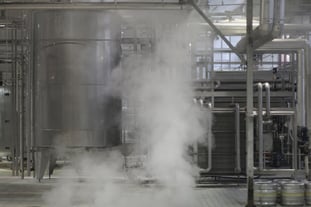
s, filters, and process equipment without dismantling, using controlled cycles of detergents, temperature, and flow to remove product residues, biofilms, and contaminants.
SIP follows with high-temperature steam sterilisation to eliminate microorganisms and ensure systems are safe for production.
Effective CIP/SIP design ensures:
- Reliable microbial control
- Reduced downtime and manual intervention
- Protection of filtration systems and membranes
- Consistent product quality and audit readiness
When properly engineered, CIP and SIP are not just cleaning steps they are integral to process performance and operational efficiency.
Read more in our blog: How CIP & SIP Can Extend Cartridge Filter Lifespan.
What Is Utility Filtration? 
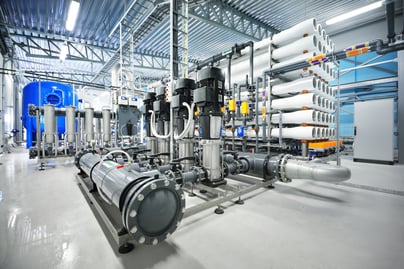
Utility filtration refers to filtration systems designed to clean and condition fluids used in support roles across manufacturing and processing environments rather than final product filtration. These include:
Utility fluids such as compressed air, steam, water and process gases are essential to industrial operations. Their quality directly affects product safety, equipment performance and regulatory compliance. Advanced utility filtration ensures contaminants are removed before they can compromise products or damage critical assets.
Effective utility filtration prevents contamination, improves product consistency, reduces maintenance costs, and supports regulatory compliance.
CLICK HERE TO READ MORE ON UTILITY FILTRATION SOLUTIONS
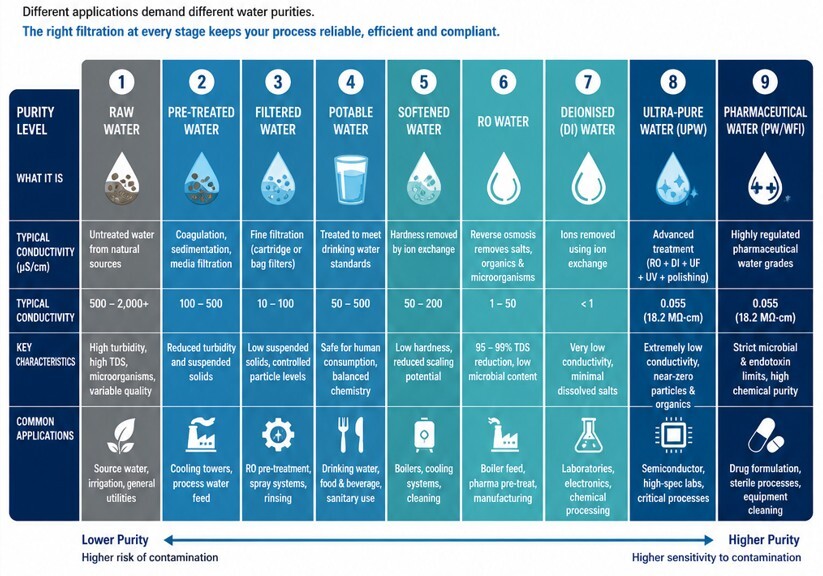
The Role of Cartridge Filtration in Pure & Ultrapure Water Systems
For pure and ultrapure water systems, the primary objective is consistent water quality low conductivity, minimal TOC, and complete particulate and microbial control — regardless of feed water variability or system demand. Cartridge filtration plays a critical role in achieving this by removing contaminants at each stage of the purification process and protecting downstream technologies.
From laboratory systems to large-scale industrial plants, filtration is applied across multiple key stages:
- Raw water pre-treatment using bag filters or coarse cartridge filters (25–100 micron) to remove larger suspended solids and protect downstream equipment
- Chlorine and organic removal through activated carbon filters, preventing damage to RO membranes and reducing total organic carbon (TOC) loading
- Primary fine filtration using depth filter cartridges (1–10 micron) to remove suspended solids and colloids, supporting stable RO and deionisation performance
- RO / EDI protection with high-efficiency depth or pleated cartridge filters, helping to maintain low SDI and prevent fouling of critical purification technologies
- Final polishing filtration using absolute-rated pleated or membrane cartridge filters (0.2–1 micron) to remove fine particulates and bacteria at the point of use
Cartridge filtration is therefore not just a pre-treatment step, but a critical control point throughout the entire purification process, directly influencing system performance, reliability, and final water quality.
In pure water and ultrapure water systems, feed water quality is the foundation of consistent performance. Variability in source water, whether mains, borehole, or surface supply introduces contaminants such as suspended solids, chlorine, organics, and microorganisms that must be removed before purification.
For operators, this can lead to:
- Damage to RO membranes and ion exchange resins from chlorine and oxidants
- Increased fouling of pure water systems and downstream equipment
- Elevated total organic carbon (TOC) levels
- Reduced efficiency and higher operating costs in water purification systems
Cartridge filtration is essential in preparing water for treatment stages.
This typically includes:
- Coarse filtration using bag filters or pre-filter cartridges to remove larger suspended solids
- Fine particulate removal through depth or pleated cartridge filters to reduce turbidity and protect reverse osmosis systems
- Dechlorination using activated carbon filters to remove chlorine and reduce organic contaminants
As water passes through reverse osmosis (RO), deionisation (DI), and electrodeionisation (EDI) stages, effective filtration is critical to protect these technologies from fouling and contamination.
For operators, this can lead to:
- Reduced efficiency in ultrapure water systems
- Increased maintenance and resin replacement costs
- Inconsistent resistivity and water quality
- Downtime in critical water purification processes
To mitigate this, protection filtration typically relies on:
Depth filter cartridges for fine particulate and colloidal removal upstream of RO and DI systems and High-efficiency pleated cartridge filters to deliver consistent filtration with low pressure drop.
This stage is particularly important for:
Ultrapure water production systems, where performance stability is essential.
Pharmaceutical and industrial processes, where water quality directly impacts output.
In ultrapure water filtration systems, final filtration is critical to achieving the highest levels of purity. Even trace particles, bacteria, endotoxins, or extractables can compromise sensitive applications.
For operators, this can lead to:
- Contamination at the point of use
- Failed laboratory analysis or quality control
- Product defects in microelectronics and pharmaceutical manufacturing
- Increased risk of bacterial growth in water systems
Cartridge filtration supports final water quality through:
Absolute-rated membrane or pleated cartridge filters (0.2–1 micron) for fine particulate and bacteria removal and sterilising-grade filters for microbial control in critical applications. Final polishing filters to maintain low TOC and consistent ultrapure water quality
This stage is particularly important for:
Laboratory and analytical water systems, where precision and repeatability are critical. Semiconductor and pharmaceutical industries, where ultrapure water standards must be maintained.
Filtration in pure and ultrapure water treatment systems is not just a pre-treatment step it is a critical part of contamination control and system optimisation. The correct filtration strategy directly impacts water quality, system efficiency, and long-term reliability.
For operators, this can lead to:
- Inconsistent ultrapure water quality
- Increased operational and maintenance costs
- Higher risk of contamination and system failure
- Reduced system uptime and performance
A strategic approach to cartridge filtration typically includes:
Staged filtration systems combining bag filters, depth filters, carbon filters, and pleated cartridges. Application-specific filter selection for laboratory, pharmaceutical, and industrial water purification to optimised filter change-out strategies to maintain consistent performance and reduce costs.
What our customers say ...
“Very quick response from the team at PoreFiltration. Great communication throughout. Very helpful in establishing the correct product for our application, and worked closely with us to get the product to us in order that we could meet a tight deadline. Excellent service all round :)”
Steven Sweeney
“Always great products and service. The first people I call whenever I have any issues filtering my products!"
Ben Carmichael
Talk to us today about your filtration requirements
-
Extensive product range
-
Best Price GUARANTEED!
-
Specialist support team with deep knowledge of liquid & gas applications
-
Reliable quality & delivery


