



<img alt="" src="https://secure.smart-company-vision.com/267217.png" style="display:none;">

Plant-Based Protein Manufacture

Proteins derived from legumes, cereals, oilseeds, and other botanical sources

Filtration Steps in Plant-Based Protein Manufacture

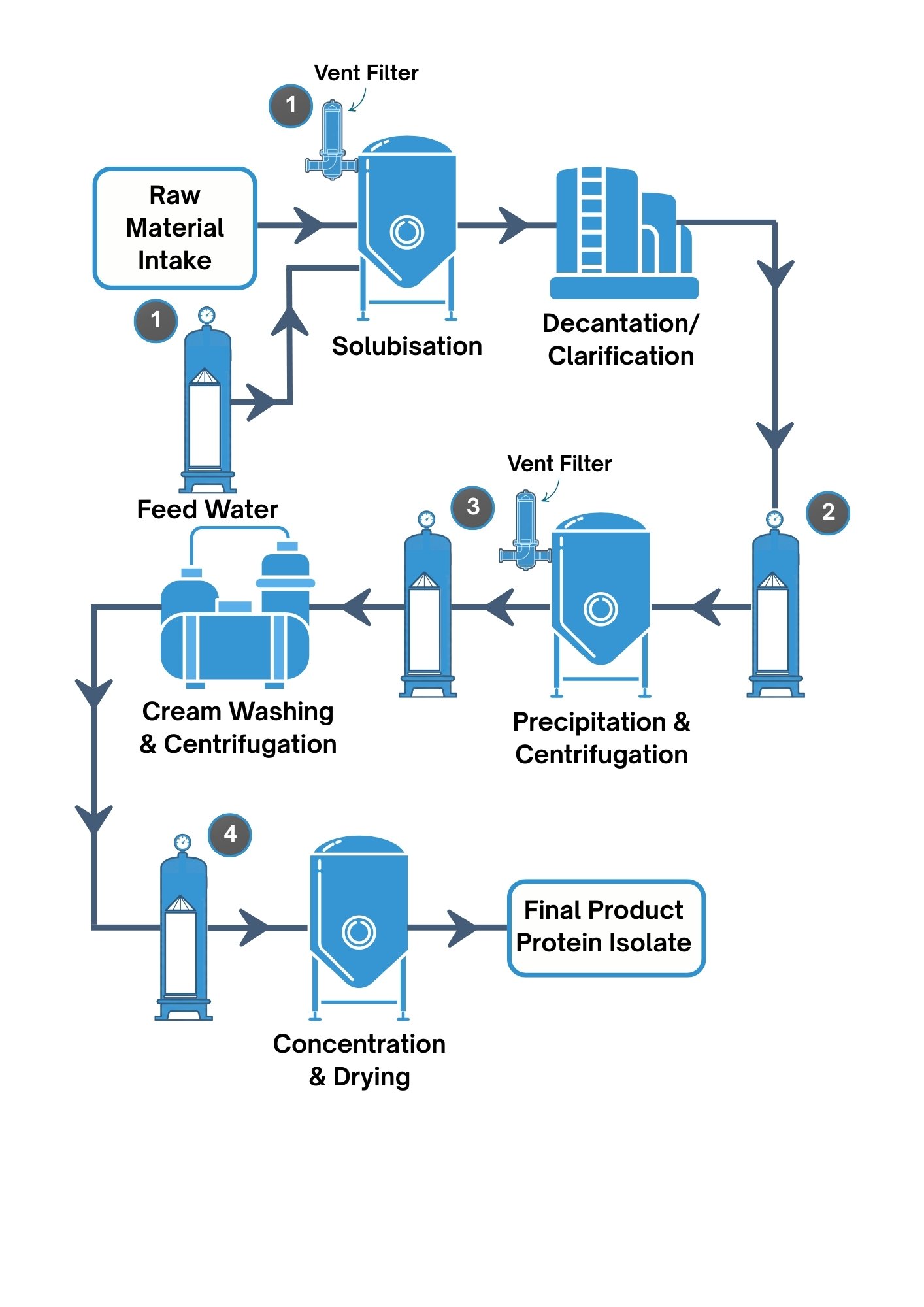
Plant Based Protein FINAL-1
Feedwater and Solubilisation Vessel Protection

During the solubilisation stage, plant flour or extracted raw material is mixed with water under controlled pH, temperature and agitation conditions to dissolve the target proteins into solution. Cartridge filtration is used to protect the process from unnecessary solids loading and improve batch-to-batch consistency.

In addition to feedwater filtration, the solubilisation vessel itself may require vent filtration. As the tank fills, empties, heats, cools or experiences changes in liquid level, air must move in and out of the vessel without introducing airborne or environmental contaminants while allowing the tank to breathe safely.

Together, feedwater filtration and vessel vent filtration help protect the protein solution at an early and sensitive stage of production, supporting cleaner processing, improved consistency and reduced downstream contamination risk.

Recommended Products:

Post-Decanter Polishing Filtration

After decantation or clarification, the process stream may still contain fine suspended solids, insoluble fibre, starch residues, colloidal material and other particles that have passed through the primary separation stage. Decanters and centrifuges are highly effective at removing bulk solids, but they are not absolute separation devices. As a result, residual particulate can remain in the liquid phase, increasing turbidity and creating variation in the feed stream entering the precipitation stage.

Cartridge filtration at this point provides a valuable post-decanter polishing step. Depth cartridges, pleated polypropylene cartridges or high dirt-holding pleated depth filters can be used to reduce suspended solids and improve liquid clarity before pH adjustment and protein precipitation. By reducing turbidity and controlling the fine particulate load, filtration helps improve consistency in the precipitation stage, supports more predictable protein recovery and reduces the risk of downstream fouling.

Recommended Products:

Precipitation, Centrifugation and Intermediate Polishing Filtration

During precipitation, solubilised protein is separated by adjusting conditions such as pH, temperature or ionic strength, causing the target protein to precipitate for recovery by centrifugation. At this stage, consistency is critical, as residual suspended solids, insoluble material or turbidity variation can affect precipitation behaviour, separation efficiency and final protein quality.

Cartridge filtration can provide an intermediate polishing step before or after precipitation, depending on the process design. Before precipitation, it improves feed clarity and consistency, supporting more predictable pH adjustment and protein recovery. After centrifugation, it helps remove fine residual solids, protein fines or agglomerates not fully removed by the centrifuge. Where downstream concentration is performed by a membrane system then additional fine cartridge filter protection is required.

Together, intermediate liquid polishing and vessel vent filtration improve precipitation consistency, protect downstream processing and support reliable production of high-quality plant protein isolate.

Recommended Products:

Concentration, Drying & Final Product Quality

The purified protein slurry is concentrated to increase solids content before drying, typically by spray drying in commercial plant protein isolate production. Before this stage, the protein stream may still contain residual particulates, protein agglomerates, fine insoluble material or upstream process debris.

As the product value is higher at this point, contamination or fouling can significantly affect process efficiency and final product quality. A final cartridge filtration stage helps stabilise the feed to evaporators, membrane concentration systems, heat exchangers or spray dryers, reducing the risk of nozzle blockage, heat transfer losses, membrane fouling and visible particulate in the finished isolate.

Often a sterile membrane cartridge filter provides final polishing filtration or a pleated depth cartridge protects concentration and drying equipment, and supports consistent production of high-quality dried plant protein powder.

Recommended Products:

Demand for plant-based protein ingredients from legumes, cereals, oilseeds, and other botanical sources continues to grow as food manufacturers develop meat alternatives, dairy-free products, protein drinks, bakery ingredients, snacks and nutritional formulations. Sources such as pea, soy, wheat, rice, oat and lentil can all be processed into protein concentrates or isolates, but the quality of the final ingredient depends heavily on how well the process is controlled.

Behind every high-quality plant protein powder is a complex separation process. Proteins must be extracted from the raw crop material, separated from fibre, starch, fats and insoluble solids, then concentrated and stabilised for use in food manufacture.

Plant-based protein production depends on controlled separation, clean utilities and reliable protection of key process equipment. While crossflow membrane systems are helping manufacturers move towards gentler and more efficient protein concentration, cartridge filtration remains an essential supporting technology. 

Speak to an Expert

+44(0) 203 750 8060

Drop Us an Email

enquiries@porefiltration.co.uk


Plant-Based Protein Filtration Resources and Support

What is plant-based protein processing?

Plant-based protein processing is the extraction, separation and concentration of proteins from crops such as pea, soy, wheat, rice, oat or lentil. The aim is to produce a protein concentrate or isolate suitable for use in food, drink, nutrition or ingredient applications.

Where are cartridge filters used in plant protein production?

Cartridge filters are commonly used for process water filtration, clarification polishing, membrane protection, ingredient filtration, CIP and rinse water filtration, sterile air and gas filtration, and final polishing before drying or packing.

What type of cartridge filter is suitable for plant protein applications?

The choice depends on the stream being filtered. Polypropylene depth cartridges are often used for general particulate removal, pleated depth cartridges for higher surface area and longer life, and membrane cartridges where finer or microbial control is required.

Can cartridge filtration improve protein yield?

Cartridge filtration does not usually create yield by itself, but it can help protect downstream separation equipment and reduce avoidable losses caused by fouling, contamination, inconsistent clarification or premature membrane blockage.

Is sterile filtration needed in plant protein processing?

Sterile filtration may be required for certain water, air, gas or liquid streams, particularly where microbial control is important. The level of filtration depends on the hygiene requirement, product sensitivity and process design.

How does filtration support more sustainable plant protein production?

Filtration can reduce fouling, lower cleaning demand, protect membranes, improve water reuse opportunities and support more efficient separation. This can help reduce water use, chemical use, energy demand and unplanned downtime.

Commitment to quality is of paramount importance at PoreFiltration.  We supply filtration solutions that help customersPore_Filter_9001_Logo protect their processes, meet regulatory requirements, and deliver consistent, high-quality finished products across industrial, food & beverage, chemical, and water applications. As such we have been certified to ISO9001, providing a quality management system that covers the entire organization for clarity and transparency in our processes.

Our Quality Commitment

Every PoreFiltration product is supplied with one clear objective: to perform reliably, consistently, and exactly as intended.

We are committed to:

  • Meeting customer, regulatory, and application-specific requirements
  • Supplying filtration products with consistent, repeatable performance
  • Providing clear specifications, traceability, and technical guidance
  • Continually improving our products, processes, and quality systems

If you need any more information on any aspect of quality management and assurance, then give us a call or send us an email - we’d be more than happy to help.

PoreFiltration is committed to supplying filtration products that support the highest standards of food safety and product integrity across the food and beverage industry. Our solutions are selected to meet the stringent requirements of manufacturers operating under globally recognised standards such as BRCGS Global Standard for Food Safety, as well as wider frameworks including HACCP, FDA compliance, and EU food contact regulations.

Our range of cartridge filters, bag filters, and associated housings are designed for use in food and beverage applications where hygiene, material traceability, and process reliability are critical. We work closely with leading manufacturers to ensure that all supplied filtration products are suitable for food contact applications and supported by appropriate documentation, including material certifications and conformity declarations where required.

PoreFiltration operates as a specialist distributor of industrial filtration products and components used within a wide range of processing environments. While we do not manufacture, process, store, or handle food products directly, we play a key role in supporting compliant and hygienic processing through the supply of high-quality filtration solutions.
FOOD SAFETY LOGO


Clean-In-Place (CIP) and Sterilise-In-Place (SIP) systems are critical to maintaining hygiene, product safety, and regulatory compliance in food, beverage, dairy, and pharmaceutical processing.

CIP enables the cleaning of pipelines, vesselSteams, filters, and process equipment without dismantling, using controlled cycles of detergents, temperature, and flow to remove product residues, biofilms, and contaminants.
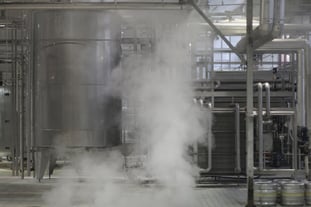
SIP follows with high-temperature steam sterilisation to eliminate microorganisms and ensure systems are safe for production.

Effective CIP/SIP design ensures:

  • Reliable microbial control
  • Reduced downtime and manual intervention
  • Protection of filtration systems and membranes
  • Consistent product quality and audit readiness

When properly engineered, CIP and SIP are not just cleaning steps they are integral to process performance and operational efficiency.

Read more in our blog: How CIP & SIP Can Extend Cartridge Filter Lifespan.

What Is Utility Filtration?                    Municipal RO system
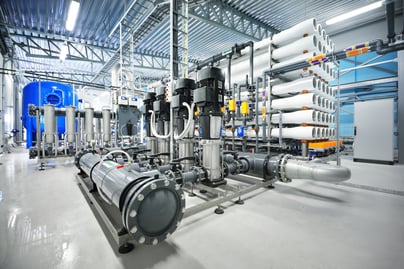
Utility filtration refers to filtration systems designed to clean and condition fluids used in support roles across manufacturing and processing environments rather than final product filtration. These include:


Utility fluids such as compressed air, steam, water and process gases are essential to industrial operations. Their quality directly affects product safety, equipment performance and regulatory compliance. Advanced utility filtration ensures contaminants are removed before they can compromise products or damage critical assets.

Effective utility filtration prevents contamination, improves product consistency, reduces maintenance costs, and supports regulatory compliance.


CLICK HERE TO READ MORE ON UTILITY FILTRATION SOLUTIONS 


Key Filtration Challenges Plant Derived Protein Manufacture

 The production of plant-based proteins from sources such as peas, soy, oats, rice, lentils, chickpeas, and fava beans involves multiple processing stages where effective filtration is essential. Unlike many traditional food manufacturing processes, plant proteins present unique challenges due to their high solids content, complex chemistry, and the need to maximise valuable product recovery. 

While centrifuges and membrane systems perform the primary separation tasks, cartridge filtration provides the critical protection between process stages. By removing particulates, protecting expensive membranes, maintaining sterility, and safeguarding final product quality, properly selected filtration systems help manufacturers:

  • Increase protein yields.
  • Reduce membrane cleaning frequency.
  • Lower operating costs.
  • Improve batch consistency.
  • Minimise downtime.
  • Protect valuable finished products.

As the global plant-based protein market continues to grow, effective filtration is becoming an increasingly important contributor to efficient, reliable, and profitable production.

Protecting Membrane Systems

Ultrafiltration (UF) , nanofiltration (NF) and diafiltration systems sit at the heart of modern plant protein production, concentrating and purifying proteins extracted from sources such as peas, soy, oats, and rice. These membrane systems represent a significant capital investment and are essential for achieving the high protein concentrations demanded by today's food manufacturers.

Unfortunately, centrifuges and decanters are rarely able to remove every fine particle from the process stream. Membrane systems are highly sensitive to feed quality, making effective pre-membrane cartridge filtration one of the most important protection stages within the entire process. Residual fibres, starches, and colloidal material can rapidly foul membrane surfaces, reducing permeate flow, increasing operating pressures, and forcing more frequent cleaning cycles. Over time, excessive fouling shortens membrane life and increases operating costs.

Installing absolute-rated cartridge filters upstream of membrane systems provides a simple but highly effective layer of protection. By removing fine suspended solids before they reach the membranes, manufacturers can maintain stable flux rates, extend membrane service life, reduce cleaning frequency, and maximise plant productivity.

Maintaining Product Consistency

Consumers and food manufacturers expect plant proteins to deliver consistent appearance, texture, flavour, and functionality in every production batch. Variations in clarity or the presence of fine particulates can negatively affect downstream applications such as dairy alternatives, nutritional beverages, bakery products, and meat substitutes.

While primary separation equipment removes the bulk of insoluble material, fine fibres and suspended particles often remain in the product stream. Without adequate polishing filtration, these contaminants can lead to inconsistent product quality and unpredictable processing behaviour.

Cartridge filtration provides a reliable polishing stage that removes residual particulates while preserving the functional properties of the protein. This helps manufacturers achieve stable product quality, improved batch-to-batch consistency, and greater customer confidence.

Maximising Protein Yield

Plant protein concentrates and isolates are high-value products, with every kilogram of recovered protein directly impacting manufacturing profitability. Any product lost during processing, whether through excessive filter hold-up or unnecessary filter changes, represents lost revenue.

Traditional filtration systems can sometimes retain significant volumes of valuable product within the filter media, particularly when handling high-viscosity protein solutions. Poor filter selection may also lead to protein adsorption onto the filter material itself, reducing overall recovery.

Carefully selected low-binding cartridge filters with optimised surface areas help minimise product losses while maintaining process performance. The result is improved yield, reduced waste, and greater return from every batch processed.

Preventing Microbial Contamination

Plant protein production often involves warm process conditions and extended holding times, creating an environment where microorganisms can multiply if not carefully controlled. Contamination introduced through process water, ingredient additions, compressed air, or tank venting systems can compromise product quality and reduce shelf life.

A single contamination event may result in failed microbiological testing, expensive product recalls, or the loss of an entire production batch.

Comprehensive filtration strategies help maintain hygienic processing conditions throughout the plant. Sterile filtration of process water, compressed gases, liquid additions, and tank vent air provides an effective barrier against microbial ingress, helping manufacturers maintain product integrity and comply with increasingly stringent food safety standards.

Handling High-Viscosity Process Streams

As proteins become more concentrated during processing, the viscosity of the product stream can increase dramatically. High-viscosity fluids create greater resistance to flow through filtration systems, leading to higher differential pressures, reduced throughput, and shorter filter service life.

These challenges become particularly significant during the production of premium protein concentrates and isolates, where maintaining production efficiency is essential.

Modern high-surface-area pleated cartridges and high-flow filter designs are specifically developed to handle demanding process conditions. By reducing pressure loss and increasing dirt-holding capacity, these filters help manufacturers maintain production rates while minimising downtime and consumable costs.

Selecting the correct filtration technology for high-viscosity applications ensures that productivity, product quality, and operating efficiency are all optimised throughout the manufacturing process.

What our customers say ...   


Very quick response from the team at PoreFiltration. Great communication throughout. Very helpful in establishing the correct product for our application, and worked closely with us to get the product to us in order that we could meet a tight deadline. Excellent service all round :) 

Steven Sweeney


Always great products and service. The first people I call whenever I have any issues filtering my products!"  

Ben Carmichael

Talk to us today about your filtration requirements


  • Extensive product range
  • Best Price GUARANTEED!
  • Specialist support team with deep knowledge of liquid & gas applications
  • Reliable quality & delivery