



<img alt="" src="https://secure.smart-company-vision.com/267217.png" style="display:none;">

Light Spirits Filtration

Ensuring Consistency & Quality of Taste & Presentation

The Steps in Light Spirit Filtration

Light Spirit

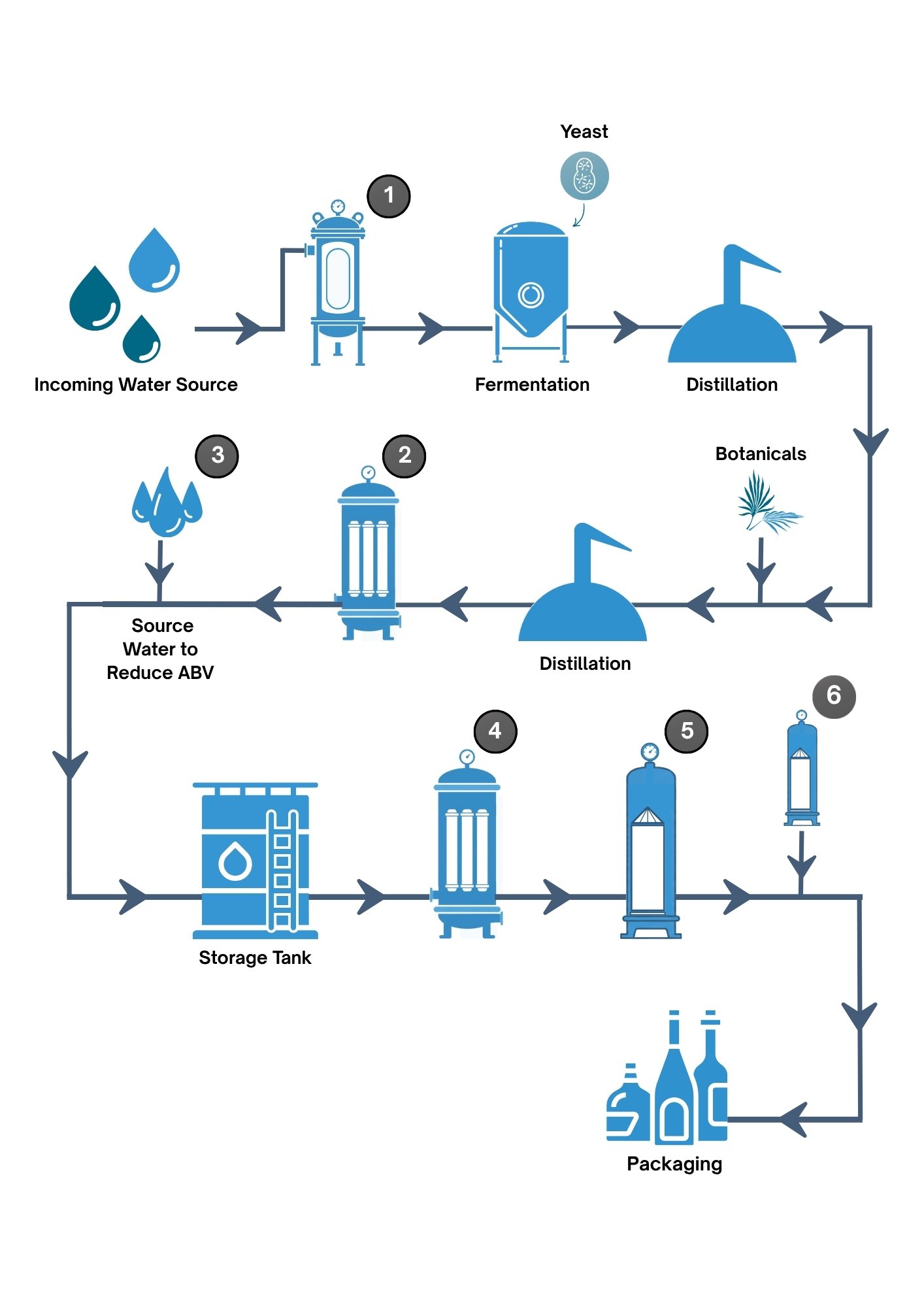
Incoming Water Supply

Water used in light spirits production — particularly for dilution, blending, and final proofing — must be of consistent and high quality. Incoming potable water is therefore pre-treated to remove suspended solids, particulates, and distribution-related contaminants such as rust, scale, or organic matter.

This initial filtration step protects downstream processes, ensures consistent spirit quality, and prevents the introduction of impurities that could impact clarity or flavour. Depth filtration is typically used to provide reliable particulate removal and maintain process stability.

Recommended Products:

Carbon Filtration – Removing Colour & Off-Flavours

Light spirits such as vodka and white rum often undergo carbon filtration to remove unwanted colour, off-flavours, and trace impurities following distillation. This process enhances purity, smoothness, and overall product quality.

Filtration plays a key role in supporting carbon treatment by ensuring consistent flow through activated carbon beds and preventing carbon fines from carrying over into downstream processes. This helps maintain clarity while achieving the desired neutral or refined flavour profile.

Recommended Products:

Incoming Source Water Filtration Prior to ABV Reduction

Following distillation, light spirits are typically reduced to bottling strength using high-quality source water. Filtration at this stage is critical to ensure that the dilution process does not introduce particulates, microorganisms, or unwanted taste components.

Membrane and depth filtration are used to ensure water purity, enabling precise ABV adjustment while maintaining the clean, crisp profile expected in light spirits.

Recommended Products:


Chill Haze & Colloidal Removal

Light spirits can develop haze or instability when exposed to lower temperatures due to the presence of trace oils, esters, or colloidal particles. Chill haze removal ensures that the final product remains bright and clear under all storage and serving conditions.

Fine filtration removes these haze-forming components without affecting the intended flavour profile, ensuring visual clarity and long-term product stability.

Recommended Products:


Trap/Guard Filtration Prior to Bottling

A guard or trap filtration stage is used prior to final bottling to remove any remaining particulates and protect final membrane filters from fouling. This is particularly important in light spirits where visual clarity is critical.

This step ensures consistent flow rates, extends filter life, and improves overall filtration efficiency, supporting a reliable and cost-effective bottling process.

Recommended Products:

 Bottle Washing Prior to Filling

Before filling, bottles are rinsed to remove dust, glass particles, or contaminants introduced during storage and handling. The water or air used must be filtered to prevent recontamination of the final product.

Filtration at this stage ensures packaging cleanliness and protects the clarity and purity of the finished spirit during filling.

Recommended Products:

The production of light spirits, such as vodka, gin, and white rum, has evolved significantly in recent years, driven by demand for cleaner profiles, innovative flavour infusions, and premium presentation. Modern distillation and blending techniques are now complemented by advanced filtration and stabilisation processes to achieve the desired clarity, smoothness, and consistency. As producers experiment with new botanicals, lower alcohol variants, and flavoured expressions, filtration plays a key role in refining the final product — removing impurities, balancing flavour, and ensuring visual brilliance. The aim is to deliver a consistent and high-quality spirit that meets consumer expectations, whether produced at craft scale or across global operations. 

Speak to an Expert

+44(0) 203 750 8060

Drop Us an Email

enquiries@porefiltration.co.uk


Light Spirit Filtration Resources and Support

Why is my light spirit still hazy after filtration in production?

Haze is typically caused by sub-micron particles, colloidal compounds, or incomplete removal of carbon fines. If filtration is not properly staged, these contaminants can pass through coarse filters and remain in the final product. Implementing depth cartridge filtration followed by membrane filtration ensures effective removal of fine particulates and delivers a consistently clear spirit.

How do I prevent carbon fines carryover after carbon treatment?

Powdered activated carbon can introduce fine particulates that are difficult to remove without the correct filtration setup. A dedicated carbon filtration stage, followed by depth cartridge filters, is essential to trap residual fines. This prevents downstream haze issues and protects final membrane filters from premature fouling.

Why does haze form after the product is chilled or diluted?

Haze can form when fatty acid esters and oils become insoluble at lower temperatures or reduced alcohol strength. This is common in light spirits post-dilution. Using fine depth filtration or membrane filtration helps remove these haze-forming compounds, improving clarity and cold stability.

How can I improve clarity without stripping flavour?

Achieving clarity without impacting flavour requires optimised staged filtration. Using depth cartridge filters with appropriate pore size gradients removes unwanted particles while preserving desirable flavour compounds. Avoiding overly tight membrane filtration at early stages helps maintain the intended sensory profile.

What causes high differential pressure during light spirit filtration?

High differential pressure is usually caused by excess solids loading, including carbon fines or insufficient upstream filtration. This leads to rapid fouling of the filter media and restricted flow. Incorporating high dirt-holding depth cartridge filters as a pre-filtration step reduces the burden on final filters and maintains stable operating pressure.

6. How do I reduce filtration costs and downtime in light spirits production?

Costs and downtime can be minimised by implementing a multi-stage filtration system, starting with carbon filtration (where required) and progressing through depth cartridge filtration to final membrane filtration. Selecting filters with high dirt-holding capacity and optimising changeout intervals improves throughput, extends filter life, and reduces operational interruptions.

Commitment to quality is of paramount importance at PoreFiltration.  We supply filtration solutions that help customersPore_Filter_9001_Logo protect their processes, meet regulatory requirements, and deliver consistent, high-quality finished products across industrial, food & beverage, chemical, and water applications. As such we have been certified to ISO9001, providing a quality management system that covers the entire organization for clarity and transparency in our processes.

Our Quality Commitment

Every PoreFiltration product is supplied with one clear objective: to perform reliably, consistently, and exactly as intended.

We are committed to:

  • Meeting customer, regulatory, and application-specific requirements
  • Supplying filtration products with consistent, repeatable performance
  • Providing clear specifications, traceability, and technical guidance
  • Continually improving our products, processes, and quality systems

If you need any more information on any aspect of quality management and assurance, then give us a call or send us an email - we’d be more than happy to help.

PoreFiltration is committed to supplying filtration products that support the highest standards of food safety and product integrity across the food and beverage industry. Our solutions are selected to meet the stringent requirements of manufacturers operating under globally recognised standards such as BRCGS Global Standard for Food Safety, as well as wider frameworks including HACCP, FDA compliance, and EU food contact regulations.

Our range of cartridge filters, bag filters, and associated housings are designed for use in food and beverage applications where hygiene, material traceability, and process reliability are critical. We work closely with leading manufacturers to ensure that all supplied filtration products are suitable for food contact applications and supported by appropriate documentation, including material certifications and conformity declarations where required.

PoreFiltration operates as a specialist distributor of industrial filtration products and components used within a wide range of processing environments. While we do not manufacture, process, store, or handle food products directly, we play a key role in supporting compliant and hygienic processing through the supply of high-quality filtration solutions. 
FOOD SAFETY LOGO


Clean-In-Place (CIP) and Sterilise-In-Place (SIP) systems are critical to maintaining hygiene, product safety, and regulatory compliance in food, beverage, dairy, and pharmaceutical processing.

CIP enables the cleaning of pipelines, vesselSteams, filters, and process equipment without dismantling, using controlled cycles of detergents, temperature, and flow to remove product residues, biofilms, and contaminants.
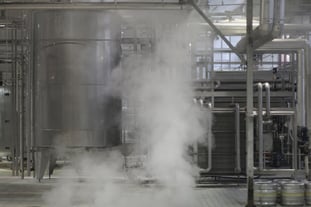
SIP follows with high-temperature steam sterilisation to eliminate microorganisms and ensure systems are safe for production.

Effective CIP/SIP design ensures:

  • Reliable microbial control
  • Reduced downtime and manual intervention
  • Protection of filtration systems and membranes
  • Consistent product quality and audit readiness

When properly engineered, CIP and SIP are not just cleaning steps they are integral to process performance and operational efficiency.

Read more in our blog: How CIP & SIP Can Extend Cartridge Filter Lifespan.

What Is Utility Filtration?                    Municipal RO system
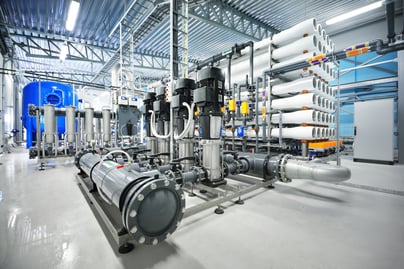
Utility filtration refers to filtration systems designed to clean and condition fluids used in support roles across manufacturing and processing environments rather than final product filtration. These include:


Utility fluids such as compressed air, steam, water and process gases are essential to industrial operations. Their quality directly affects product safety, equipment performance and regulatory compliance. Advanced utility filtration ensures contaminants are removed before they can compromise products or damage critical assets.

Effective utility filtration prevents contamination, improves product consistency, reduces maintenance costs, and supports regulatory compliance.


CLICK HERE TO READ MORE ON UTILITY FILTRATION SOLUTIONS 

The Role of Cartridge Filtration in Modern Light Spirits Production

For distillers, the primary objective is consistent product quality — flavour, clarity, colour, and stability — regardless of batch size or production scale. Cartridge filtration plays a critical role in achieving this by removing particulates and potential contaminants throughout the production process.

From craft distilleries to large-scale spirit producers, filtration is applied across three key areas:

    • Preventing contamination from utilities and ingredients (water, neutral spirits, CO₂, steam)
    • Controlling particulates generated during processing (e.g., residual mash solids, botanical carryover, or sediment from maturation)
    • Removing unwanted microorganisms or haze prior to bottling (sterile filtration as an alternative or complement to heat treatment)

While the principles remain the same, the scale of production influences filtration strategy. Large producers require higher throughput and longer service life, whereas craft distillers often prioritise flexibility, flavour retention, and maintaining subtle botanicals or delicate aromas.

Managing Variability: Batch-to-Batch Filterability

One of the most significant challenges in light spirits production is variability between batches. Differences in base spirits, botanicals, ageing processes, and process conditions can all impact filtration performance.

For distillers, this can translate to:

  • Fluctuating differential pressures
  • Reduced filter life
  • Increased operating costs

Cartridge filtration systems must therefore handle a wide range of feed characteristics without increasing costs or requiring frequent changeouts. This is particularly important for:

  • Craft distilleries, where recipes and botanical blends often change

  • Large producers, where consistent flavour, clarity, and colour are critical
Utility Filtration: Water, Air, CO₂ & Steam

Water, compressed air, CO₂, and steam are essential utilities in spirits production, interacting directly or indirectly with the product and influencing taste, clarity, and stability.

Key applications include:

  • Filtration of water for spirit dilution and blending
  • Sterile air for tank blanketing or bottling environments
  • CO₂ filtration for carbonation in some ready-to-drink or flavoured spirits
  • Steam filtration for heating or infusion processes

Depth and membrane filtration remove particulates, oil, moisture, and microbial contamination, ensuring product integrity.

Impact by distillery scale:

  • Craft producers: Use compact, multi-purpose systems with high flexibility
  • Regional producers: Focus on consistent product quality across multiple batches
  • Large producers: Require validated, high-throughput systems with strict compliance

Effective utility filtration protects the product, reduces downtime, and improves operational efficiency across the facility.

Guard (Trap) Filtration: Protecting the Core Process

After distillation, blending, or maturation, light spirits can contain residual solids, botanical particles, or haze-forming compounds that must be removed before final filtration.

Trap filtration typically uses:

These are selected for:

  • High dirt-holding capacity
  • Resistance to CIP/SIP procedures
  • Reliable, consistent performance

Why it matters:

  • Protects final membrane filters from premature fouling
  • Maintains consistent flow rates
  • Improves overall filtration efficiency

For larger producers, this stage ensures continuity and efficiency, while craft distillers rely on it to maintain clarity and flavour without excessive product loss.

Final Filtration: Stabilisation Without Compromise

Before bottling, spirits must be stabilised to remove particulates or potential spoilage organisms that could impact clarity, flavour, and shelf life.

This is often achieved using membrane filtration, most commonly:

These filters provide:

  • Reliable particle and microbial retention
  • High flow rates
  • Compatibility with CIP/SIP regimes

Using asymmetric PES membranes, combined with prefiltration (polypropylene or glass fibre), extends filter life and improves overall process efficiency.

Scale considerations:

  • Craft distilleries: Often use membrane filtration to preserve delicate botanicals and flavour
  • Large producers: Use validated systems for consistent particle and microbial control across high volumes

Membrane filtration has become a widely adopted alternative to heat treatment or cold stabilisation, primarily because it maintains the original taste, aroma, and character of the spirit.

Filtration as a Strategic Tool in Light Spirits Production

Across all distillery sizes, filtration is more than a processing step — it is a critical control point that impacts:

  • Product consistency and clarity
  • Flavour and aroma retention
  • Shelf life and stability
  • Equipment protection
  • Operational efficiency

Whether producing small-batch craft spirits or large-scale commercial volumes, the right cartridge filtration strategy allows distillers to manage variability, protect quality, and scale production confidently.

What our customers say ...   


Pore filtration have been a great help to us , We are a small specialist digital ink manufacturers and needed to be sure the ink was correctly filtered .this has been a problem for us for quite some time as our previous process was extremely slow . David at Porefiltration went through all our needs and processes with us and supplied us with exactly what we had been searching for . Our filtration is now assured and twenty times quicker than before . I highly recommend Pore filtration. 

Clive Lawes. M.D. Ikonmac Ltd


"High quality at competitive prices. Excellent availability and support from the entire sales and technical staff, focused on customer satisfaction"

Guiseppe Buttitta

Talk to us today about your filtration requirements


  • Extensive product range
  • Best Price GUARANTEED!
  • Specialist support team with deep knowledge of liquid & gas applications
  • Reliable quality & delivery