


Water is one of the most widely used utilities in industrial manufacturing, yet it is often misunderstood. Many organisations assume that if water looks clean, it is suitable for their process. In reality, different applications require dramatically different levels of water purity, and using the wrong water quality can lead to product contamination, equipment damage, compliance failures, and costly downtime.
From purified water used in manufacturing processes to Water for Injection (WFI) required in pharmaceutical production, every grade of water demands a carefully designed filtration and purification strategy.
Understanding how filtration technologies create these different water qualities, and what can happen when filtration systems fail or are incorrectly specified, is critical for maintaining product quality and operational efficiency.
Why Water Purity Matters
Natural water sources contain a wide range of contaminants, including:
- Suspended particles
- Sediment and rust
- Dissolved minerals
- Organic compounds
- Bacteria and microorganisms
- Endotoxins
- Viruses
- Chemical contaminants
The challenge for manufacturers is that different industries have different tolerance levels for these contaminants.
For example, water suitable for cooling systems may be completely unsuitable for pharmaceutical manufacturing, while water acceptable for general cleaning processes could cause defects in semiconductor production.
The higher the purity requirement, the more advanced and specialised the filtration and treatment process becomes.
Understanding Different Water Purity Levels
Potable Water
Potable water is safe for human consumption and typically supplied by municipal utilities. While it meets drinking water standards, it still contains dissolved minerals, microorganisms, and organic matter.
For many industrial applications, potable water serves only as the starting point for further treatment.
Purified Water (PW)
Purified Water is commonly used in pharmaceutical manufacturing, biotechnology, cosmetics production, and laboratory applications.
Compared to potable water, purified water contains significantly lower levels of:
- Dissolved solids
- Organic contaminants
- Microorganisms
- Conductivity-causing ions
Purified water systems are designed to ensure consistent quality and prevent contamination throughout the distribution network.
Water for Injection (WFI)
Water for Injection represents one of the highest purity grades used in regulated manufacturing environments.
WFI is typically used for:
- Injectable pharmaceutical products
- Sterile manufacturing processes
- Equipment rinsing in aseptic environments
- Biopharmaceutical production
In addition to stringent microbial requirements, WFI must meet strict endotoxin limits, making its production and distribution significantly more demanding than standard purified water systems.
How Filtration Creates Different Water Qualities
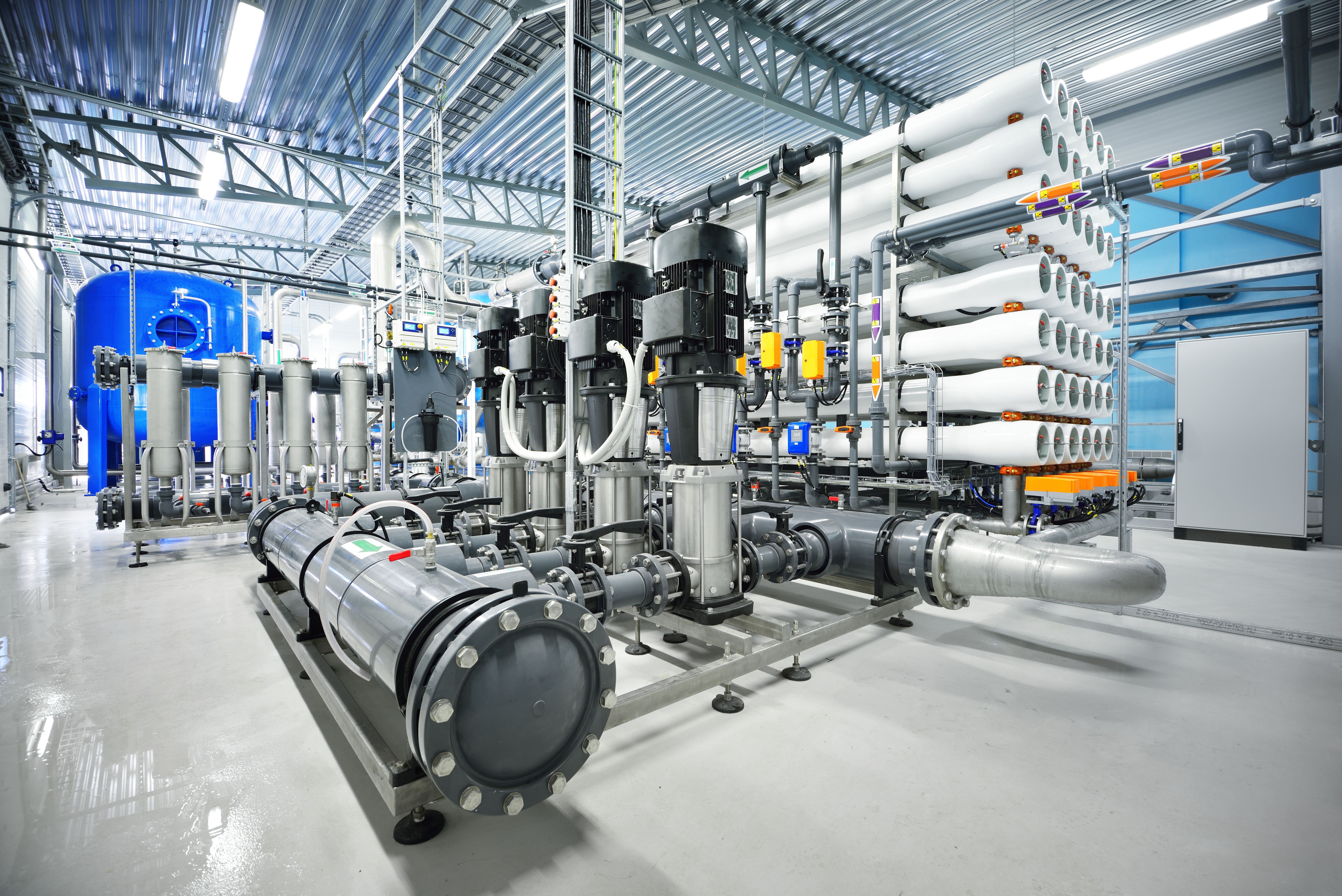
Achieving higher levels of purity is not simply a matter of adding a single filter. Instead, water treatment systems use multiple stages of filtration and purification, with each stage targeting specific contaminants.
Stage 1: Pre-Filtration
The first line of defence removes larger particles such as:
- Sand
- Silt
- Rust
- Debris
Cartridge filters and multimedia filters are commonly used to protect downstream equipment from fouling and damage.
Without effective pre-filtration, downstream membranes can become blocked prematurely, increasing maintenance costs and reducing system efficiency.
Stage 2: Activated Carbon Filtration
Activated carbon removes:
- Chlorine
- Chloramine
- Organic compounds
- Taste and odour-causing substances
This stage is particularly important before reverse osmosis systems, as chlorine can damage membrane surfaces.
Insufficient carbon filtration can lead to membrane degradation, resulting in poor water quality and expensive membrane replacements.
Stage 3: Reverse Osmosis (RO)
Reverse osmosis is one of the most important technologies for producing purified water.
RO membranes remove:
- Dissolved salts
- Heavy metals
- Bacteria
- Organic contaminants
- Many viruses
This stage significantly reduces total dissolved solids (TDS) and forms the backbone of many purified water systems.
Poorly maintained RO systems can experience membrane fouling, reduced rejection rates, and inconsistent water quality. This may lead to failed quality tests and interrupted production schedules.
Stage 4: Deionisation and Electro-Deionisation (EDI)
For applications requiring extremely low conductivity, deionisation technologies remove residual ionic contaminants left after RO treatment.
These systems help manufacturers achieve the high purity levels required for sensitive production processes.
Insufficient ion removal can affect product formulations, laboratory testing accuracy, and process consistency.
Stage 5: Ultrafiltration (UF)
Ultrafiltration membranes target:
- Fine particulates
- Colloids
- Bacteria
- Endotoxins
UF is frequently used in pharmaceutical and biotechnology applications where microbial control is essential.
Without effective ultrafiltration, endotoxins can enter production processes and compromise product safety, leading to batch rejection or regulatory concerns.
Stage 6: Final Sterilising Filtration
In critical applications, final membrane filtration provides an additional barrier against microbial contamination before water reaches the point of use.
This stage helps maintain water quality throughout distribution systems.
Even if water is produced to specification, contamination within poorly maintained distribution loops can undermine the entire treatment process.
Common Water Quality Problems Caused by Inadequate Filtration
Product Contamination
Microbial contamination can impact product safety, shelf life, and regulatory compliance.
Industries at particular risk include:
- Pharmaceuticals
- Food and beverage
- Biotechnology
- Cosmetics
A single contamination event can result in product recalls, lost revenue, and reputational damage.
Equipment Fouling and Scaling
Minerals and particulates that are not adequately removed can accumulate inside:
- Heat exchangers
- Boilers
- Membranes
- Process equipment
The result is reduced efficiency, increased energy consumption, and more frequent maintenance requirements.
Regulatory Compliance Failures
Industries operating under GMP and other quality frameworks must demonstrate that water systems consistently meet defined specifications.
Poor filtration performance can lead to:
- Failed audits
- Non-conformances
- Production delays
- Regulatory scrutiny
Reduced Product Quality
Even low levels of contamination can impact product performance and consistency.
Examples include:
- Variations in pharmaceutical formulations
- Defects in electronics manufacturing
- Reduced shelf life in food products
- Inaccurate laboratory results
Increased Operating Costs
When filtration systems are incorrectly sized, poorly maintained, or unsuitable for the application, businesses often experience:
- Increased filter replacement costs
- Higher energy consumption
- More frequent downtime
- Increased maintenance requirements
- Product waste and batch losses
Choosing the Right Filtration Strategy
There is no universal solution for industrial water treatment. The correct filtration approach depends on:
- Required water quality
- Industry regulations
- Source water characteristics
- Production volumes
- Operational risks
A system designed for purified water may not provide sufficient protection for WFI production, while over-engineering a system can unnecessarily increase capital and operating costs.
The most effective approach is to design filtration stages around the specific contaminants that must be removed while ensuring long-term system reliability and regulatory compliance.
Final Thoughts
All water is not created equal. The difference between potable water, purified water, and Water for Injection is defined by the contaminants that have been removed and the technologies used to achieve that level of purity.
For industrial manufacturers, water quality directly affects product quality, operational efficiency, compliance, and profitability. Understanding how filtration technologies work together—and recognising the risks associated with inadequate filtration—can help organisations avoid costly production issues while maintaining the highest standards of performance.
When filtration systems are correctly designed, validated, and maintained, water becomes a reliable process utility rather than a hidden source of operational risk.
To learn more about PoreFiltration’s water filtration solutions or if you’d like us to review your current filtration set-up, then contact our team today - give us a call or send us an email - we’d be more than happy to help.
And here are a few more blogs and links that you might find useful:
- Porefiltration’s range of water filtration solutions:
- Cartridge Filtration for Process & Ultrapure Water: Challenges & Solutions
- What is a Reverse Osmosis System
- Why Your RO System is Fouling Faster than Expected: How Better Filtation Protects Membrane Performance
PoreFiltration – Making your filtration systems work harder