


The pharmaceutical industry is evolving rapidly, with manufacturers under increasing pressure to improve production efficiency, maintain regulatory compliance and reduce their environmental impact.
While sustainability has become a major focus across the sector, one of the fastest-growing trends appears, at first glance, to contradict this goal: the widespread adoption of single-use manufacturing.
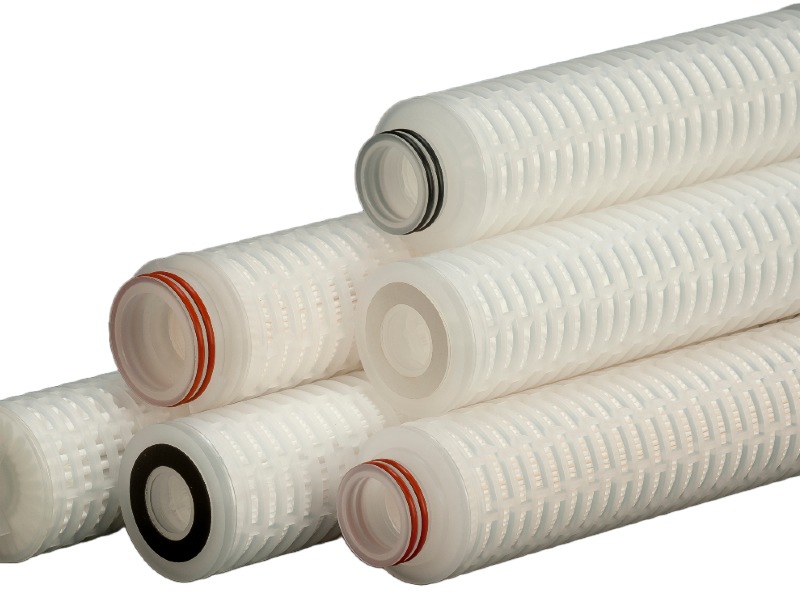
Disposable filtration systems, including capsule filters, membrane filters and single-use assemblies, are now commonplace in pharmaceutical and biotechnology facilities. Although these products are designed for one-time use, they can often help reduce water consumption, chemical usage, energy demand and production waste compared with traditional reusable systems.
So, how can disposable filtration contribute to more sustainable pharmaceutical manufacturing?
Why Single-Use Manufacturing Is Growing
Single-use technology has transformed pharmaceutical production over the past decade. Instead of cleaning and validating stainless-steel process equipment between batches, manufacturers can replace filtration components quickly and begin the next production run with minimal downtime.
This approach is particularly valuable for:
- Biopharmaceutical manufacturing
- Vaccine production
- Cell and gene therapies
- Clinical trial manufacturing
- Laboratory-scale development
- Contract manufacturing organisations (CMOs)
The continued growth of biologics and personalised medicines has accelerated demand for flexible manufacturing solutions, making single-use systems an increasingly attractive option.
Industry analysts expect continued growth in the global single-use bioprocessing market as pharmaceutical companies invest in more agile production facilities.
The Sustainability Question
It’s easy to assume that disposable filtration generates more waste than reusable equipment. However, sustainability should be assessed across the entire manufacturing process, rather than by considering solid waste alone.
Traditional stainless-steel systems require extensive cleaning after every production batch, often involving:
- Large volumes of purified water or Water for Injection (WFI)
- Steam sterilisation cycles
- Cleaning chemicals
- Clean-in-Place (CIP) systems
- Steam-in-Place (SIP) processes
- Validation testing before production resumes
Each of these activities consumes significant amounts of water, energy and chemicals while increasing production downtime.
Single-use filtration removes many of these requirements entirely.
How Disposable Filtration Can Reduce Environmental Impact
Lower Water Consumption
Cleaning reusable filtration systems requires substantial volumes of purified water and WFI. By eliminating repeated cleaning cycles, single-use capsule filters can significantly reduce water usage across a manufacturing facility.
Reduced Chemical Use
CIP processes rely on detergents, acids and alkaline cleaning solutions. Disposable filtration eliminates the need for many of these cleaning chemicals, reducing both consumption and wastewater treatment requirements.
Lower Energy Demand
Steam sterilisation, heated cleaning cycles and drying equipment all consume energy. Pre-sterilised single-use filtration systems minimise these energy-intensive processes while allowing production to resume more quickly.
Reduced Risk of Batch Loss
Filtration failures and cross-contamination can result in rejected batches, wasted raw materials and additional manufacturing runs. Reliable sterile filtration helps minimise these risks, reducing unnecessary waste throughout production.
Faster Production Changeovers
Replacing a validated capsule filter can often take minutes rather than hours of cleaning and validation, allowing manufacturers to improve equipment utilisation and overall process efficiency.
Why Capsule Filters Are Driving Single-Use Processing
Capsule filters have become one of the most widely used filtration solutions in pharmaceutical production because they arrive as fully enclosed, ready-to-use units.
Typical applications include:
- Sterile filtration of pharmaceutical solutions
- Buffer preparation
- Cell culture media filtration
- Pilot-scale manufacturing
- Clinical batch production
- Laboratory process development
- Final product filtration
Their enclosed design helps minimise operator exposure while reducing contamination risks and simplifying installation.
Membrane Filters Continue to Play a Critical Role
While capsule filters improve operational efficiency, membrane filters remain essential for achieving the precise particle retention and microbial control required in pharmaceutical manufacturing.
Common membrane materials include:
- PES (Polyethersulfone) for high-flow sterile filtration
- PVDF for low protein binding applications
- PTFE for aggressive chemicals and gases
- Nylon for general laboratory filtration
Selecting the correct membrane material is just as important as selecting the appropriate pore size, ensuring optimal process performance while extending filter service life.
Regulatory Compliance Supports Sustainable Manufacturing
Regulatory expectations continue to emphasise product quality, contamination control and robust manufacturing practices. Single-use filtration systems can simplify compliance by providing:
- Consistent batch-to-batch performance
- Reduced operator intervention
- Simplified validation documentation
- Lower contamination risk
- Improved process reproducibility
These advantages support both operational efficiency and quality objectives without compromising regulatory requirements.
Is Single-Use Always the Right Choice?
Not every pharmaceutical process is suited to disposable filtration. High-volume continuous production may still benefit from reusable systems, while smaller or multiproduct facilities often gain greater flexibility from single-use technologies.
The most effective approach is to evaluate the complete process, considering:
- Production volume
- Cleaning requirements
- Validation costs
- Water and energy consumption
- Product changeover frequency
- Contamination risk
- Total cost of ownership
In many cases, the most sustainable solution is not defined by how many filters are discarded, but by the overall environmental impact of the manufacturing process.
Looking Ahead
As pharmaceutical manufacturing continues to evolve, filtration will play an increasingly important role in delivering safe, efficient and sustainable production.
Single-use technologies are no longer simply a convenience — they have become a strategic tool for improving manufacturing flexibility, reducing resource consumption and supporting modern pharmaceutical operations.
When combined with the correct capsule and membrane filtration solutions, manufacturers can enhance product quality, minimise downtime and contribute to broader sustainability goals without compromising performance.
How PoreFiltration Can Help
At PoreFiltration, we supply high-quality capsule filters and membrane filtration solutions designed to support pharmaceutical, biotechnology and laboratory applications.
Whether you’re looking to optimise sterile filtration, improve process efficiency or transition towards single-use manufacturing, our team can help you identify the most appropriate filtration solution for your process. Just give us a call or send us an email - we’d be more than happy to help.
And here are a few other useful resources::
- Membrane Cartridge Filters for Sterile or Final Filtration
Learn how membrane cartridge filters support sterile filtration, bioburden reduction and final product protection. - Choosing the Right Membrane Filter Micron Rating
Understand how micron rating affects clarification, microbial control and sterilising-grade filtration. - PES, PTFE, PVDF and Nylon Membrane Filters Explained
Compare common membrane materials and how to select the right option for your process.
PoreFiltration – Making your filtration systems work harder

/collage.jpg)