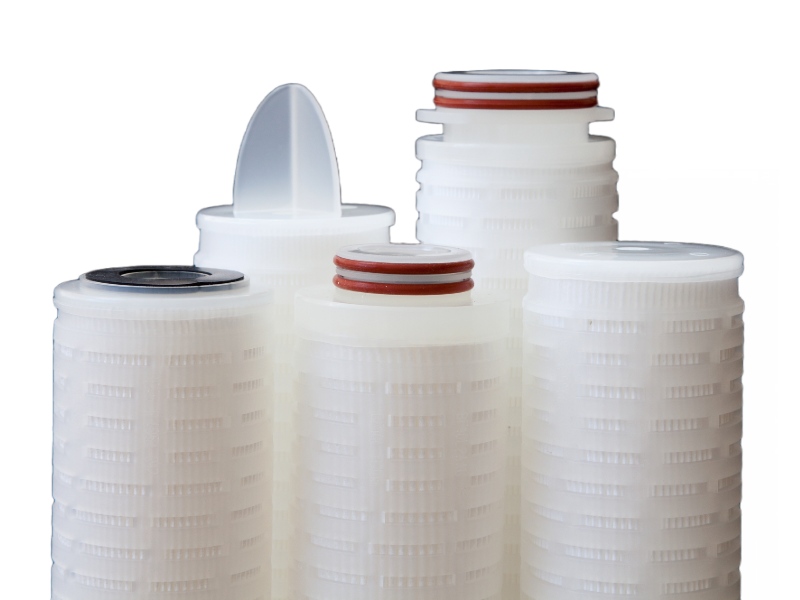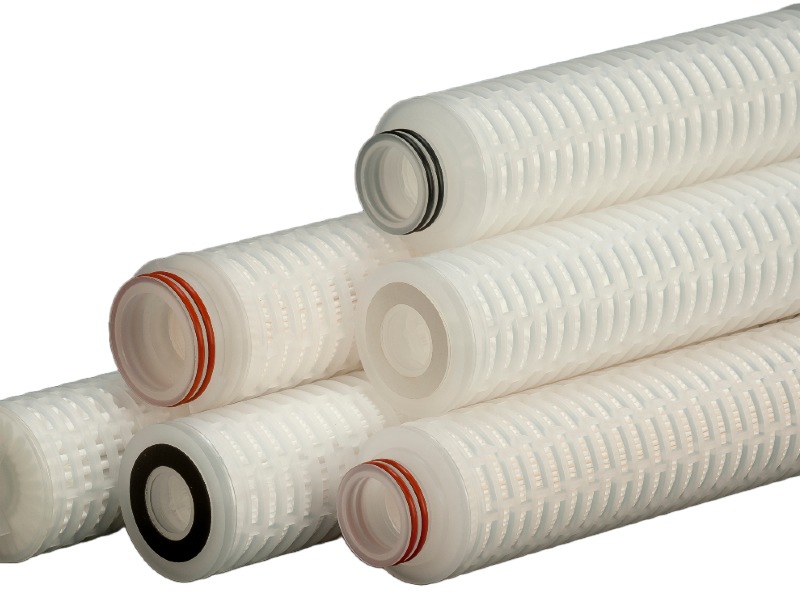



When a filter cartridge reaches the end of its service life, the natural response is often to replace it with exactly the same product.
After all, if the existing filter has been doing its job, why change it?
It’s a question we’re asked regularly, but in our experience, the best filtration solution isn’t always a like-for-like replacement. Production demands change, water quality can vary over time, and operating conditions often evolve long after a system has been commissioned.
A recent project with a customer in the water treatment sector highlighted exactly why taking a step back and reviewing the application can uncover opportunities to improve filtration performance without making major changes to the overall system.
The Initial Enquiry
The customer contacted us looking for replacement depth filter cartridges that were reaching the end of their service life more quickly than expected.
Their initial request was straightforward: they wanted to replace the existing pleated polypropylene depth filter cartridges with the same specification to keep the process running.
From a supply perspective, we could simply have quoted for the replacement cartridges.
Instead, we paused and asked a few questions.
Looking Beyond the Cartridge
Whenever we support a filtration project, we like to build a complete picture of the application before recommending a product.
Rather than starting with the cartridge dimensions or micron rating, we wanted to understand:
- What is the source of the water?
- What contaminants are being removed?
- Has the process changed since the system was installed?
- What flow rate and operating pressure is the system running at?
- How frequently are the cartridges being replaced?
- What equipment is the filtration system protecting downstream?
- Are any future changes planned for the process?
These conversations often reveal opportunities that aren’t immediately obvious when simply replacing an existing filter.
In this case, they did exactly that.
Understanding the Real Problem
The existing pleated polypropylene depth filters were achieving the required filtration performance, but they weren’t providing the service life the customer needed.
The application had a relatively high particulate loading, causing the filters to block sooner than expected. This meant more frequent cartridge changes, increased maintenance time and higher consumable costs.
Rather than asking:
“Which replacement cartridge fits the housing?”
We asked a different question:
“Is polypropylene still the most suitable filter media for this application?”
That simple shift in thinking changed the direction of the project.
Why Filter Media Matters
Not all depth filter cartridges are constructed in the same way.
Different filter media offer different characteristics, including:
- Dirt-holding capacity
- Flow characteristics
- Differential pressure
- Chemical compatibility
- Temperature resistance
- Service life
Although pleated polypropylene depth filters are an excellent solution for many applications, they are not always the optimum choice where contaminant loading is particularly high.
After reviewing the operating conditions and contaminant profile, we recommended changing to a glass fibre depth filter cartridge.
The higher dirt-holding capacity of the glass fibre media made it better suited to the application, allowing the filters to remain in service for longer before requiring replacement.
The customer achieved a noticeable increase in cartridge service life, with the glass fibre filters lasting approximately two to three times longer than the pleated polypropylene cartridges. This reduced maintenance frequency and improved the overall efficiency of the filtration system.
The housing hadn’t changed.
The process hadn’t changed.
The micron rating hadn’t changed.
Only the filter media had changed.
Sometimes, relatively small engineering adjustments can deliver significant operational improvements.
Why the Whole Process Matters
Once we had established that the existing polypropylene cartridges were reaching the end of their service life sooner than expected, the next step wasn’t simply to choose a replacement. It was to understand why.
Rather than looking at the filter in isolation, we reviewed the complete filtration process surrounding it.
We wanted to understand:
- Had the incoming water quality changed since the system was originally commissioned?
- Had production volumes increased, resulting in higher flow rates through the cartridges?
- Was the contaminant loading greater than the original system had been designed for?
- Was the depth filter adequately protecting the downstream process?
- Were there opportunities elsewhere in the filtration train that could reduce the loading placed on the cartridges?
These questions are often where the biggest improvements are found.
In this project, our review confirmed that the primary challenge wasn’t the housing or the system design. It was selecting the most appropriate filter media for the contaminants being removed.
By understanding the wider process rather than focusing solely on the replacement cartridge, we were able to recommend a solution that delivered a longer service life while maintaining the required filtration performance.
Reviewing the Complete Filtration Train
Although the filter media proved to be the key improvement in this project, we also reviewed the entire filtration train to ensure there weren’t any other factors affecting performance.
This is a step we carry out on every project because a cartridge reaching the end of its life is often only a symptom of what is happening elsewhere in the process.
For example, we considered whether additional upstream protection would benefit the system.
In many water treatment applications, the filtration train may include:
- Basket strainers to remove larger debris before it reaches the filtration system
- Bag filters where higher particulate loading needs to be reduced
- Depth filter cartridges to remove suspended solids and protect downstream equipment
- Membrane filter cartridges for final particulate or microbiological control
Each stage has a specific purpose. When correctly selected, the different stages work together to reduce contaminant loading, maintain consistent flow rates and maximise the service life of downstream filters.
While the existing filtration train was appropriate for this customer’s application, reviewing every stage gave us confidence that changing the filter media would address the root cause of the reduced service life rather than simply treating the symptom.
It’s an important part of our engineering approach: before recommending any product, we first make sure the overall filtration strategy is working as efficiently as possible.
Every Process Has Different Considerations
One of the key lessons from this project is that filtration decisions should never be based solely on the product being filtered.
Every application has its own operating conditions, and those conditions can significantly influence the most appropriate filtration solution.
For this customer, understanding the contaminant loading led us to recommend a glass fibre depth filter to increase service life. However, another application with seemingly similar operating conditions could require a completely different recommendation.
A good example is where a process incorporates Clean-in-Place or Steam-in-Place procedures.
Clean-in-Place and Steam-in-Place Compatibility
While a particular filter media may offer excellent dirt-holding capacity and extended service life, it may not be compatible with the cleaning chemicals or temperatures used during routine cleaning.
In these situations, chemical and temperature compatibility become just as important as filtration performance, and a different filter construction may provide a more suitable long-term solution.
It is also worth considering that CIP chemicals can themselves become a potential contaminant source.
Before a system returns to production, appropriate filtration may be required to remove residual cleaning chemicals or loosened debris before protecting downstream equipment or membrane filtration stages.
This is why we always encourage customers to look at the complete process rather than focusing on a single component. The best filter for one application isn’t necessarily the best filter for another, even if the two systems appear similar at first glance.
A Small Change with a Significant Result
In this case, the solution wasn’t a new housing, a finer micron rating or a complete system redesign.
It was understanding the application well enough to recognise that a change from polypropylene to glass fibre media was the most appropriate solution.
That relatively small change delivered a significant improvement in cartridge service life, while the wider engineering review gave both us and the customer confidence that the rest of the filtration system was already performing as intended.
At PoreFiltration, we believe every successful project starts with understanding the process, not simply replacing the filter.
A Simple Engineering Checklist
Before replacing a filter cartridge, it’s worth taking a step back and asking:
- Has the process changed since the original system was commissioned?
- Has production increased?
- Has the incoming water quality changed?
- Are filters blocking sooner than expected?
- Has the contaminant profile changed?
- Are there cleaning regimes, such as CIP or SIP, that could influence material compatibility?
- Is the current filter media still the most appropriate choice?
- Would improvements to upstream filtration stages better protect downstream filters?
These discussions often identify opportunities to improve reliability, extend service life and reduce operating costs without making major changes to the overall system.
How PoreFiltration Can Help
A like-for-like replacement may keep a filtration system running, but it may not address the reason cartridges are blocking or reaching the end of their service life sooner than expected.
PoreFiltration can review the complete application, including contaminant loading, process conditions, cartridge construction, filter media and upstream filtration stages, to help identify the most appropriate long-term solution. Just give us a call or send us an email - we’d be more than happy to help.
Further Reading
Here are a few more blogs that you might find useful:
- Reduce Filtration Costs by Switching from Pleated Polypropylene to Pleated Glass Fibre Filters
Explore why glass fibre media can provide greater dirt-holding capacity and longer cartridge life than polypropylene in applications with high solids or gel-like contamination. This is the closest match to the case study in your new blog. - Why Cartridge Filters Block Too Quickly: 7 Common Causes & Fixes
Learn how micron rating, filter media, contaminant loading and system design can contribute to premature blockage and frequent filter changeouts. - Industrial Water Filtration
See how polypropylene and glass fibre pleated depth filters are used for particulate removal and long service life across industrial process-water applications.
PoreFiltration – Making your filtration systems work harder