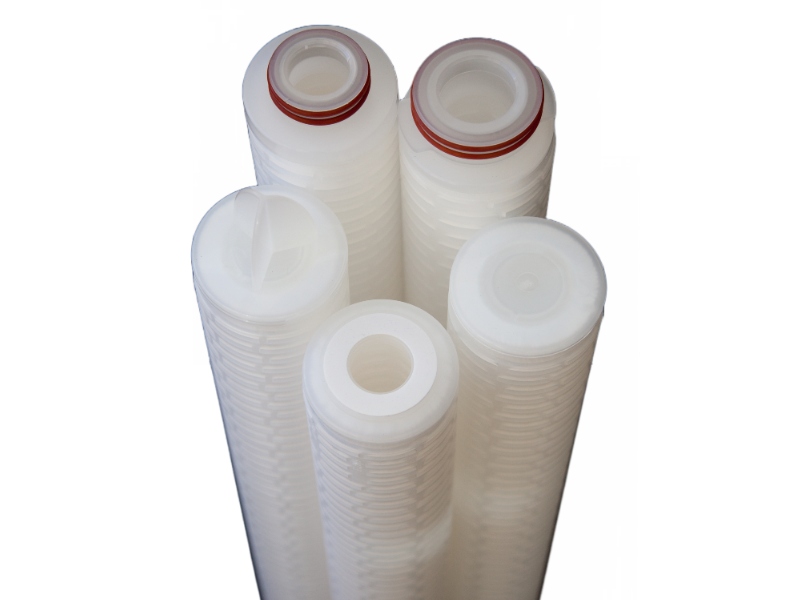



Cartridge filtration in cider production can be highly effective for clarification and microbial stabilisation. However, cider presents specific challenges compared with beer, wine, or water. These arise primarily from its composition, including pectins, colloids, yeast residues, and seasonal variability in apples.
Here are the key challenges cider producers face when using cartridge filters.
1. High Pectin Content
Apples naturally contain pectins, which are soluble polysaccharides released during pressing and fermentation.
Why this matters:
- Pectins form colloidal suspensions that are difficult to remove
- They can rapidly blind cartridge filters, particularly membranes
- Flow rates decline quickly if pectin is not reduced beforehand
Typical mitigation:
- Enzymatic treatment with pectinase
- Use of depth filter cartridges before membrane filtration
- Proper settling before filtration
2. Yeast and Fermentation Solids
After fermentation, cider contains significant levels of yeast and fermentation debris.
Challenges:
- Yeast loads are often higher than membrane cartridge capacity
- Rapid filter blocking and reduced service life
- Variability in fermentation leads to inconsistent solids loading
Typical filtration strategy:
- Coarse clarification (centrifuge, settling, or DE filtration)
- Depth filtration (lenticular or sheet filters)
- Final membrane filtration
3. Apple Protein and Polyphenol Complexes
Cider contains polyphenols (tannins) and proteins that can form colloidal complexes.
Issues caused:
- Haze formation
- Filter fouling
- Reduced throughput
These complexes may also form during filtration, particularly with oxygen exposure or temperature changes.
4. Seasonal and Raw Material Variability
Apple composition varies significantly by season, variety, and orchard.
Key variables:
- Pectin levels
- Polyphenol content
- Yeast populations
- Juice solids
Impact:
- Cartridge performance can vary between batches
- Filter sizing may not remain consistent year to year
5. High Colloidal Load
Even after clarification, cider often retains fine colloids smaller than yeast cells.
Consequences:
- Rapid membrane fouling
- Increased differential pressure
- Reduced membrane life
Effective prefiltration is essential to manage this.
6. Microbial Stabilisation Requirements
Many cider producers rely on membrane filtration instead of pasteurisation.
Key challenges:
- Brettanomyces
- Lactic acid bacteria
- Wild yeasts
These can pass through poorly designed systems if:
- Cartridge ratings are incorrect
- Integrity testing is not performed
- Prefiltration is insufficient
7. Carbonated Cider Filtration
Filtering carbonated cider introduces additional complexity.
Issues:
- Gas breakout within the housing
- Flow instability
- Poor cartridge utilisation
Mitigation:
- Maintain stable pressure
- Minimise pressure drops
- Optimise system design
8. Sensory Preservation
Over-filtration can negatively impact cider quality.
Potential effects:
- Loss of aroma compounds
- Reduced mouthfeel
- Removal of beneficial colloids
A balance between clarity, stability, and flavour retention is essential.
9. Filter Cost vs Throughput
Cider can foul filters quickly, impacting operating costs.
Implications:
- Frequent cartridge change-outs
- Increased cost per hectolitre
Proper filter selection and prefiltration design are critical to maintaining efficiency.
Typical Cartridge Filtration Setup for Cider
A staged approach is commonly used:
- 5–10 µm depth cartridge for coarse particle and yeast removal
- 1–3 µm depth cartridge for fine clarification
- 0.45 µm or 0.65 µm membrane for microbial stabilisation
(Some producers may use 0.2 µm membranes where absolute sterility is required.)
Summary
The key challenges in cider cartridge filtration include:
- Pectin-related fouling
- High yeast and solids loading
- Polyphenol and protein colloids
- Seasonal raw material variability
- Rapid membrane blockage
- Balancing flavour retention with microbial stability
If you have any questions about cider filtration or the associated cartridge filters then give us a call or send us an email - we’d be more than happy to help.
And here are a few more blogs and links that you might find useful:
- Choosing the Right Cartridge Filters for Process Filtration
- Utility Filtration in Process Industries: The Role of Cartridge Filters
- Process Filtration Membranes in Industrial Applications
- Membrane Cartridge Filters Explained by Micron Rating
- And here you can browse our full range of Depth Filters & Membrane Filters..
PoreFiltration – Making your filtration systems work harder