



The Filtration Focus: August Edition
Welcome to the August edition of The Filtration Focus—your monthly digest for industrial efficiency.
This month, we cover:
-
Technical Insight: Mastering your micron selection.
-
Pharma Trends: The shift toward single-use manufacturing.
-
Cost Savings: Implementing cold pasteurisation in breweries.
-
By the Numbers: How a 5-micron change delivers big results.
Dive into the articles below, and as always, our engineering team is here if you need any specific technical support.
Technical Insight: Micron Selection
When specifying a filtration system, one of the first questions engineers and production managers ask is, "What micron rating do I need?" It's an understandable starting point, but it's also where many filtration systems begin to underperform. A common misconception is that a smaller micron rating automatically provides better filtration. While finer filters remove smaller contaminants, they also place greater demands on the process by increasing pressure drop, reducing flow rates and often requiring more frequent changeouts. In many cases, the most effective filtration system isn't the one with the finest filter—it's the one with the most appropriate filtration stages.
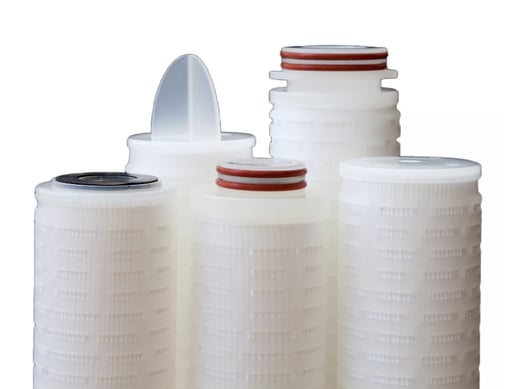
Micron ratings should always be selected based on three key considerations: the contaminants present, the level of product quality required and the equipment you're trying to protect. For example, if your objective is to remove large particulates from incoming process water before it reaches pumps or valves, a coarse filter between 25 and 100 microns may be perfectly suitable. However, if you're producing bottled beverages, pharmaceuticals or electronics where microscopic contamination can affect product quality, filtration may need to progress through several stages before reaching a final membrane filter rated at 0.45 or even 0.2 microns.
This staged approach is one of the simplest ways to improve overall filtration performance. Rather than asking a single membrane cartridge to remove every contaminant entering the system, each filtration stage performs a specific role. Larger particles are removed first using bag filters, basket strainers or depth cartridges, leaving the final membrane to polish the product or provide microbial reduction. The result is lower differential pressure, longer cartridge life and more predictable production.
We recently worked with a beverage manufacturer that was replacing its final membrane cartridges every week. Initial concerns focused on the membrane itself, but a review of the process showed that fine sediment was reaching the final filtration stage because the upstream pre-filter was allowing too much particulate through. By introducing a more suitable staged filtration arrangement, contaminant loading on the membrane was significantly reduced. The customer increased cartridge life, reduced production interruptions and lowered annual filter consumption without changing the final membrane specification.
Another important consideration is the difference between nominal and absolute micron ratings. Two filters may both be labelled as "1 micron", but they can perform very differently. A nominal filter captures a percentage of particles around its rated size, while an absolute-rated membrane is designed to retain virtually all particles at that size under specified operating conditions. Understanding this distinction is particularly important in industries such as food and beverage, pharmaceuticals and high-purity water treatment, where product consistency and regulatory compliance depend on reliable particle retention.
Ultimately, selecting the correct micron rating isn't about choosing the smallest number it's about understanding your process. The right filtration strategy balances contaminant removal, flow rate, operating costs and filter life to deliver reliable, efficient performance over the long term.
Latest Article: The Rise of Single-Use Manufacturing in Pharma

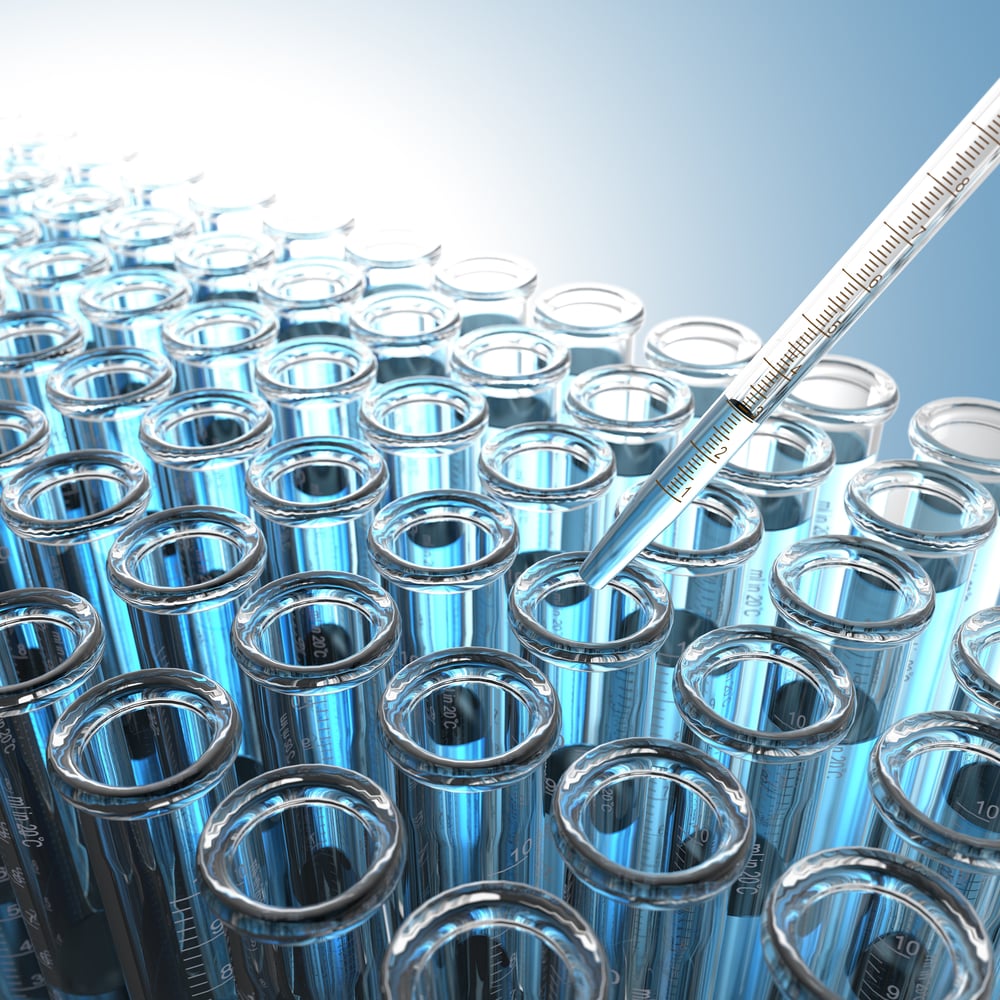
The pharmaceutical industry is changing rapidly. As demand increases for biologics, vaccines and personalised medicines, manufacturers are looking for production methods that are faster, more flexible and easier to validate. One of the biggest developments supporting this shift is the widespread adoption of single-use manufacturing systems. Rather than relying solely on traditional stainless steel process equipment that requires extensive cleaning and validation between batches, many facilities are now integrating disposable components into their production processes, including tubing, bags, connectors and filtration assemblies.
The advantages are significant. Every cleaning cycle requires time, water, chemicals and validation before production can begin again. Single-use filtration removes many of these steps by providing sterile, ready-to-install components that can be disposed of after use. This not only reduces downtime but also minimises the risk of cross-contamination between batches an increasingly important consideration as facilities manufacture multiple products within the same production environment.
Cost Saving Tip: Could Cold Pasteurisation Reduce Your Brewery's Operating Costs?
For many breweries, energy has become one of the largest production costs. Rising electricity and gas prices, combined with increasing pressure to improve sustainability, mean brewers are constantly looking for ways to produce high-quality beer more efficiently. Traditional thermal pasteurisation has long been used to improve product stability, but it comes at a cost. Heating beer requires significant energy, often followed by cooling before packaging, increasing utility consumption while adding complexity to production.
Cold pasteurisation using membrane filtration offers an alternative approach that is gaining interest across both craft and commercial brewing. Instead of relying on heat, membrane filters remove spoilage microorganisms through physical separation, allowing breweries to achieve microbiological stability while preserving the beer's original flavour, aroma and mouthfeel. This is particularly important for modern beer styles where delicate hop character or subtle flavour profiles are central to the finished product.
The benefits become even more apparent in the rapidly growing low and no-alcohol beer market. Without alcohol acting as a natural preservative, microbiological control becomes increasingly important. At the same time, consumers expect these products to retain the flavour characteristics of traditional beer. Membrane filtration enables breweries to achieve both objectives while avoiding the flavour changes that can sometimes occur with heat treatment.
One independent brewery recently reviewed its packaging process after noticing increasing utility costs and reduced production efficiency during peak demand. Following a filtration assessment, it introduced membrane filtration as part of its cold pasteurisation strategy. The brewery reduced energy usage associated with heat treatment, shortened processing times and maintained excellent product consistency across multiple beer styles. While every brewery operates differently, reviewing pasteurisation methods can often reveal opportunities to improve both product quality and operating costs.
With brewing margins under constant pressure, small improvements in process efficiency can have a significant impact over the course of a year. For breweries investing in long-term productivity, filtration should be viewed not simply as a quality control measure, but as a valuable opportunity to reduce energy consumption, minimise waste and improve overall profitability.
By The Numbers: 5 Microns: Small Change, Big Difference
When engineers think about improving filtration performance, they often focus on changing filter media or replacing cartridges more frequently. However, one of the biggest improvements can come from changing just a single number. Moving from a 10-micron filter to a 5-micron filter may seem like a minor adjustment, but it can dramatically reduce the amount of particulate reaching downstream equipment. In many applications, this simple change provides better protection for pumps, valves and membrane cartridges, resulting in longer filter life, improved product consistency and fewer unplanned production interruptions.
A 5-micron filter is capable of removing contaminants that are often responsible for premature membrane fouling, including fine sediment, rust particles, mould spores, yeast and many suspended solids. By capturing these particles earlier in the process, the final filtration stage has significantly less work to do. This staged approach is widely used throughout food and beverage manufacturing, water treatment and pharmaceutical production because it balances contaminant removal with flow rate, helping facilities maintain efficient production while reducing operating costs.
One customer in the beverage industry contacted us after experiencing frequent membrane cartridge blockages during final filtration. Although the membranes were performing exactly as designed, excessive fine particulate was reaching the final stage because the upstream filtration wasn't removing enough contaminants. After reviewing the process, we recommended replacing the existing 10-micron pre-filter with a 5-micron depth cartridge. The result was a noticeable reduction in differential pressure across the membrane, longer cartridge service life and fewer filter changeovers, all achieved without altering the final filtration stage or making expensive equipment modifications.
It's important to remember that finer isn't always better. Selecting a 5-micron filter where a 25-micron filter would be more appropriate can increase pressure drop and reduce flow unnecessarily. The goal isn't to install the smallest micron rating possible—it's to remove contaminants progressively throughout the process. Choosing the right micron at the right stage helps maximise filtration efficiency, protect downstream equipment and reduce the total cost of ownership.
Common Contaminants Removed at Different Micron Ratings
|
Micron Rating |
Typical Contaminants Removed |
Common Applications |
|
100 µm |
Large debris, leaves, coarse sediment |
Process water protection, strainers |
|
50 µm |
Sand, rust flakes, scale particles |
Pump and valve protection |
|
25 µm |
Fine sand, heavy sediment, paint solids |
General pre-filtration |
|
10 µm |
Fine silt, carbon fines, visible particulates |
Pre-filtration before finer cartridges |
|
5 µm |
Fine sediment, yeast, mould spores, suspended solids |
Protecting membrane filters and extending cartridge life |
|
1 µm |
Very fine particulates, some bacteria-sized particles |
Product polishing and critical process filtration |
|
0.45 µm |
Most bacteria and fine particulates |
Beverage clarification and microbiological reduction |
|
0.2 µm |
Sterilising-grade filtration and microbial control |
Pharmaceuticals, high-purity water and final product filtration |
Key Takeaway:
A reduction of just 5 microns in your pre-filtration stage could significantly increase the lifespan of your final membrane filters, reduce differential pressure and lower overall filtration costs. The best filtration systems aren't built around the finest filter—they're built around selecting the right micron rating at every stage of the process.
Need Filters?
View Our Range of Filter Products
Speak to an Expert
+44(0) 203 750 8060
Send Us An Email
enquiries@porefiltration.co.uk

